

 English
  中文简体
中文简体 
How Advanced Polymer Film Converting Transforms Metallized CPP and BOPP Film Performance
 2026.08.25
 Industry News
Why Polymer Film Converting Defines the Performance of Metallized Packaging Film
Every roll of high-barrier flexible packaging starts as a plain plastic substrate long before it becomes a functional structure. The step that changes a simple resin web into a usable packaging material is metallized film converting, a sequence of coating, treating, slitting, and laminating operations that determines barrier performance, seal integrity, and print quality. Brand owners rarely think about this stage, yet it is often the biggest factor separating a film that performs consistently on high-speed lines from one that causes downtime, seal failures, or inconsistent shelf appeal.
Film converting is not a single machine or a single pass. It is a coordinated set of processes applied to a base film after extrusion, including vacuum metallizing, corona or flame treatment, precision slitting, and multi-layer lamination. Each step introduces variables that affect the final gauge, optical density, and mechanical strength of the roll. Understanding how these variables interact is the difference between specifying a film that works and specifying one that only looks right on a data sheet.
This article breaks down the technical capabilities that define modern film converting, compares the two most common metallized substrates used in flexible packaging, and outlines the data points worth reviewing before selecting a converting partner for a custom application.
The stakes of getting this stage right are higher than they might appear from a purchasing spreadsheet. A film that arrives with inconsistent optical density can cause a packaging line's vision inspection system to reject good product, while a film with uneven gauge can create tension spikes that snap a web mid-run. Because these problems only surface once the film is running on a customer's own equipment, tighter process control at the source tends to save far more in avoided downtime than any small price difference would suggest.
How the Film Converting Process Turns Raw Substrate into Finished Rolls
A typical converting line moves a base film through a controlled sequence of stations. The order and combination of these stations depend on the target structure, but most metallized film production follows a comparable path from unwind to finished roll.
Standard Metallized Film Converting Sequence
The metallizing station is usually where the greatest technical control is required. Aluminum vapor is deposited on the film surface inside a vacuum chamber, and the deposition rate, chamber pressure, and web speed together determine optical density and barrier value. A deposition that runs too thin produces weak barrier properties and visible pinholing, while a deposition that runs too thick wastes material and can create adhesion problems in later lamination steps.
Surface treatment, typically corona or flame treatment, raises the surface energy of the film so that inks, adhesives, or extrusion coatings bond properly. Without adequate treatment, even a well-metallized film will show poor lamination bond strength and delamination in the field. Slitting and rewinding close out the line, converting a master roll into finished widths while checking for gauge bands, wrinkles, and edge trim consistency.
Web handling between these stations is just as important as the stations themselves. Tension that is too low allows the film to wander off center, misaligning the metallizing pattern or the treatment zone, while tension that is too high can stretch a thin gauge film permanently, distorting its dimensional stability once it cools. Experienced converters map out a tension profile for each substrate and gauge combination rather than applying a single default setting across every job, since a profile tuned for a heavier BOPP structure will typically overstretch a lighter CPP film at the same settings, leading to wrinkling or bowed edges once the roll cools.
Metallized CPP Film Versus Metallized BOPP Film: Matching Structure to Application
Two substrates dominate metallized flexible packaging: metallized cpp film and metallized bopp film. Both start from a polypropylene resin base, but the way each film is oriented during extrusion changes its mechanical behavior, heat seal characteristics, and typical role in a laminate structure.
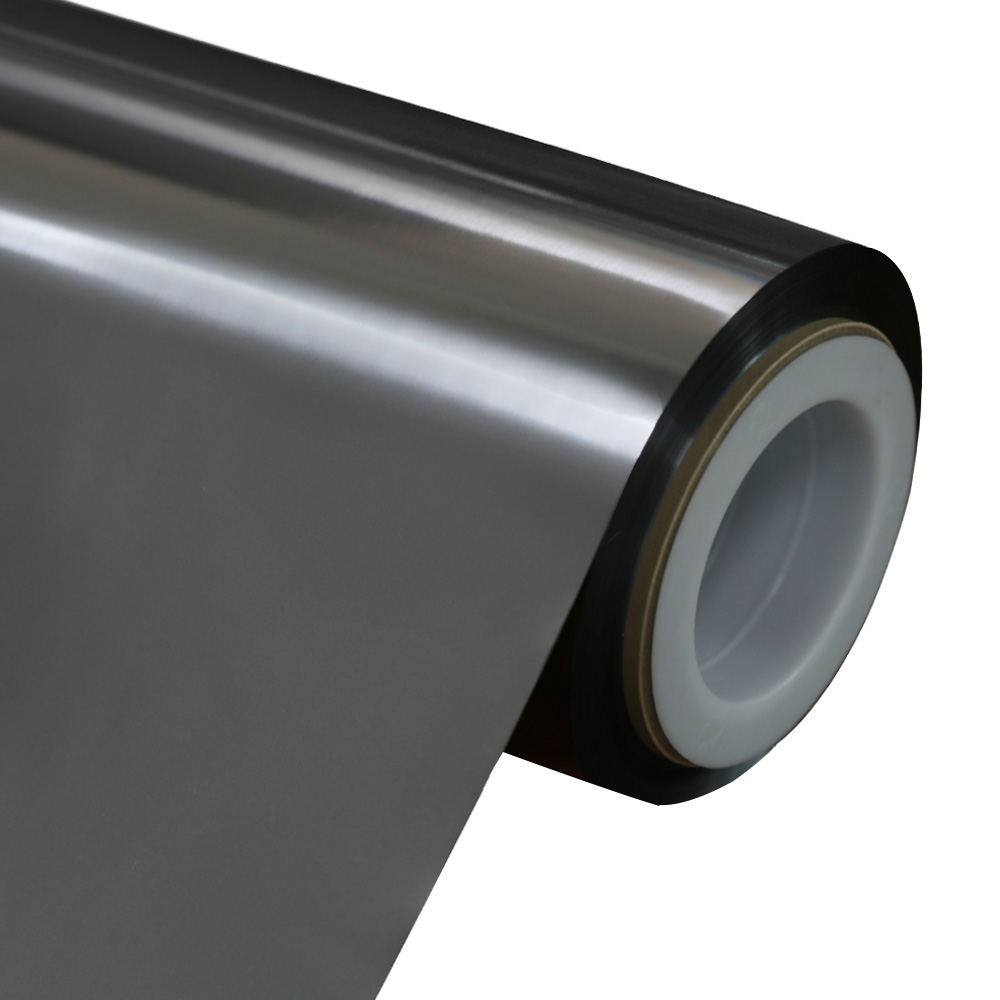
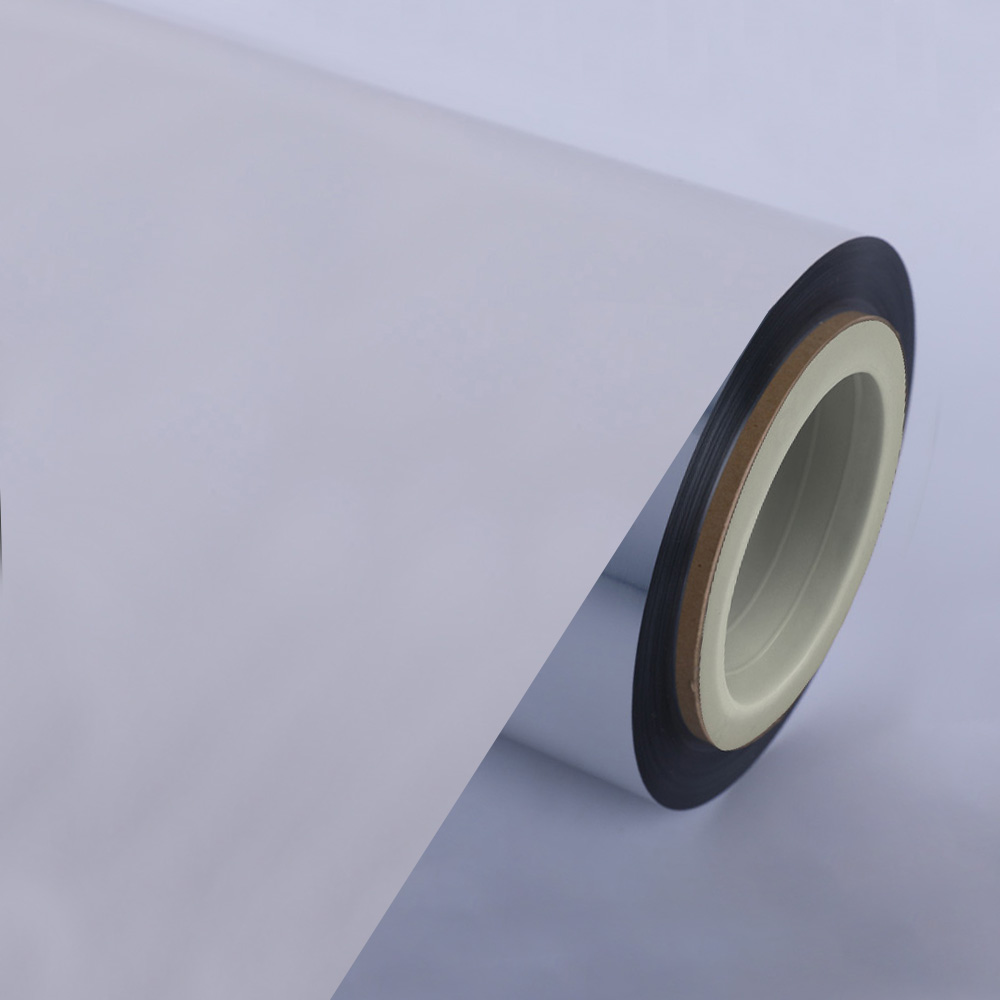
Cast polypropylene film is extruded and cooled quickly without a stretching step, which leaves it softer and easier to heat seal at moderate temperatures. Biaxially oriented polypropylene film is stretched in both machine and transverse directions, which increases stiffness, tensile strength, and optical clarity but raises the seal initiation temperature. In a laminate, the metallized layer is often paired with the substrate that best complements the missing property, so metallized CPP frequently serves as the sealing layer while metallized BOPP serves as the printable or structural outer layer.
The choice also affects how a package behaves after it leaves the converting line. A pouch built around a metallized CPP sealant layer tends to tolerate off-angle or wrinkled seals better because the softer film flows slightly under heat and pressure, closing small gaps. A structure built around metallized BOPP as the outer web instead prioritizes dimensional stability during high-speed printing and die cutting, since the film resists stretching under the tension of a printing press. Neither substrate is universally better; the right choice depends on whether the priority is sealing forgiveness or print and structural precision.
Property Comparison: Metallized CPP Film and Metallized BOPP Film
| Attribute | Metallized CPP Film | Metallized BOPP Film |
|---|---|---|
| Typical Gauge Range | 20 to 40 micron | 15 to 30 micron |
| Seal Initiation Temperature | Lower, moderate range | Higher, tighter control needed |
| Stiffness | Softer, more flexible | Stiffer, better machinability |
| Common Role in Laminate | Inner sealing layer | Outer printable layer |
| Optical Clarity Before Metallizing | Moderate | High |
What Precision Slitting and Gauge Control Change About Film Quality
Gauge consistency is one of the least visible but most consequential quality factors in converted film. A roll with wide gauge variation will run unevenly through packaging equipment, causing tension fluctuations, wrinkling, and inconsistent seal pressure. Slitting precision and inline gauge monitoring together determine how tight that variation can be held across a production run.
Typical Gauge Variation by Slitting Precision Tier
Standard tolerance slitting, common on general purpose lines, typically allows gauge deviation in the range of three to four percent across the web width. Precision tolerance converting narrows that spread through tighter roller alignment, calibrated knife pressure, and closed-loop gauge feedback, often reaching under two percent. High precision tiers, generally reserved for demanding applications like retort pouches or high-speed vertical form fill seal lines, push variation below one percent by combining laser or beta gauge measurement with automated die or roller correction.
- Tighter gauge control reduces web tension variability during high-speed unwind
- Consistent gauge improves seal bar contact and reduces seal failure rates
- Narrow tolerance bands reduce material waste from over-specification of thickness
- Custom gauge control allows converters to match film weight to specific barrier targets rather than defaulting to a heavier, safer gauge
Gauge control also interacts with knife maintenance in ways that are easy to overlook. A slitting blade that has dulled gradually will not fail outright; instead it produces a slow drift in edge quality, generating fine dust and slightly uneven trim that only becomes visible after several thousand meters of film. Converters that track knife life against a fixed meter count, rather than waiting for a visible defect, tend to hold tighter gauge and edge tolerance over an entire production run instead of just at the start of it.
Roll-to-Roll Converting Efficiency Trends Worth Tracking
Roll-to-roll converting efficiency has improved steadily across the industry as tension control systems, automated splicing, and inline inspection have matured. Waste rate, the percentage of substrate rejected or trimmed during converting, is one of the clearest indicators of how well a line is running.
Industry Average Converting Waste Rate Trend
The downward trend reflects several converging improvements rather than any single technology. Closed-loop tension control reduces telescoping and roll deformation during winding. Automated flying splice systems keep the line running through roll changeovers instead of stopping and restarting, which used to be a common source of scrap. Inline optical inspection catches metallizing defects and pinholes before the roll reaches slitting, preventing an entire jumbo roll from being converted around a flaw.
For buyers evaluating a converter, waste rate is a useful proxy for overall process control, but it should be read alongside on-time delivery performance and defect rates reported after the film reaches the customer's packaging line, since a low internal waste rate does not always translate into fewer field complaints.
Line speed is another metric worth putting alongside waste rate rather than reading in isolation. Pushing a converting line faster without matching improvements in tension control and inspection tends to raise both waste rate and downstream defect rate at the same time, since defects that would normally be caught by a slower inspection pass instead slip through. The most efficient operations tend to increase speed and inspection capability together, which is why year-over-year waste rate improvement is often a better efficiency signal than raw line speed on its own.
How Surface Treatment and Laminating Solutions Strengthen Multi-Layer Structures
Metallized film is rarely used as a single layer in finished packaging. It is almost always combined with a sealant layer, a printable layer, or both through adhesive or extrusion lamination. Bond strength between layers depends heavily on how well the metallized surface was treated before lamination.
Average Bond Strength by Surface Treatment Method
Untreated metallized surfaces typically show the weakest bond because the low surface energy of polypropylene does not allow adhesives to wet the surface properly. Corona treatment raises surface energy quickly and inexpensively, though the effect can decay over time if the roll sits in storage before lamination. Adding a primer coating after corona treatment locks in that surface energy and improves consistency for adhesive lamination. Extrusion lamination, which applies molten polymer directly between the two film layers, generally produces the strongest and most consistent bond because it does not rely on a pre-applied surface energy that can fade.
The choice between adhesive and extrusion lamination is not purely about bond strength. Adhesive lamination is generally more flexible for short runs and lower line speeds, while extrusion lamination favors longer runs where the added equipment cost is offset by throughput. Custom polymer film converting decisions here should weigh run length, target bond strength, and whether the finished laminate needs to remain flexible at low temperature, since some adhesive systems become brittle in cold storage applications.
Curing time is a related factor that often gets overlooked during scheduling. Adhesive laminated rolls typically need a curing period in a temperature controlled room before they are slit and shipped, and cutting that period short can leave a laminate with bond strength that looks acceptable on the day it leaves the plant but degrades once the customer begins converting it into finished packages. Building adequate curing time into the production schedule is a simple but frequently underestimated part of achieving the bond strength figures shown above.
How to Evaluate a Polymer Film Converter for Custom Film Converting Capabilities
Selecting a converting partner for a custom application involves more than comparing price per kilogram. The following criteria give a more complete picture of whether a converter's film converting capabilities match the demands of a specific packaging line.
| Evaluation Criteria | What to Look For |
|---|---|
| Gauge Control Equipment | Inline beta or laser gauge measurement with automated correction |
| Slitting Precision | Documented tolerance bands and roll-to-roll consistency data |
| Metallizing Chamber Control | Optical density monitoring and consistent deposition rate management |
| Lamination Options | Both adhesive and extrusion lamination available for structure flexibility |
| Sample and Trial Support | Willingness to run small trial batches before full production commitment |
A converter with narrow slitting precision but no extrusion lamination option may not fit a project that needs strong low-temperature bond strength. Likewise, a converter with strong lamination capability but wide gauge tolerance may create downstream sealing issues on a high-speed line. Matching the converter's actual equipment and process control to the specific application, rather than to a general product description, reduces the risk of costly trial and error after a purchase order is placed.
It is also worth asking how a converter handles a specification change mid-project. Packaging development rarely stays static from first sample to full production, and a converter with flexible film converting capabilities across gauge, treatment level, and lamination method can absorb a revised barrier target or seal strength requirement without forcing a full restart of trials. A converter locked into one narrow process window, by contrast, may require the customer to redesign around the film rather than the other way around.
The most reliable way to shortlist a converting partner is to request a defect and gauge variation report from a completed production run rather than a spec sheet describing target values alone.
Precision Slitting Roll-to-Roll Converting Custom Gauge Control Laminating Solutions
Frequently Asked Questions About Metallized Film Converting
Q1: What makes a film converter capable of custom gauge control?
Custom gauge control depends on inline measurement equipment, typically beta or laser gauging, paired with automated feedback that adjusts extrusion or coating parameters in real time. Converters without this feedback loop can usually only offer a fixed set of standard gauges.
Q2: Why does surface treatment matter if the film will be laminated anyway?
Lamination bond strength depends directly on surface energy. Without adequate corona or flame treatment, adhesives or molten polymer used in lamination will not wet the metallized surface evenly, leading to weak spots and eventual delamination in the field.
Q3: How is metallized CPP film typically different from metallized BOPP film in application?
Metallized CPP film generally serves as a heat sealable inner layer because it seals at moderate temperatures, while metallized BOPP film is more often used as a stiffer, more optically clear outer layer suited for printing and structural support.
Q4: What causes gauge variation across a converted roll?
Gauge variation can come from extrusion die inconsistency, uneven winding tension, or slitting equipment that is not properly calibrated. Precision converting lines address this with tighter roller alignment and continuous gauge monitoring during production.
Q5: Is a lower converting waste rate always a sign of better film quality?
Not necessarily. A low internal waste rate reflects efficient line operation, but film quality should also be judged by defect rates reported after the film is used on a customer's packaging line, since some defects only appear during high-speed conversion downstream.

Are you ready to work with us?
Start a project
- Quick Links
- Company Profile
- Company Culture
- Qualification
- FAQ
- Product
- ALOx Films
- VMPET
- VMCPP
- VMBOPP
- Coated Film
- Contact Us
- Tel: +86-13456263964
-
Phone : +86-0573-87783633
Phone : +86-0573-87780583 - E-mail : [email protected]
- Address: 6th Xinhe Road, Xieqiao Town, Haining City, Zhejiang Province, China

