

 English
  中文简体
中文简体 
How Do Metalized PET Films Behave at High and Low Temperatures?
 2026.02.05
 Industry News
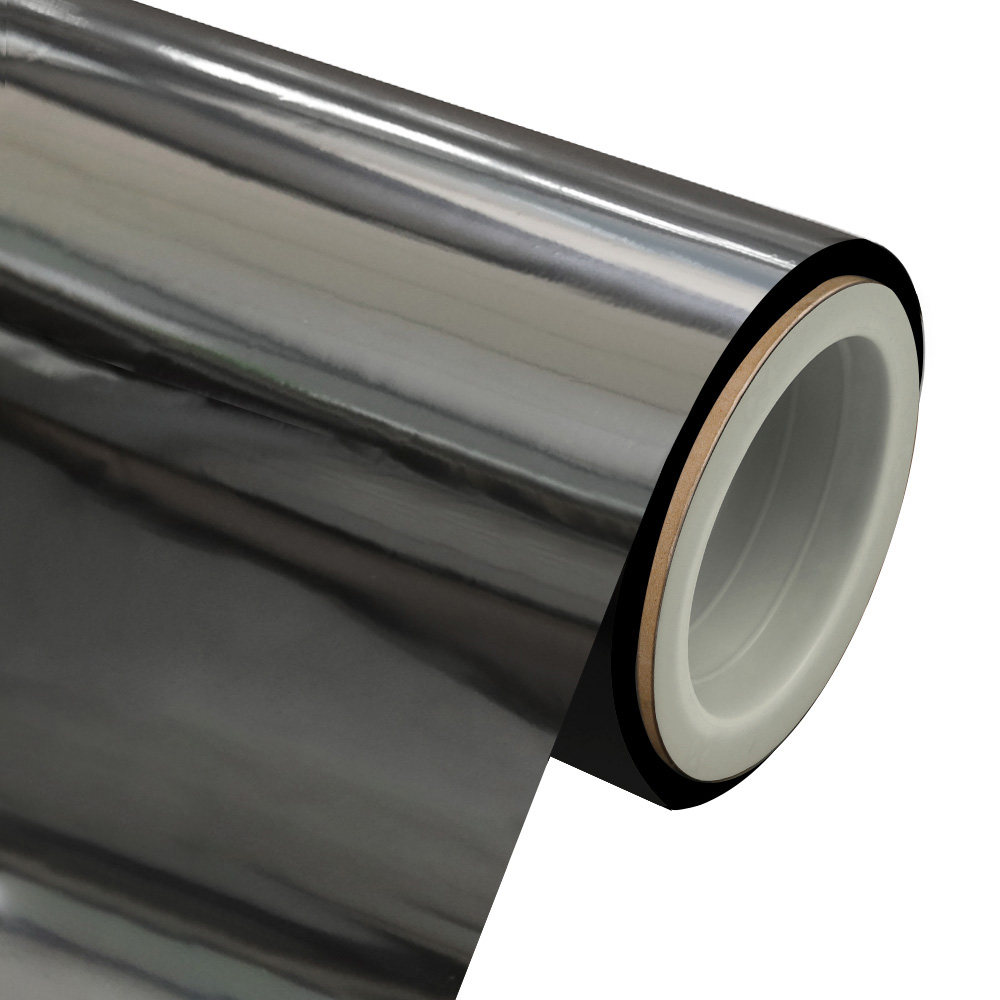
In modern engineered systems, flexible materials with controlled thermal characteristics are increasingly critical. Among these materials, metalized PET film has emerged as a widely used component due to its balanced mechanical, barrier, and thermal properties. Its applications span packaging, electrical insulation, flexible circuitry, thermal management layers, and barrier layers within multi‑layer composites.
1. Overview of Metalized PET Film Composition
Before analyzing temperature behavior, it is essential to understand what constitutes metalized PET film.
1.1 Base Polymer: PET
- Polyethylene terephthalate (PET) is a semi‑crystalline polymer polymerized from ethylene glycol and terephthalic acid.
- PET provides a combination of tensile strength, dimensional stability, and chemical resistance.
- Its glass transition temperature (Tg) and melting range define the temperature limits within which PET maintains useful properties.
1.2 Metal Coating Layer
- The metal layer (commonly aluminum) is deposited on PET through vacuum metallization.
- This thin metal layer imparts reflectivity, barrier performance, and electrical properties.
- The adhesion and continuity of the metal coating are influenced by the underlying PET substrate and temperature cycles.
1.3 Composite Structure
- The integrated structure behaves differently than the individual components.
- The combined polymer‑metal system must be evaluated for differential expansion, stress transfer, and thermal cycling response.
2. Temperature Ranges and Definitions
To organize the analysis, temperature effects are classified into three ranges:
| Temperature Range | Typical Limits | Relevance |
|---|---|---|
| Low Temperature | Below −40 °C | Cold storage, cryogenic environments |
| Moderate Temperature | −40 °C to 80 °C | Standard operating environments |
| High Temperature | Above 80 °C up to PET softening point | Elevated service conditions, thermal processing |
The specific transition points depend on the particular PET grade and processing history. Metalized PET film exhibits distinct responses within each range, which are elaborated below.
3. Thermal Behavior at Low Temperatures
3.1 Mechanical Properties
At low temperatures, the polymer matrix and metal layer behavior diverge:
-
Stiffening of PET: As the temperature decreases below the glass transition region, the PET substrate becomes more rigid and less ductile. This leads to increased tensile modulus but reduced elongation at break.
-
Brittleness: The polymer backbone exhibits reduced molecular mobility, which increases the risk of brittle fracture when stressed.
-
Metal Coating Interaction: The thin metal layer, typically aluminum, retains ductility to a greater extent than PET at low temperature. This can create interfacial stresses due to differential contraction.
Design Implication
In applications involving repeated low‑temperature cycles, careful consideration must be given to strain distribution. Stress concentrators such as sharp corners or perforations can become initiation points for microcracks, particularly when the film is under load.
3.2 Dimensional Stability
- Thermal contraction of PET is moderate compared to many metals. The coefficient of thermal expansion (CTE) of PET is higher than that of aluminum.
- At low temperatures, differential contraction can lead to micro‑buckling of the metal layer or micro‑delamination.
3.3 Barrier Performance
Temperature reduction generally improves barrier properties for gases and moisture due to decreased molecular mobility in the polymer matrix. However:
- Micro‑cracks induced by stress may create local leakage paths.
- For films used in cold storage packaging or cryogenic insulation, the integrity of seals and seams becomes critical.
3.4 Electrical Behavior
- Dielectric properties of PET improve (higher resistivity) at low temperatures.
- The presence of a continuous metal layer changes the effective electrical behavior; thermal contraction of polymer underneath can cause surface tension differences affecting electrical performance.
4. Thermal Behavior at High Temperatures
4.1 Structural Response
As temperature increases:
- PET approaches its glass transition temperature (Tg). Above this point, the polymer transitions from a rigid to a more rubbery state.
- Near Tg, mechanical strength decreases and creep deformation becomes significant.
4.2 Dimensional Changes
- The polymer component exhibits thermal expansion, while the metal layer expands less.
- This mismatch induces interfacial stress that can lead to blisters, buckling, or micro‑wrinkling in the metal layer.
4.3 Thermal Aging and Property Degradation
Prolonged exposure to elevated temperatures accelerates physical aging mechanisms:
- Chain mobility increases, allowing relaxation but also facilitating oxidative degradation if reactive species (oxygen) are present.
- Repeated thermal cycles can produce microstructural fatigue, which degrades mechanical integrity.
4.4 Barrier Performance at Elevated Temperature
- Elevated temperature increases gas and vapor diffusion rates through the polymer.
- While the metalized layer continues to provide a barrier, local defects at high temperatures become more critical.
- Heat‑induced stress in the substrate can increase the size and frequency of defects, reducing effective barrier performance.
4.5 Electrical Effects
- High temperature can affect the conductivity of the metal layer, particularly if it suffers from stress‑induced defects.
- PET insulation properties degrade as Tg is approached, potentially compromising electrical isolation.
5. Thermal Cycling and Fatigue
5.1 Mechanisms of Thermal Cycling Stress
Thermal cycling — repeated transitions between high and low temperatures — challenges the multi‑layer structure:
- Expansion/contraction mismatch between polymer and metal layers.
- Development of interfacial shear stress.
- Progressive accumulation of micro‑damage.
5.2 Effects on Structural Integrity
Over multiple cycles:
- Debonding at the polymer‑metal interface can occur.
- Micro‑cracking in PET can propagate and coalesce.
- The metal layer can delaminate or wrinkle, particularly near edges or bonded regions.
5.3 Mitigation Strategies
- Use of graded interlayers or adhesion promoters to improve stress transfer.
- Optimized lamination processes to reduce residual stresses after metallization.
- Controlled design of film geometry to minimize stress concentrations.
6. Thermal Conductivity and Heat Management
6.1 Anisotropic Thermal Behavior
- PET’s thermal conductivity is relatively low compared to metals.
- The metalized layer increases surface reflectivity and can enhance surface heat distribution but does not significantly elevate bulk thermal conductivity.
6.2 Heat Flow in Composite Systems
In multi‑layer assemblies, heat transfer depends on:
- Thickness and continuity of the metal layer.
- Contact resistance between interfaces.
- Heat conduction paths through adjacent layers and substrates.
6.3 Thermal Management Applications
Applications such as heat‑reflective coatings or thermal shielding rely on:
- Radiative heat control by the metal layer.
- Insulation performance of PET in limiting conductive heat flow.
7. Environmental and Long‑Term Stability
7.1 Humidity and Temperature Interactions
- Elevated humidity combined with temperature accelerates hydrolytic degradation of PET.
- Moisture ingress can plasticize the polymer, altering mechanical and barrier properties.
7.2 UV and Thermal Exposure
- UV radiation in conjunction with high temperature accelerates oxidative chain scission.
- Protective coatings or UV stabilizers are often integrated to mitigate these effects.
7.3 Thermal Stress Over Service Life
- Long service life under fluctuating temperatures can produce cumulative damage.
- Predictive modeling and accelerated life testing are used to estimate serviceable lifetimes.
8. Comparative Behavior Summary
The following table summarizes the key temperature effects on metalized PET film properties:
| Property / Behavior | Low Temperature | Moderate | High Temperature |
|---|---|---|---|
| Mechanical Stiffness | Increases | Nominal | Decreases |
| Ductility | Decreases | Nominal | Reduces near Tg |
| Thermal Expansion Stress | Moderate | Nominal | High |
| Barrier Performance | Improves | Nominal | Degrades |
| Electrical Insulation | Improves | Nominal | Deteriorates near Tg |
| Interface Stress | Low to Moderate | Nominal | High |
| Long‑Term Aging | Slow | Nominal | Accelerated |
9. Design and Integration Considerations
When integrating metalized PET film into engineered systems with thermal variations:
9.1 Material Selection
- Choose PET substrates with appropriate Tg margins above expected service temperatures.
- Evaluate metal layer thickness for desired reflectivity and barrier without inducing excessive stress.
9.2 Interface Engineering
- Employ adhesion layers to minimize interfacial debonding under thermal stress.
- Optimize deposition parameters to ensure uniform coating.
9.3 Processing and Handling
- Avoid sharp bends or creases that introduce stress concentrators.
- Control thermal cycles during assembly to prevent undue stress accumulation.
9.4 Testing and Qualification
- Use thermal cycling tests that simulate real service conditions.
- Employ mechanical, electrical, and barrier testing across temperature extremes.
10. Practical Case Insights
In flexible packaging for temperature‑sensitive products:
- The improved barrier at low temperature is beneficial for aroma and moisture retention.
- However, rapid temperature fluctuations during shipping can challenge seal integrity.
In electrical insulation films subjected to elevated temperatures:
- The metalized surface aids in shielding but demands careful consideration of polymer softening and creep.
In thermal management layers:
- The reflective surface enhances radiative heat control, but conductive heat transfer through interfaces must be understood.
Summary
The behavior of metalized PET film at high and low temperatures is governed by the interaction between the PET polymer substrate and its metalized coating. Thermal extremes affect mechanical properties, barrier performance, dimensional stability, electrical characteristics, and long‑term reliability.
Key insights include:
- Low temperatures increase stiffness and barrier performance but raise brittleness and interfacial stress.
- High temperatures, especially near the polymer’s glass transition, reduce mechanical strength, induce dimensional changes, and compromise barrier and electrical properties.
- Thermal cycling induces fatigue mechanisms due to differential expansion and stress concentration.
- Material selection, interface engineering, and appropriate thermal testing are critical for reliable integration.
Understanding these behaviors allows for informed engineering decisions and more robust, temperature‑resilient system designs.
FAQ
Q1: What temperature range can metalized PET film typically tolerate without performance loss?
A1: It depends on the PET grade and metallization quality. Typically, mechanical and barrier properties remain stable well below the glass transition temperature. Above this, properties progressively degrade.
Q2: Does the metal layer protect PET from thermal deformation?
A2: The metal layer influences surface reflectivity and barrier characteristics but does not prevent the underlying PET substrate from expanding or softening at elevated temperatures.
Q3: Can metalized PET film be used in cryogenic applications?
A3: Yes, but designers must consider increased brittleness and ensure mechanical loads do not exceed the reduced fracture tolerance at very low temperatures.
Q4: How does thermal cycling affect long‑term reliability?
A4: Repeated expansion and contraction induce interfacial stresses, potentially leading to micro‑cracks, delamination, or loss of barrier integrity over many cycles.
Q5: What testing methods are used to evaluate thermal performance?
A5: Evaluations include thermal cycling tests, mechanical tests at temperature extremes, barrier and moisture transmission tests, and accelerated aging under defined thermal loads.
References
- Technical literature on polymer thermal properties and barrier materials.
- Industry standards for thermal testing of flexible films.
- Engineering texts on composite material thermal behavior.
- Conference proceedings on metallization techniques and adhesion engineering.

Are you ready to work with us?
Start a project
- Quick Links
- Company Profile
- Company Culture
- Qualification
- FAQ
- Product
- ALOx Films
- VMPET
- VMCPP
- VMBOPP
- Coated Film
- Contact Us
- Tel: +86-13456263964
-
Phone : +86-0573-87783633
Phone : +86-0573-87780583 - E-mail : [email protected]
- Address: 6th Xinhe Road, Xieqiao Town, Haining City, Zhejiang Province, China

