

 English
  中文简体
中文简体 
How does vacuum metallization compare to sputtering for PET films?
 2026.02.12
 Industry News
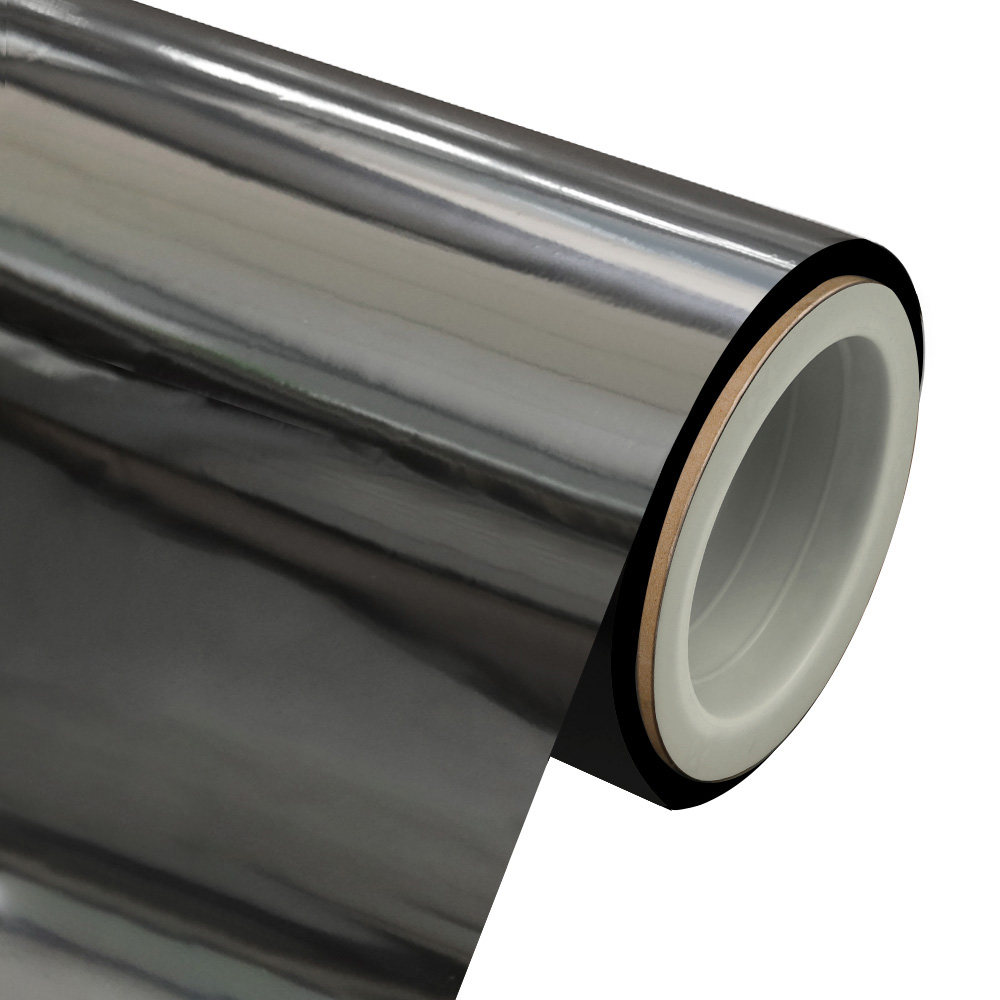
Metalized polyester film has become a crucial component in multiple industrial applications, ranging from packaging to electronics. The process by which a thin metal layer is applied onto PET films affects the final film’s barrier properties, reflectivity, adhesion, and suitability for specific engineering applications. Two primary methods—vacuum metallization and sputtering—offer different mechanisms, benefits, and limitations.
1. Overview of Metallization Techniques
1.1 Vacuum Metallization
Vacuum metallization, also referred to as physical vapor deposition (PVD), involves the thermal evaporation of metal in a vacuum chamber. The process deposits a thin metal layer onto the surface of PET films through condensation. Key aspects include:
- Process Environment: The deposition occurs under high vacuum conditions to reduce contamination and enable uniform metal film formation.
- Metal Sources: Common metals include aluminum due to its reflectivity and barrier properties, although other metals can also be used depending on application requirements.
- Deposition Rate Control: The evaporation rate is carefully controlled to maintain consistent thickness, which is critical for optical and barrier performance.
- Substrate Handling: Continuous rolls of PET film are typically used, allowing high throughput for industrial-scale production.
1.2 Sputtering
Sputtering is a technique in which high-energy ions bombard a metal target, ejecting atoms that then condense onto the PET film surface. Characteristics include:
- Plasma Generation: A plasma environment facilitates the transfer of metal atoms from the target to the substrate.
- Deposition Precision: Sputtering allows fine control over film thickness, density, and microstructure.
- Adhesion and Coverage: Compared to vacuum metallization, sputtering can produce films with improved adhesion and more uniform coverage, especially on complex surfaces.
- Material Versatility: Sputtering accommodates a wider range of metals, alloys, and even compound layers, enabling tailored functional properties.
2. Comparative Analysis of Film Properties
The choice between vacuum metallization and sputtering impacts several critical attributes of metalized polyester film. The following table summarizes key performance differences:
| Property | Vacuum Metallization | Sputtering |
|---|---|---|
| Metal Adhesion | Moderate; may require pre-treatment | High; better chemical bonding to PET |
| Barrier Performance | Effective for oxygen and moisture | Slightly improved due to denser film |
| Reflectivity | High for aluminum; consistent | High; can be tuned via deposition parameters |
| Film Uniformity | Good, but sensitive to evaporation rate | Excellent; uniform over large areas |
| Surface Microstructure | Smooth, sometimes columnar | Dense, amorphous or nanocrystalline structures |
| Scalability | High; suitable for continuous roll-to-roll | Moderate; deposition rate slower for thick layers |
| Energy Consumption | Lower than sputtering | Higher due to plasma generation |
| Material Flexibility | Limited mostly to metals with high vapor pressure | Broad range of metals and alloys |
Observations:
- Vacuum metallization is efficient for high-throughput production where moderate adhesion and barrier performance are acceptable.
- Sputtering provides superior film adhesion and density, advantageous for high-performance electronic and barrier applications.
3. Systems Engineering Considerations
Adopting metallization methods in production requires a holistic systems perspective, balancing throughput, quality, energy use, and process integration.
3.1 Production Integration
- Vacuum Metallization Lines: Typically integrated as continuous roll-to-roll systems with pre-heating, metallization, and cooling stages. Efficient for packaging-grade films.
- Sputtering Systems: May require segmented deposition chambers or multi-target configurations. Integration is more complex due to plasma control and substrate cooling.
3.2 Quality Control and Monitoring
- Thickness Monitoring: Both methods employ in-situ thickness sensors, but sputtering allows finer granularity.
- Defect Detection: Pinholes, delamination, and uneven coverage are monitored via optical and electrical testing, particularly critical for high-barrier films.
3.3 Environmental and Safety Factors
- Vacuum metallization requires vacuum pumps and metal handling precautions.
- Sputtering introduces high-voltage plasma environments, necessitating advanced safety interlocks.
3.4 Material Utilization and Waste
- Vacuum Metallization: Metal is evaporated, some loss occurs due to condensation on chamber walls.
- Sputtering: Target utilization efficiency can be lower due to sputter yield variations, but the deposited film is highly uniform.
4. Application Performance Implications
4.1 Packaging Applications
- Vacuum metallized PET films offer sufficient barrier properties for flexible food and consumer goods packaging.
- Reflectivity and aesthetic properties are advantageous for labeling and decorative purposes.
4.2 Electronics and Optical Applications
- Sputtered PET films provide enhanced barrier properties, uniform thickness, and superior adhesion, making them suitable for flexible electronics, solar control films, and display components.
4.3 Thermal and Mechanical Stability
- Sputtering produces denser films with improved thermal stability, which is critical in high-temperature or prolonged service applications.
- Vacuum metallization may exhibit slight degradation under mechanical flexing or high humidity conditions due to lower adhesion.
5. Cost and Operational Considerations
5.1 Capital Expenditure
- Vacuum metallization lines are generally lower in cost and simpler to maintain.
- Sputtering systems involve higher initial investment, complex power supplies, and plasma control systems.
5.2 Operational Costs
- Vacuum metallization consumes less energy per square meter of film processed.
- Sputtering incurs higher energy costs and may require more frequent maintenance due to plasma exposure of components.
5.3 Yield and Reliability
- High-throughput vacuum metallization processes can achieve good yield if process control is maintained.
- Sputtering provides more consistent film quality, reducing downstream rejection in sensitive applications.
6. Decision Matrix for Selection
The following decision factors can guide process selection for metalized polyester film:
| Factor | Vacuum Metallization | Sputtering |
|---|---|---|
| Throughput | High | Moderate |
| Adhesion | Moderate | High |
| Barrier Performance | Moderate | High |
| Energy Efficiency | Higher | Lower |
| Material Versatility | Limited | Broad |
| Integration Complexity | Low | High |
| Operational Cost | Lower | Higher |
| Film Uniformity | Good | Excellent |
This matrix allows engineers to prioritize requirements such as cost, adhesion, or barrier properties when designing systems for specific applications.
Summary
Metalized polyester film is a versatile material whose performance is strongly influenced by the metallization process. Vacuum metallization offers high throughput, simplicity, and cost-effectiveness, making it suitable for packaging and decorative applications. Sputtering, on the other hand, delivers higher adhesion, denser films, and improved barrier performance, ideal for electronic and optical applications. From a systems engineering perspective, the selection involves trade-offs among production speed, quality, energy consumption, and application-specific performance.
FAQ
Q1: Can vacuum metallization achieve the same adhesion as sputtering?
A1: Generally, sputtering provides superior adhesion due to denser film structure and improved chemical bonding, while vacuum metallization may require pre-treatment for enhanced adhesion.
Q2: Is sputtering slower than vacuum metallization?
A2: Yes, sputtering typically has a lower deposition rate, especially for thick films, making throughput lower than continuous vacuum metallization lines.
Q3: Which method is more energy-efficient?
A3: Vacuum metallization consumes less energy per unit area due to lower power requirements, while sputtering requires plasma generation, which is more energy-intensive.
Q4: Can both methods use metals other than aluminum?
A4: Sputtering offers broader material versatility, accommodating metals, alloys, and compound layers. Vacuum metallization is generally limited to metals with high vapor pressure.
Q5: How does the choice affect long-term film performance?
A5: Films sputtered on PET generally offer better thermal stability, barrier properties, and resistance to mechanical stress, whereas vacuum metallized films may show slight performance degradation under challenging conditions.
References
- Smith, J., & Lee, K. (2022). Physical Vapor Deposition Techniques for Flexible Films. Journal of Materials Engineering, 48(3), 201-215.
- Zhao, L., et al. (2021). Barrier Properties of Metalized Polyester Films: Vacuum Evaporation vs. Sputtering. Advanced Polymer Science, 35(7), 412-428.
- Chen, H., & Kumar, R. (2020). Process Integration and Quality Control in Metallized PET Films. International Journal of Coatings Technology, 12(5), 77-93.
- Jackson, P. (2019). Sputtering and Vacuum Deposition: Engineering Considerations for Flexible Films. Materials Performance Journal, 30(11), 55-70.
- Patel, S. (2021). Comparative Analysis of Thin Metal Layers on Polyester Substrates. Coatings Technology Review, 22(8), 120-135.

Are you ready to work with us?
Start a project
- Quick Links
- Company Profile
- Company Culture
- Qualification
- FAQ
- Product
- ALOx Films
- VMPET
- VMCPP
- VMBOPP
- Coated Film
- Contact Us
- Tel: +86-13456263964
-
Phone : +86-0573-87783633
Phone : +86-0573-87780583 - E-mail : [email protected]
- Address: 6th Xinhe Road, Xieqiao Town, Haining City, Zhejiang Province, China

