

 English
  中文简体
中文简体 
How Heat-Resistant PET Films Perform Under Extreme Industrial Temperatures
 2026.08.20
 Industry News
Why Heat Resistance Defines the Performance Ceiling of Industrial Film
Every roll-to-roll production line that runs through an oven, a laminator, or a hot-melt station places a hidden demand on the film passing through it: survive the heat without losing shape, strength, or surface integrity. A pet film that performs well at room temperature can still fail the moment it enters a thermoforming tunnel or a high-speed metallizing chamber, because heat resistance is not a single property. It is a combination of dimensional stability, mechanical retention, and surface chemistry that only becomes visible once the material is put under thermal stress.
Engineers selecting film for ovenable packaging, masking tape backing, flexible circuit lamination, or high-temperature release liners are really asking one question: how much heat can this substrate absorb before it shrinks, curls, or delaminates. This article breaks that question into measurable parts, using industry-representative data rather than brand comparisons, so buyers and process engineers can evaluate film specifications on their own merits.
Core Properties That Separate Standard Film From Heat-Engineered Film
A polyester film that has been specifically stabilized for heat exposure differs from a standard extrusion in several measurable ways. Manufacturers typically adjust the orientation and heat-setting stage of production to lock in crystallinity, which reduces shrinkage and preserves tensile properties at elevated temperatures.
The chart below compares six performance attributes between a standard film and an engineered heat-resistant film, scored on a relative ten-point scale based on typical industrial test data.
The gap is widest in dimensional stability and metallization bond strength, which is why engineered grades are the default choice for applications involving repeated thermal cycling, such as flexible printed circuits and vacuum-deposited packaging films.
Industrial Applications Where High-Temperature Film Performance Matters
Heat-resistant polyester substrates show up across a wide range of industrial and packaging processes. The table below groups common applications by the thermal condition they impose on the film.
| Application Area | Typical Thermal Exposure | Primary Film Requirement |
|---|---|---|
| Ovenable food packaging | Short-term high heat | Low shrinkage, food-contact stability |
| Masking tape backing | Sustained moderate heat | Dimensional stability, clean release |
| Flexible circuit lamination | Repeated thermal cycling | Mechanical retention, flatness |
| Vacuum metallizing base film | High heat during deposition | Surface uniformity, bond strength |
| Thermoforming release liner | Continuous elevated heat | Heat-seal resistance, low shrink |
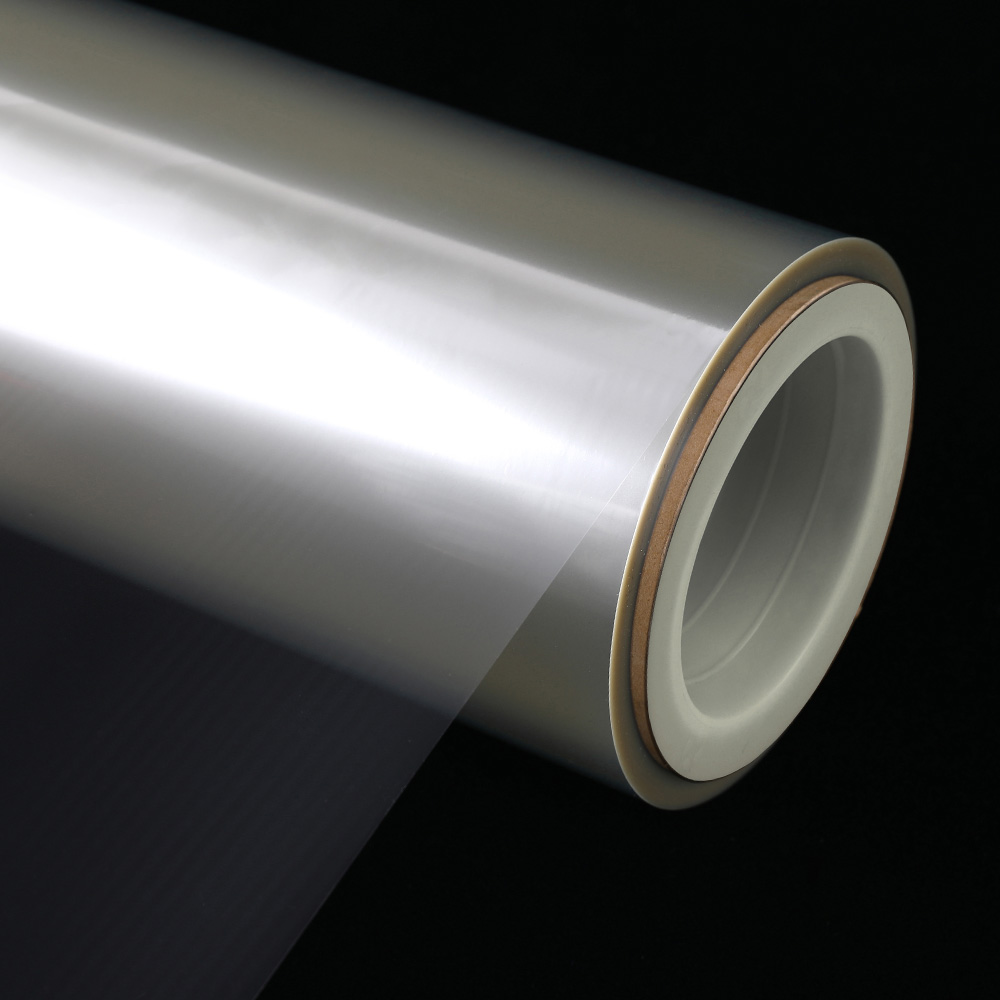
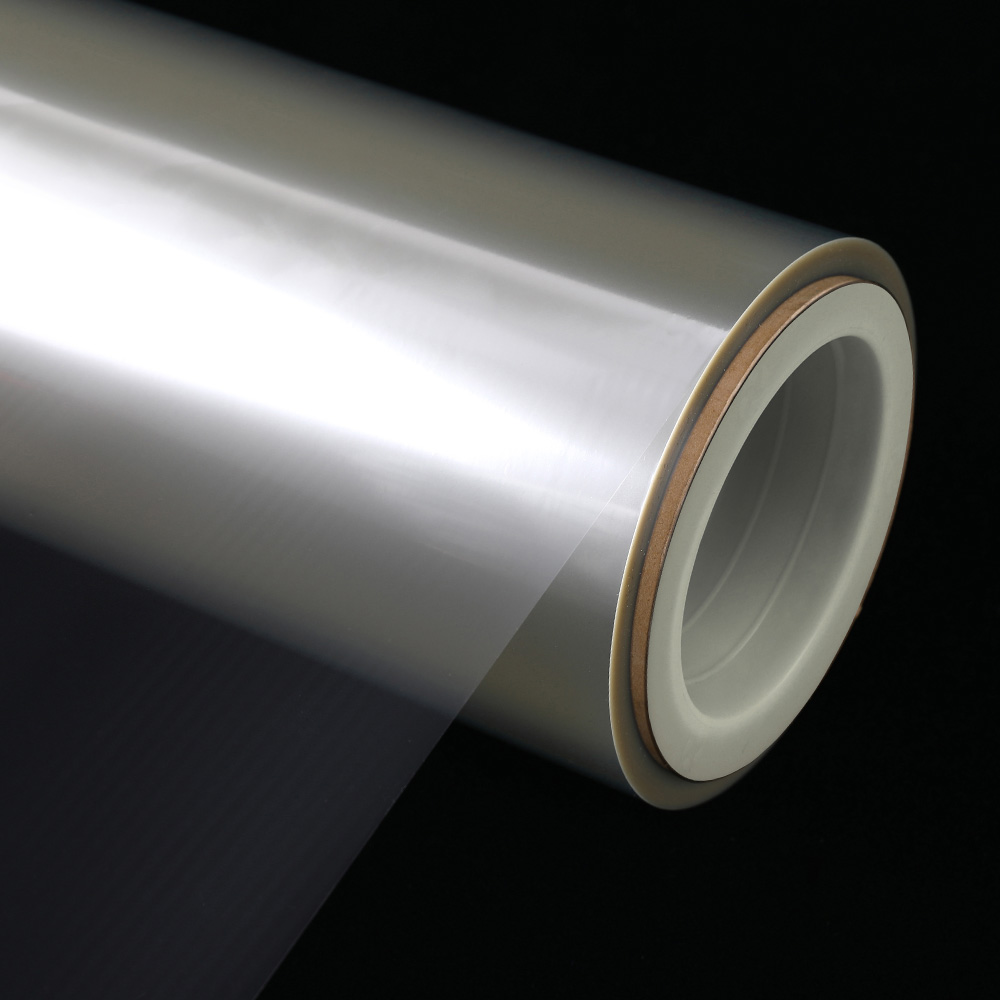
A wound roll of engineered polyester film prepared for high-temperature processing.
Across these applications, the common thread is that failure rarely happens through outright melting. It happens through gradual dimensional drift, where the film shrinks a fraction of a percent per cycle until registration is lost or a laminate bond weakens.
Comparing Maximum Continuous-Use Temperatures Across Film Categories
Different film chemistries and heat-setting processes yield very different ceilings for continuous-use temperature. The chart below summarizes typical values reported for five common film categories used in demanding thermal environments, including film PET high temperature grades used in masking and industrial lamination.
CPET film sits at the top of this comparison because its crystallized structure is specifically engineered for repeated oven exposure in tray and container applications. Heat-stabilized and Melinex-type grades occupy the mid-range, offering a balance of flexibility and thermal ceiling suited to lamination and masking work.
How High Bonding Metallized Film Is Engineered for Thermal and Adhesive Performance
Producing a high bonding metallized film requires more process control than standard film extrusion, because the metallized layer must remain adhered through both the deposition heat and any downstream lamination heat. The sequence below outlines the typical stages involved.
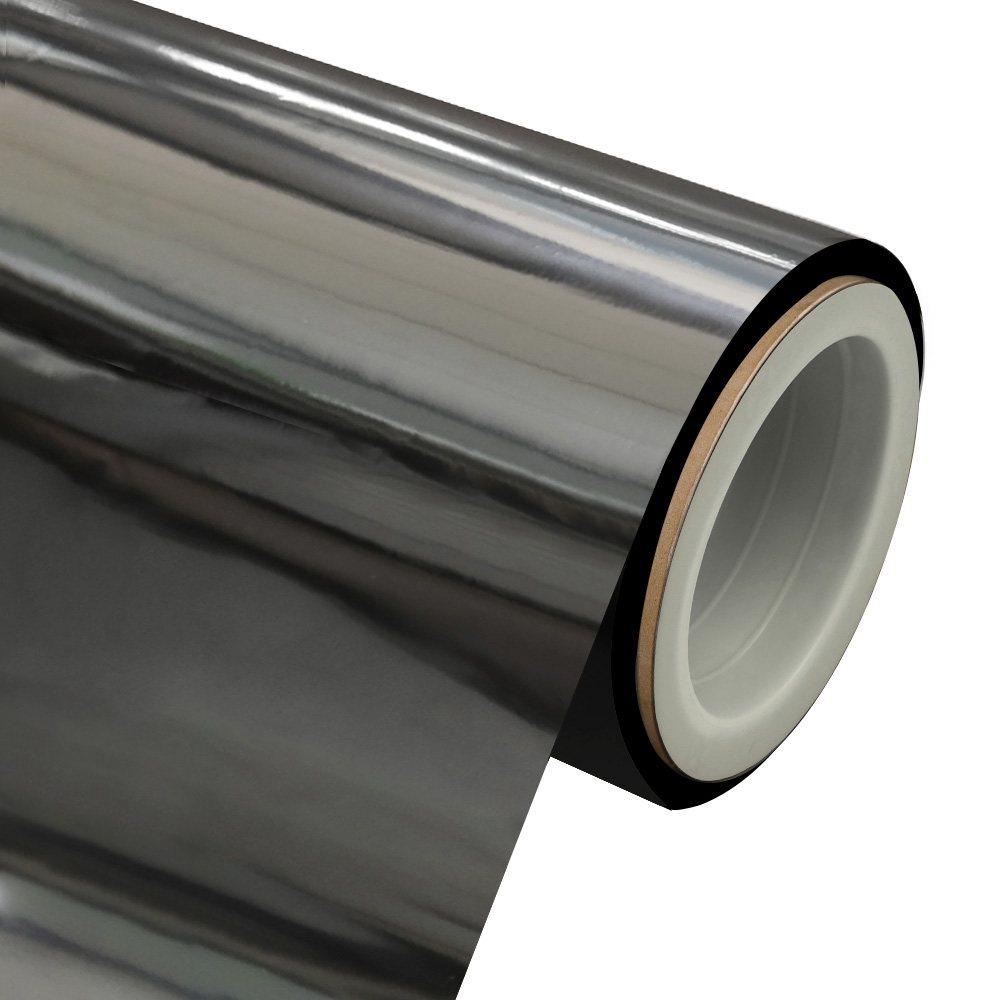
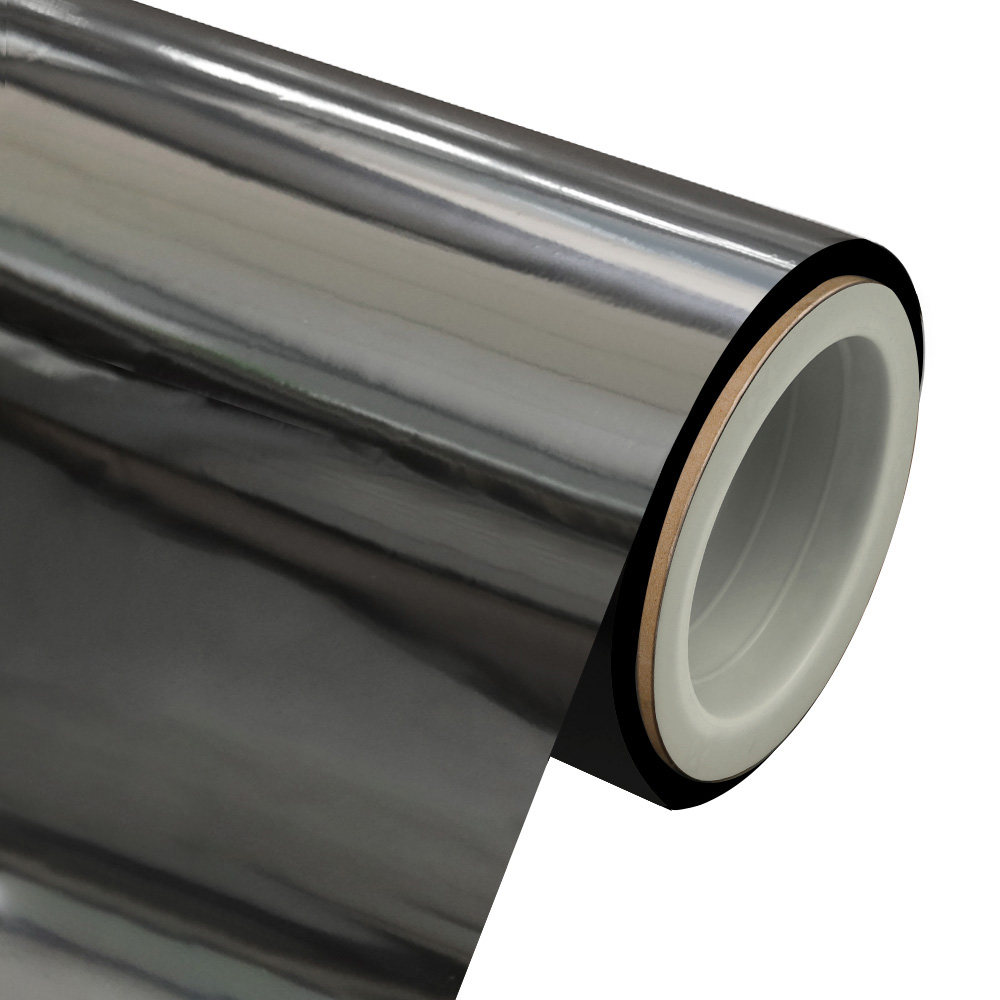
Metallized polyester film after vacuum deposition, ready for surface treatment.
The surface treatment step is where bonding performance is largely determined. Corona or plasma treatment increases surface energy so that the deposited metal layer, and any adhesive applied afterward, forms a stronger mechanical and chemical anchor. Skipping or under-running this step is one of the most common causes of delamination under heat.
Thermal Shrinkage Behavior Under Progressive Temperature Exposure
Shrinkage is the single most cited failure mode in registration-sensitive processes such as printing and lamination. The line chart below tracks shrinkage percentage for a standard film against a heat-stabilized film across a rising temperature range.
Below 140C, both film types show minimal shrinkage differences, which is why standard grades remain suitable for light lamination work. Above 160C the curves separate sharply, and by 200C the standard film shows roughly three times the shrinkage of the heat-stabilized grade, a difference large enough to shift print registration or crack a metallized layer.
Tensile Strength Retention Across Film Thickness Grades
Thickness also plays a measurable role in how well a film holds mechanical properties after heat exposure. The bar chart below shows tensile strength retention, expressed as a percentage of the original room-temperature value, after sustained heat exposure across four common thickness grades.
Thicker gauges retain more of their original tensile properties after heat cycling because the thermal gradient across the film cross-section has proportionally less impact on the core structural layer. This is a key reason heavier gauge polyester film is specified for applications where the substrate carries structural load, such as backing tape or industrial release liners.
How to Match Film Selection to Your Thermal Processing Requirements
A film specification that looks adequate at room temperature can still be the weakest link in a thermal process. Selection should always be driven by the peak temperature the film will see, not the average.
When narrowing down a film specification for a heat-intensive process, it helps to work through a short set of practical checks rather than relying on a single headline temperature rating.
- Confirm the peak temperature the film will experience, including brief spikes during startup or defect events, not just the steady-state operating temperature.
- Check shrinkage data at the specific temperature range relevant to the process, since shrinkage does not increase linearly with heat.
- Match thickness grade to the mechanical load the film carries during and after the thermal step.
- For metallized or laminated constructions, verify bond strength data at elevated temperature, not only at ambient conditions.
- Where repeated thermal cycling is expected, prioritize dimensional stability data over single-pass shrinkage figures.
Following this sequence generally narrows the field to one or two viable film categories before cost or availability even enters the conversation, which keeps the selection process grounded in performance rather than price alone.
Frequently Asked Questions About Heat-Resistant Polyester Films
Q1: What temperature range is considered high-temperature for PET film?
Standard PET film is generally rated for continuous use up to around 105 degrees Celsius, while heat-stabilized and crystallized grades can extend that range to 150 to 200 degrees Celsius depending on formulation and processing.
Q2: Why does metallized film need special heat resistance?
The metallized layer is applied through a vacuum deposition process that itself involves heat, and the finished film often faces additional heat during lamination. If the base film shrinks or loses surface stability during either step, the metal layer can crack or delaminate.
Q3: Does thicker film always mean better heat resistance?
Thicker gauges generally retain more mechanical strength after heat exposure, but heat resistance also depends on how the film was heat-set during production, so thickness alone does not guarantee a higher temperature rating.
Q4: How is thermal shrinkage typically measured?
Shrinkage is usually measured by exposing a sample to a set temperature for a defined time and comparing the dimensional change in both the machine and cross directions before and after exposure.
Q5: Can heat-resistant film be used for food-contact packaging?
Crystallized polyester film grades are widely used in ovenable food packaging because they combine low shrinkage with the dimensional stability needed to hold shape through cooking or reheating cycles.
Q6: What is the difference between dimensional stability and heat resistance?
Heat resistance describes how well a film tolerates elevated temperature overall, while dimensional stability specifically measures how little the film shrinks or distorts under that heat, making it one component of overall heat resistance rather than a separate property.

Are you ready to work with us?
Start a project
- Quick Links
- Company Profile
- Company Culture
- Qualification
- FAQ
- Product
- ALOx Films
- VMPET
- VMCPP
- VMBOPP
- Coated Film
- Contact Us
- Tel: +86-13456263964
-
Phone : +86-0573-87783633
Phone : +86-0573-87780583 - E-mail : [email protected]
- Address: 6th Xinhe Road, Xieqiao Town, Haining City, Zhejiang Province, China

