

 English
  中文简体
中文简体 
How Is BOPP Film Redefining Recyclability in Flexible Packaging?
 2026.07.09
 Industry News
The Shifting Landscape of Flexible Packaging Sustainability
Flexible packaging has spent the last decade optimizing for weight, cost, and shelf performance. That optimization race is now colliding with a second priority: end-of-life recovery. Regulators across major consumer markets are tightening extended producer responsibility rules, and retailers are pushing recyclability targets onto their supply chains rather than absorbing the cost themselves.
This shift matters because most flexible films historically combined several polymer layers to achieve barrier and mechanical properties. That multi-layer approach is exactly what makes conventional recycling streams reject them. Understanding flexible packaging trends today means understanding a pivot away from performance-only design toward performance-plus-recovery design.
Mono-Material Design PCR Integration Barrier Coatings Circular Sourcing
Is BOPP Recyclable? Understanding Mono-Material Film Architecture
The question of is bopp recyclable comes up constantly because biaxially oriented polypropylene sits at the center of the mono-material conversation. On its own, a single layer of BOPP is chemically compatible with polypropylene recycling streams. The complication arises when BOPP is laminated to polyethylene, metallized layers, or adhesive systems that are not polypropylene-based.
Film producers addressing this issue are converging on a few practical strategies:
- Replacing laminating adhesives with polypropylene-compatible tie layers so the entire structure stays within one resin family
- Swapping metallized barrier layers for coated alternatives that can be separated or that share polymer chemistry with the base film
- Reducing overall layer count so sorting facilities can identify the dominant resin more reliably through optical sorting
None of these changes are free. A mono-material BOPP structure typically needs a thicker base film or an added functional coating to recover the barrier properties that a multi-layer laminate previously delivered. That trade-off is the central engineering problem in mono-material packaging today.
PCR Plastic Recycling: Turning Post-Consumer Waste Into Usable Feedstock
PCR plastic recycling refers to the process of collecting, sorting, cleaning, and reprocessing plastic that has already been used by a consumer and discarded, then reintroducing it as raw material. For flexible film, this is harder than it sounds. Post-consumer plastic film is lightweight, easily contaminated with food residue, and often mixed with other polymer types before it ever reaches a sorting facility.
9-15% Typical PCR content achievable in film without major property loss
30%+ PCR content achievable with reinforced mono-material structures
2-3x Sorting cost difference between clean rigid PCR and mixed film PCR
Working with material pcr streams also means accepting some variability in color, odor, and mechanical consistency batch to batch. Film converters typically manage this by blending recycled resin with virgin resin at a fixed ratio, then validating each batch against tensile strength and seal integrity specifications before it goes into production.
Packaging recyclability is no longer judged only by what happens at the point of sale. It is judged by what a material recovery facility can actually do with the film once a consumer throws it away.
Coated Film and High Barrier Film: Where Protection Meets Circularity
Barrier performance and recyclability have traditionally pulled in opposite directions. A coated film approach offers one way to reconcile them, since a thin functional coating applied to a single polymer substrate can deliver oxygen or moisture barrier without introducing a second incompatible polymer layer.
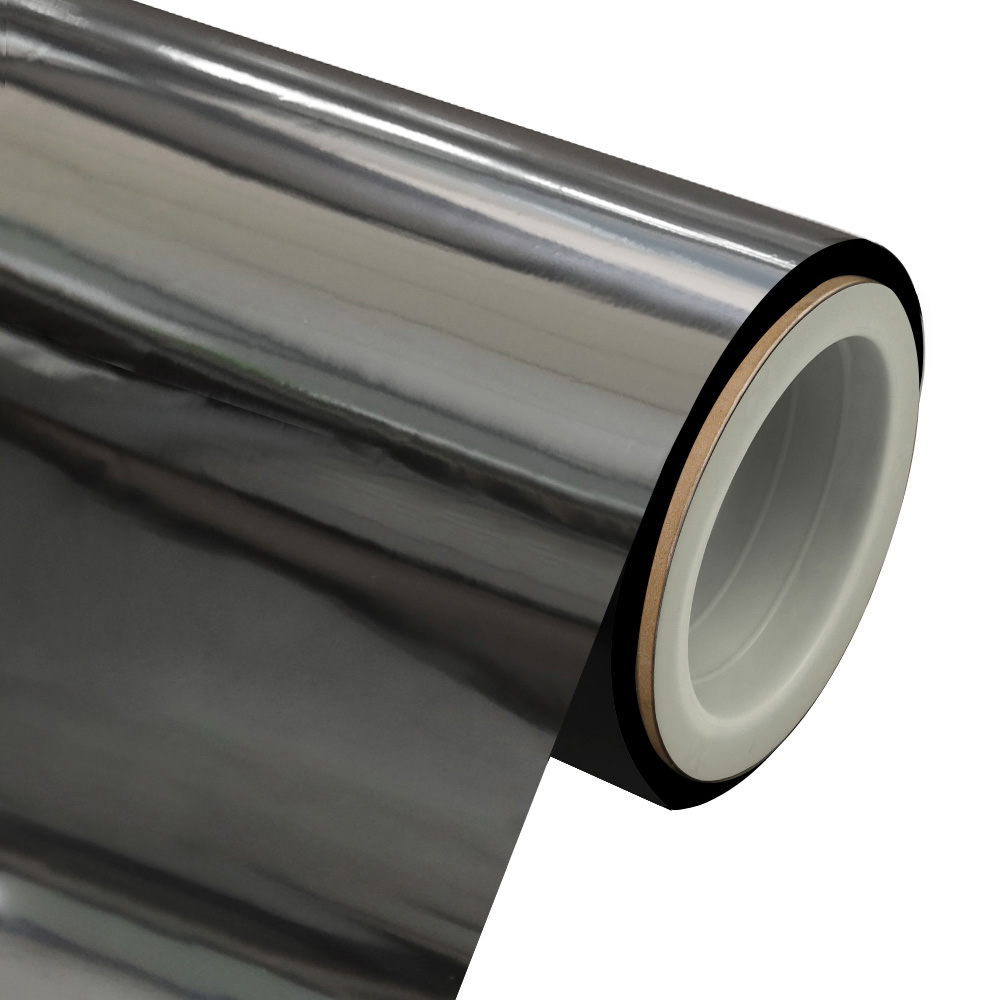
For applications demanding stronger protection, a high barrier film structure is still often necessary, particularly for products sensitive to oxygen ingress or moisture transfer over long shelf life periods. The sustainability challenge here is developing recyclable barrier coatings that hold up under real transport and storage conditions while remaining compatible with existing recycling infrastructure.
Several coating categories are gaining traction as replacements for traditional metallized or multi-polymer barrier layers:
| Coating Type | Barrier Function | Recycling Compatibility |
|---|---|---|
| Polymer-based barrier coating | Moisture and oxygen resistance | High, same-family resin |
| Inorganic oxide coating | Strong oxygen barrier | Moderate, thin layer tolerated |
| Water-based dispersion coating | Grease and moisture resistance | High, water-soluble removal |
Brands evaluating biodegradable barrier films as an alternative path should note that biodegradability and recyclability are not the same goal, and a structure optimized for one may perform poorly in the other's recovery system.
BOPE Masterbatch and the Emergence of Polyethylene-Based Barrier Systems
Bope masterbatch formulations are becoming a practical answer to the mono-material challenge for brands that want to stay within the polyethylene recycling stream rather than the polypropylene stream. Biaxially oriented polyethylene film, when paired with a masterbatch designed to improve stiffness and clarity, can approach some of the mechanical performance previously reserved for oriented polypropylene or oriented polyester films.
The masterbatch itself typically carries additives that address three known weaknesses of standard polyethylene film:
- Low stiffness, corrected through nucleating and orientation-enhancing additives
- Limited optical clarity, corrected through clarifying agents compatible with the base resin
- Poor high-temperature dimensional stability, addressed through crystallinity-modifying additives
Because the entire structure remains polyethylene, a polyethylene-based mono-material laminate using BOPE as the outer layer and a polyethylene sealant layer can move through existing polyethylene film recycling streams without additional sortation steps.
Comparing Material Pathways for Recyclable Flexible Packaging
Choosing between these approaches depends heavily on the product being protected, the required shelf life, and the recycling infrastructure available in the target market.
| Structure Type | Recyclability | Barrier Strength | PCR Compatibility | Typical Use |
|---|---|---|---|---|
| Mono-material BOPP | High | Moderate | Moderate | Dry goods, snack film |
| Coated single-substrate film | High | Moderate to High | High | Confectionery, bakery |
| Traditional multi-layer laminate | Low | High | Low | Long shelf-life or wet products |
| BOPE-based mono-material | High | Moderate | High | Frozen and refrigerated packaging |
From Waste Stream to Recycled Packaging: A Process Overview
The path a discarded film takes back into new packaging involves several distinct stages, and a break at any single stage removes that material from the circular loop entirely.
Flexible Packaging Trends Shaping the Future of Flexible Packaging
Looking at where converters and brand owners are placing investment, a few consistent directions stand out as defining the future of flexible packaging:
- Design-for-recycling guidelines becoming a standard checklist item during structure development, rather than an afterthought before launch
- Increasing minimum PCR content requirements written directly into retailer packaging specifications
- Growth in chemical recycling capacity aimed specifically at mixed film waste that mechanical recycling cannot process
- Wider adoption of digital watermarking and near-infrared markers to improve sorting accuracy for film-based packaging
These trends point toward a circular economy model where packaging is designed with its second life planned from the start, rather than treated as a single-use afterthought once it leaves the shelf.
Practical Guidance for Brands Transitioning to Recyclable Structures
Moving from a conventional multi-layer laminate to a recyclable mono-material or coated structure is rarely a simple substitution. A few steps tend to reduce friction during the transition:
- Run barrier and seal-strength testing on the new structure under the exact storage and transport conditions the product will face, not just standard lab conditions
- Confirm with regional recycling bodies that the intended structure actually qualifies as recyclable in the markets where the product will be sold
- Pilot the new structure on a limited product line before converting an entire portfolio, since machine settings and seal parameters often need adjustment
- Document the resin composition clearly for downstream sorting facilities and for on-pack recyclability labeling
Frequently Asked Questions
Q1: Is BOPP recyclable in standard municipal recycling programs?
A single-layer BOPP film is chemically recyclable within polypropylene streams, but it only qualifies in municipal programs if the collection infrastructure specifically accepts flexible film, which varies significantly by region.
Q2: How much PCR content can flexible film realistically contain?
Most commercial film structures can incorporate a moderate percentage of PCR resin without losing critical mechanical properties, while reinforced mono-material structures can support a higher share.
Q3: Does a coated film always perform worse than a laminated film?
Not necessarily. A well-designed coated film can match moderate barrier requirements while offering a clear recycling advantage, though very high barrier applications may still require a laminated or high barrier film structure.
Q4: What is the main advantage of BOPE masterbatch over standard polyethylene film?
BOPE masterbatch improves stiffness, clarity, and dimensional stability of polyethylene film, allowing it to replace less recyclable structures while staying within a single polymer family.
Q5: Are biodegradable barrier films a substitute for recyclable film design?
They serve a different end-of-life pathway. Biodegradable films are designed to break down under specific conditions, while recyclable films are designed to reenter existing material recovery systems, and the two should not be treated as interchangeable solutions.

Are you ready to work with us?
Start a project
- Quick Links
- Company Profile
- Company Culture
- Qualification
- FAQ
- Product
- ALOx Films
- VMPET
- VMCPP
- VMBOPP
- Coated Film
- Contact Us
- Tel: +86-13456263964
-
Phone : +86-0573-87783633
Phone : +86-0573-87780583 - E-mail : [email protected]
- Address: 6th Xinhe Road, Xieqiao Town, Haining City, Zhejiang Province, China

