

 English
  中文简体
中文简体 
How is single side PVDC coated PET film classified based on thickness and barrier properties?
 2025.12.24
 Industry News
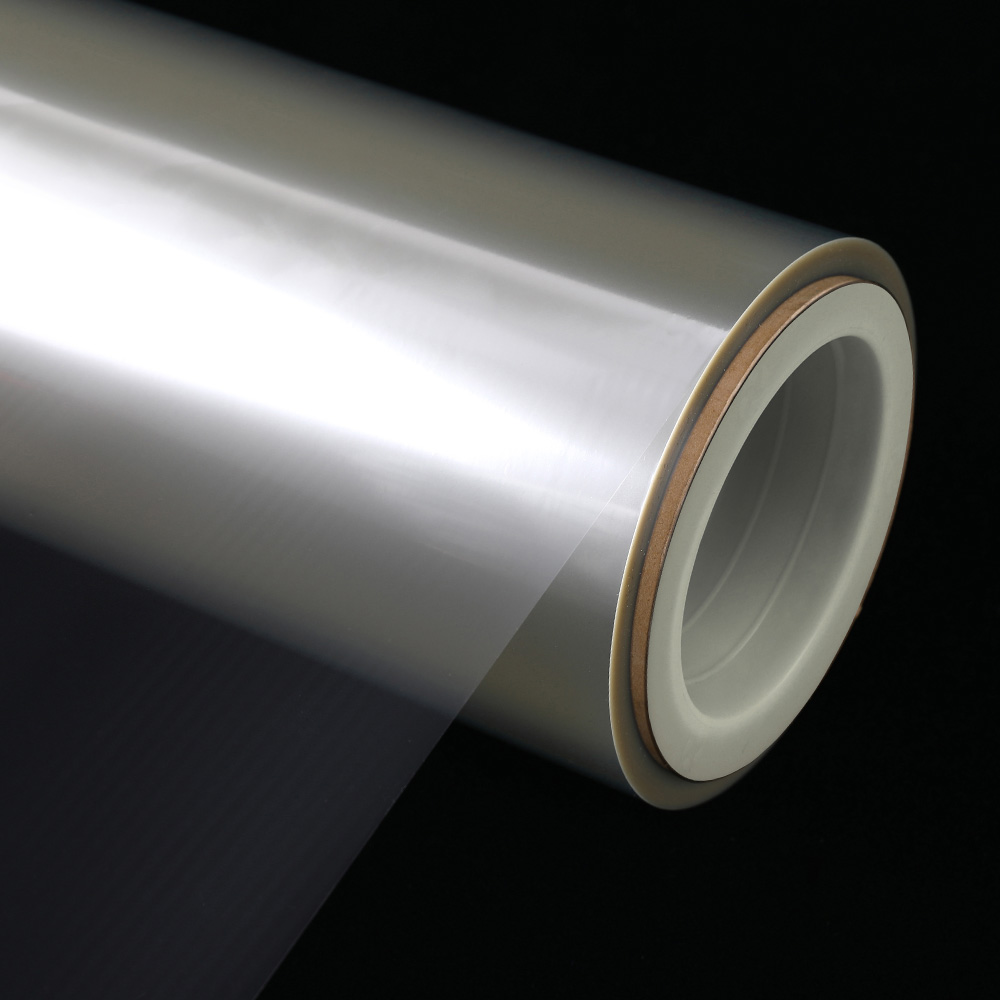
Single side PVDC coated PET film has become an essential material in the packaging and industrial sectors due to its exceptional barrier properties and versatile performance. This film combines the mechanical strength and clarity of PET (polyethylene terephthalate) with the excellent chemical and moisture resistance of PVDC (polyvinylidene chloride) coatings. Its wide applicability ranges from food packaging to pharmaceutical and industrial uses.
Understanding how single side PVDC coated PET film is classified based on thickness and barrier properties is critical for manufacturers, buyers, and end-users who require tailored performance for specific applications. Proper classification ensures product selection aligns with performance requirements, durability, and cost considerations.
Overview of single side PVDC coated PET film
Single side PVDC coated PET film is a biaxially oriented PET film coated on one surface with a thin layer of PVDC. The coating enhances the PET film’s natural barrier capabilities, particularly against oxygen, moisture, and aromas. This combination provides an effective solution for sensitive products, extending shelf life and maintaining quality.
The PVDC coating can vary in thickness and formulation, resulting in films with different barrier properties, chemical resistances, and mechanical behaviors. These variations allow the film to meet specific requirements in packaging, industrial applications, and specialty coatings.
Classification based on thickness
Standard PET base thickness
The base PET film serves as the structural backbone of the product. Single side PVDC coated PET film is typically produced in base PET thicknesses ranging from 12 μm to 50 μm or higher. The thickness of the PET base affects the film’s:
- Tensile strength: Thicker films provide higher mechanical resistance.
- Dimensional stability: Stability under temperature and stress increases with thickness.
- Handling properties: Thicker films are easier to process in lamination and converting equipment.
PVDC coating thickness
The PVDC layer is applied to one surface of the PET film and generally ranges from 1 μm to 10 μm. The coating thickness directly affects the barrier properties:
- Thin coatings (1–3 μm): Offer moderate moisture and gas barrier, suitable for less sensitive products.
- Medium coatings (4–6 μm): Provide higher protection, often used in food packaging with moderate shelf-life requirements.
- Thick coatings (7–10 μm): Deliver superior barrier performance, ideal for long shelf-life items or highly sensitive products such as pharmaceuticals.
The combination of base PET thickness and PVDC coating thickness allows manufacturers to tailor the film’s overall performance, balancing mechanical strength, flexibility, and barrier efficiency.
Classification based on barrier properties
Barrier properties are the most critical factors when selecting single side PVDC coated PET film. The classification focuses on moisture vapor transmission rate (MVTR), oxygen transmission rate (OTR), and chemical resistance.
Moisture barrier
PVDC coatings greatly reduce water vapor transmission through PET films. The thicker the PVDC layer, the lower the MVTR, making the film suitable for moisture-sensitive products. Single side PVDC coated PET film is typically classified as:
- Low barrier: Suitable for products with short storage times or low moisture sensitivity.
- Medium barrier: Suitable for packaged snacks, confectionery, or semi-perishable items.
- High barrier: Essential for pharmaceuticals, vacuum-packed foods, and products requiring extended shelf life.
Oxygen barrier
Oxygen sensitivity is critical for many food and chemical products. PVDC coatings on PET significantly reduce oxygen penetration. Classification includes:
- Moderate OTR: Sufficient for products with low oxidation risk.
- High OTR resistance: For products prone to spoilage, such as cured meats, dairy, or delicate oils.
Chemical resistance
The PVDC layer also provides resistance to oils, fats, and certain chemicals. Single side PVDC coated PET film can be classified according to:
- Low chemical resistance: Suitable for dry products or light exposure to oils.
- Medium chemical resistance: Suitable for processed foods with moderate oil content.
- High chemical resistance: Designed for industrial applications or food products with strong fatty or acidic content.
This classification allows users to select a film that not only protects against moisture and oxygen but also ensures compatibility with the packaged product.
Additional classification factors
Thermal stability
The thermal resistance of single side PVDC coated PET film depends largely on the PET base. Films are classified as:
- Low-temperature resistance: Suitable for chilled or refrigerated products.
- Medium-temperature resistance: Suitable for room temperature storage or moderate heat applications.
- High-temperature resistance: Can withstand heat during sterilization or hot-fill processes.
Transparency and gloss
While most single side PVDC coated PET films maintain high transparency, some applications require matte or tinted finishes. Films can be classified by optical properties, influencing product presentation and consumer perception.
Processability
Films can also be classified based on their suitability for converting processes:
- Laminating compatibility: How well the film bonds with other layers in multilayer packaging.
- Printing compatibility: Surface energy of the PVDC coating affects ink adhesion and clarity.
- Heat-sealing properties: Determines suitability for automated packaging lines.
These classifications provide guidance for manufacturers, helping to ensure that the film performs as expected throughout the production and packaging process.
Typical applications based on classification
| Classification | Thickness (PET + PVDC) | Barrier Properties | Applications |
|---|---|---|---|
| Low barrier | PET: 12–20 μm, PVDC: 1–3 μm | Moderate moisture and oxygen | Snack wrappers, short shelf-life products |
| Medium barrier | PET: 18–30 μm, PVDC: 4–6 μm | High moisture and oxygen | Confectionery, frozen food packaging |
| High barrier | PET: 25–50 μm, PVDC: 7–10 μm | Maximum moisture, oxygen, chemical | Pharmaceuticals, long shelf-life foods |
This table demonstrates how thickness and barrier properties guide application-specific selection for single side PVDC coated PET film.
Conclusion
The classification of single side PVDC coated PET film based on thickness and barrier properties is a critical factor in material selection. The interplay between PET base thickness and PVDC coating determines mechanical strength, moisture and oxygen barrier performance, chemical resistance, and processability. By evaluating thickness, barrier performance, and additional factors such as thermal stability and optical properties, manufacturers and buyers can select films that meet specific requirements for food, pharmaceutical, and industrial applications.
Single side PVDC coated PET film remains a versatile and reliable solution for protecting sensitive products, and understanding its classification ensures optimized performance, extended shelf life, and efficient production processes.

Are you ready to work with us?
Start a project
- Quick Links
- Company Profile
- Company Culture
- Qualification
- FAQ
- Product
- ALOx Films
- VMPET
- VMCPP
- VMBOPP
- Coated Film
- Contact Us
- Tel: +86-13456263964
-
Phone : +86-0573-87783633
Phone : +86-0573-87780583 - E-mail : [email protected]
- Address: 6th Xinhe Road, Xieqiao Town, Haining City, Zhejiang Province, China

