

 English
  中文简体
中文简体 
How PET Film and Polyester Film Are Engineered for Industrial and Commercial Performance
 2026.07.23
 Industry News
Understanding the Role of PET Film in Modern Manufacturing
Manufacturers across packaging, electronics, and industrial insulation sectors rely on pet film because it offers a dependable balance of mechanical strength, clarity, and chemical resistance. Unlike many commodity plastics, this material retains dimensional stability across a wide temperature range, which is why it shows up in applications as varied as flexible circuit boards and food-grade laminates.
At its core, polyester film is produced through a biaxial orientation process that stretches the polymer sheet in two directions simultaneously. This step realigns the molecular chains, producing a film with tensile strength values often exceeding 200 MPa and elongation properties that make it resistant to tearing during high-speed converting operations.
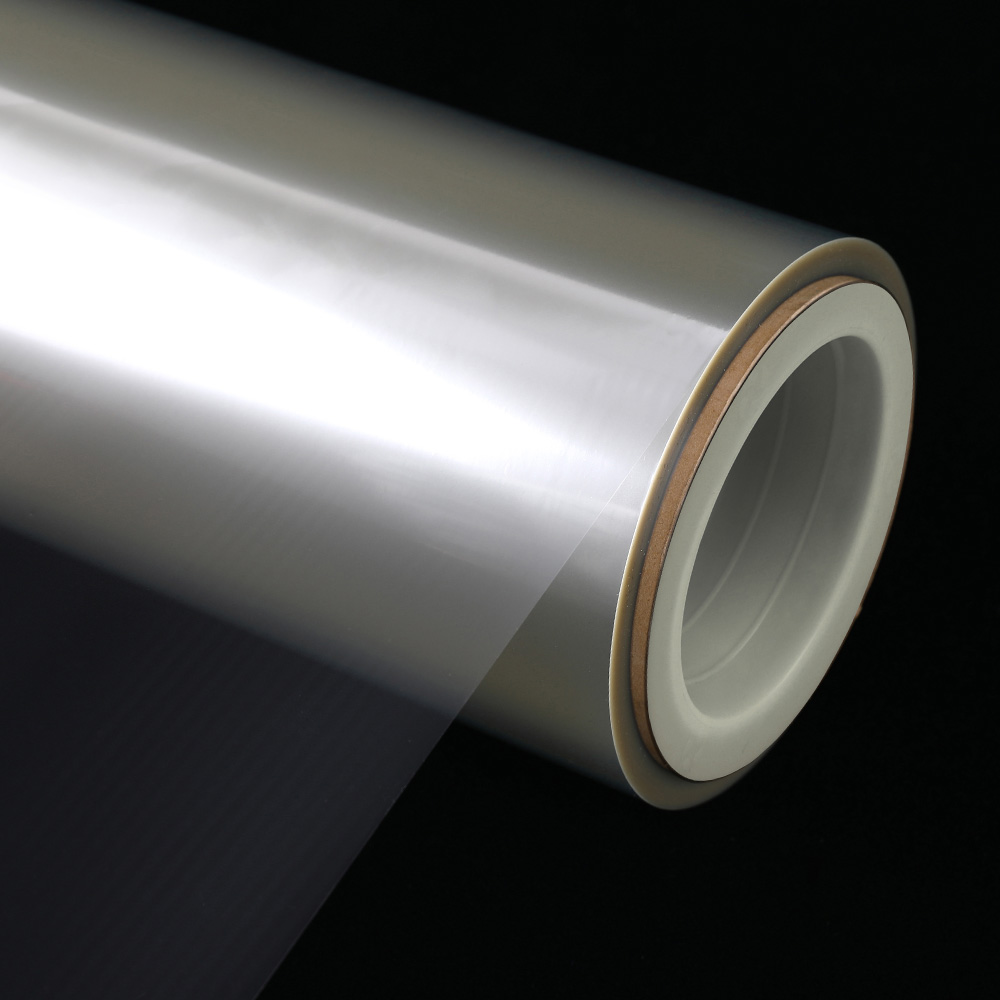
What sets this material apart from alternatives like polypropylene or polyethylene film is its combination of optical clarity and barrier performance. A standard 12-micron polyester substrate can achieve haze values below 3 percent while still providing meaningful resistance to oxygen and moisture transmission, making it a practical middle ground between rigid and flexible packaging formats.
Core Material Properties That Drive Selection
Engineers and packaging designers typically evaluate several measurable properties before specifying a polyester substrate for a project. The table below summarizes the properties most commonly referenced in technical data sheets and how they translate into real-world performance.
| Property | Typical Range | Practical Effect |
|---|---|---|
| Tensile Strength | 180 to 250 MPa | Resists stretching or breaking during high-speed printing and lamination |
| Thermal Stability | Stable up to 150 degrees Celsius | Suitable for retort pouches and heat-sealed structures |
| Optical Clarity | Haze below 3 percent | Preferred for window packaging and label overlays |
| Dielectric Strength | High insulation resistance | Used in capacitor and cable wrapping applications |
| Chemical Resistance | Resistant to oils and diluted acids | Performs well in industrial wrapping and food contact layers |
Practical note: Film thickness, typically measured in microns, has a direct relationship with barrier performance and cost. Thinner gauges reduce material use but may require additional coatings to maintain barrier targets for oxygen-sensitive products.
Why Metallized Polyester Film Improves Barrier Performance
When a project calls for enhanced light and gas barrier properties without the weight of foil laminates, converters often turn to metallized polyester film. This variant is produced by depositing a thin layer of aluminum onto the polyester substrate under vacuum, typically achieving a metal layer thickness of only a few hundred angstroms.
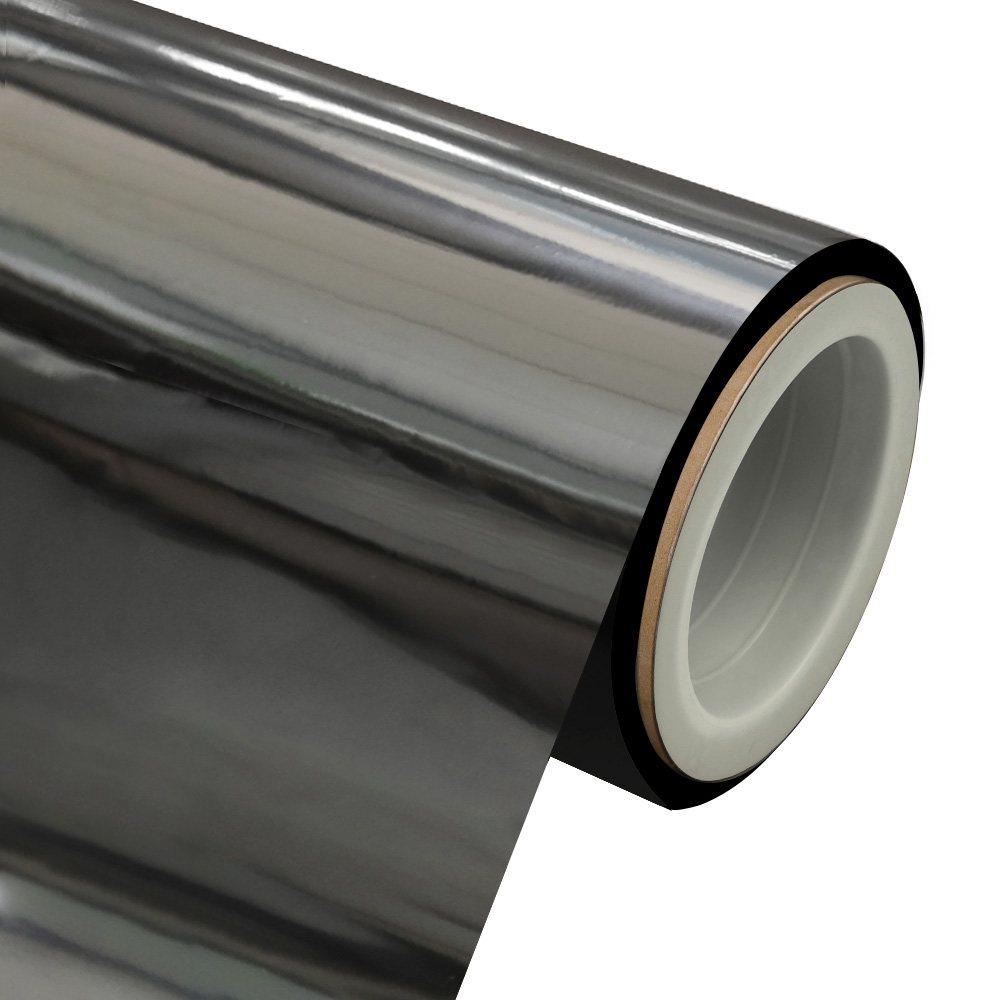
The resulting structure delivers oxygen transmission rates that can drop by more than 90 percent compared to uncoated film, while also providing a reflective surface that improves shelf presentation for snack packaging, coffee pouches, and pharmaceutical blister backing. Because the metal layer is applied at a molecular scale, the film retains flexibility and can still be printed, slit, and laminated using standard converting equipment.
Common Metallization Applications
- Flexible packaging for moisture and oxygen-sensitive foods
- Insulation backing for building and HVAC systems
- Decorative and reflective labeling stock
- Static shielding layers in electronic component packaging
How Lamination Structures Are Built for Multilayer Films
Industrial converters rarely use a single film layer in isolation. Instead, they build laminated structures that combine the strength of polyester with the sealing properties of polyethylene or the barrier characteristics of a metallized layer. The diagram below illustrates a typical three-layer lamination used in flexible food packaging.
Each layer in this structure serves a distinct purpose. The outer polyester layer resists abrasion and carries printed graphics, the middle metallized layer blocks light and gas transmission, and the inner polyethylene layer provides a reliable heat seal. Adhesive lamination or extrusion coating is used to bond these layers without compromising the barrier properties of the metallized layer.
Comparing Film Types for Different Industrial Needs
Selecting the right substrate depends on the specific demands of the application. The comparison below highlights how polyester film variants differ from one another when evaluated against common industrial criteria.
| Film Type | Barrier Level | Typical Thickness | Best Suited For |
|---|---|---|---|
| Clear Polyester Film | Moderate | 12 to 50 microns | Window packaging, label overlays |
| Metallized Polyester Film | High | 12 to 23 microns | Snack pouches, insulation backing |
| Coated Polyester Film | High to Very High | 15 to 30 microns | Retort packaging, pharmaceutical blister lids |
| Heat-Sealable Polyester Film | Moderate | 19 to 36 microns | Lidding stock, seal-through applications |
Industrial Applications Beyond Packaging
While packaging tends to dominate discussions of polyester film, its industrial applications extend well beyond the food and consumer goods sectors. The following list outlines sectors where this material plays a functional, often invisible, role.
- Electrical insulation: Used as a dielectric layer in capacitors, motor winding insulation, and cable wraps due to its high dielectric strength and thermal stability.
- Solar panel backsheets: Multilayer polyester structures protect photovoltaic cells from moisture ingress while maintaining flexibility over decades of outdoor exposure.
- Printed circuit substrates: Flexible circuits and membrane switches often use polyester film as a base layer because it withstands soldering temperatures without warping.
- Industrial masking and release liners: The dimensional stability of the film makes it suitable for precision masking during coating and painting operations.
- Magnetic and optical media substrates: Historical and specialty applications continue to use polyester as a carrier layer for coatings that require a smooth, stable base.
Commercial Packaging Applications and Design Considerations
In commercial packaging, converters balance shelf appeal against functional performance. A polyester-based structure can be printed with high-resolution graphics using gravure or flexographic methods, and the film's dimensional stability keeps registration accurate even at high press speeds.
Print Registration
Low shrinkage during printing keeps multi-color graphics aligned across long production runs.
Seal Integrity
Laminated structures with a polyethylene inner layer provide consistent heat seals across varying fill temperatures.
Shelf Life Extension
Barrier layers reduce oxygen and moisture ingress, helping extend the usable shelf life of packaged goods.
Designers should also account for the interaction between film gauge and machine speed. Thinner films run faster on packaging lines but may require tension control adjustments to avoid stretching or wrinkling during unwinding, particularly on older equipment not calibrated for lightweight substrates.
Processing and Converting Considerations
Converting polyester film into finished packaging or industrial components involves several process steps, each with its own technical requirements. The table below summarizes common converting methods and the operational factors that affect output quality.
| Process | Key Factor | Common Issue if Misapplied |
|---|---|---|
| Slitting | Blade sharpness and tension control | Edge curling or dust generation |
| Printing | Surface treatment level (corona or plasma) | Poor ink adhesion |
| Lamination | Adhesive coating weight and cure time | Delamination under stress |
| Metallizing | Vacuum chamber pressure and deposition rate | Uneven optical density |
Surface treatment is particularly important for printed applications. Untreated polyester film has a relatively low surface energy, which limits ink and adhesive bonding. Corona or plasma treatment raises the surface energy temporarily, giving inks and coatings a window in which to properly wet out and adhere to the film.
Quality Control Practices for Film Manufacturing
Consistent film quality depends on process controls applied throughout production. Common quality checkpoints include:
- Thickness gauging using non-contact sensors during extrusion and stretching
- Haze and gloss measurement to confirm optical consistency between production lots
- Oxygen and moisture transmission rate testing on barrier-coated or metallized film
- Tensile and elongation testing to verify mechanical performance meets specification
- Adhesion testing on printed or laminated samples using standardized peel methods
Operational insight: Many converting facilities run in-line inspection systems that flag thickness variation in real time, allowing operators to adjust extrusion parameters before an entire roll falls outside tolerance.
Sustainability Considerations in Polyester Film Production
As packaging regulations tighten across many regions, manufacturers are increasingly evaluating recyclability alongside performance. Mono-material structures built entirely from polyester are gaining attention because they can be processed through existing PET recycling streams more easily than mixed-material laminates.
Reducing film gauge without sacrificing barrier performance is another active area of development. Advances in coating technology have allowed some barrier layers to be applied at thinner levels while maintaining transmission rate targets, which reduces overall material consumption per unit of packaging produced.
Frequently Asked Questions
Q1: What thickness range is typical for polyester film used in packaging?
Packaging applications commonly use polyester film in the 12 to 50 micron range, with thinner gauges chosen for lidding and lamination and thicker gauges used where standalone strength is required.
Q2: How does metallized polyester film differ from foil laminates?
Metallized film uses a thin vacuum-deposited metal layer on a polyester base, offering similar barrier and reflective properties to foil at a lower weight and with better flexibility during high-speed converting.
Q3: Can polyester film be recycled after use?
Mono-material polyester structures can typically be processed through PET recycling streams, though multilayer laminates combining different polymer types often require specialized separation processes.
Q4: Why is surface treatment necessary before printing on polyester film?
Untreated film has low surface energy, which limits ink adhesion. Corona or plasma treatment temporarily raises surface energy so printing inks and coatings bond properly.
Q5: What industries rely most heavily on polyester film for non-packaging uses?
Electronics, solar energy, and electrical insulation industries make extensive use of polyester film for its dielectric strength, thermal stability, and dimensional consistency.

Are you ready to work with us?
Start a project
- Quick Links
- Company Profile
- Company Culture
- Qualification
- FAQ
- Product
- ALOx Films
- VMPET
- VMCPP
- VMBOPP
- Coated Film
- Contact Us
- Tel: +86-13456263964
-
Phone : +86-0573-87783633
Phone : +86-0573-87780583 - E-mail : [email protected]
- Address: 6th Xinhe Road, Xieqiao Town, Haining City, Zhejiang Province, China

