English
  中文简体
中文简体 


Understanding the Demands of High-Speed Automated Packaging
Selecting the correct coated film or high barrier film for vertical form fill seal (VFFS), horizontal form fill seal (HFFS), or thermoforming machinery is a multidisciplinary challenge. It involves balancing mechanical properties, surface behavior, thermal characteristics, and barrier performance. A mismatch in any of these areas can lead to downtime, excessive scrap rates, or compromised product shelf life. This guide delivers practical, data-driven insights for engineers and procurement specialists working with vffs packaging film, hffs packaging, and thermoforming film supplier specifications.
Comparative Analysis: VFFS, HFFS, and Thermoforming Dynamics
Each packaging platform imposes distinct mechanical and thermal stresses on flexible packaging films. Understanding these differences is the first step toward film optimization.
Vertical Form Fill Seal (VFFS)
VFFS systems operate at high cyclic speeds (60–120 ppm typical). Film is pulled over a forming collar, filled vertically, and sealed through heated jaws. Critical parameters include coefficient of friction (COF) on both film sides—inner COF governs product flow, outer COF controls film transport over forming tubes. Optimal values: inner COF 0.25–0.35, outer COF 0.30–0.40.
Horizontal Form Fill Seal (HFFS)
In HFFS, film unwinds horizontally, product is placed on the lower web, and the top web seals under pressure. This platform demands excellent seal-through-contamination properties, especially for particulate foods. The sealing window must be at least 10°C to compensate for jaw temperature variations across the width.
Thermoforming Machinery
Thermoforming uses thermoform gauge films (typically 200–400 μm) that are heated, vacuum-formed into cavities, filled, and sealed with a lidding film. Key requirement: uniform thickness distribution (< ±5%) and elongation at break >300% at forming temperature. A reliable thermoforming film supplier provides detailed formability charts.
Typical Performance Ranges by Platform
| Parameter | VFFS | HFFS | Thermoforming |
|---|---|---|---|
| Film gauge (μm) | 40–90 | 50–120 | 200–450 |
| COF (dynamic) | 0.25–0.40 | 0.30–0.45 | 0.35–0.50 |
| Sealing window width | >12°C | >10°C | >15°C (form + seal) |
| Puncture resistance (N) | >2.5 | >3.0 | >5.0 (bottom web) |
| Typical speed (ppm) | 60–120 | 40–80 | 15–35 cycles |
High Barrier and Coated Films: Performance Differentiators
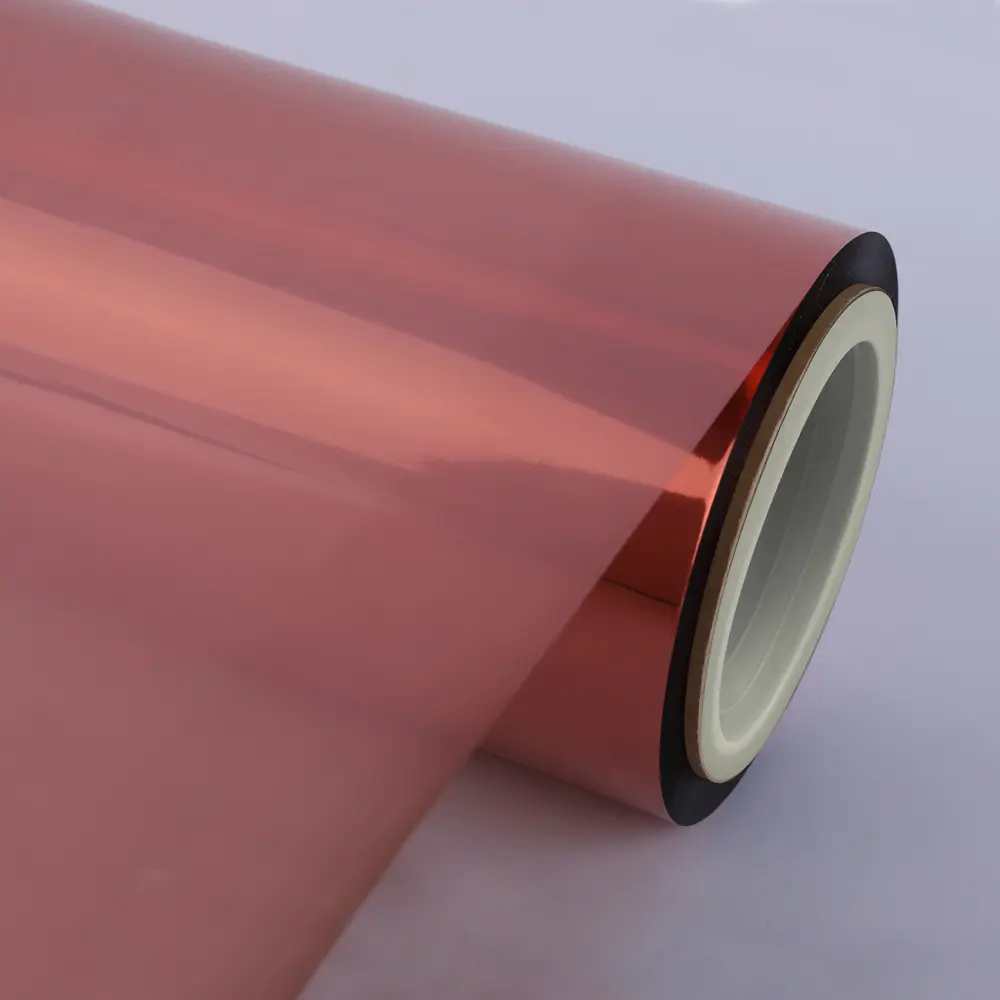
High barrier film structures (typically EVOH, aluminum oxide, or metallized layers) provide oxygen transmission rates (OTR) below 1 cm³/(m²·day) and water vapor transmission rates (WVTR) below 0.5 g/(m²·day). For extended shelf-life applications like modified atmosphere packaging (MAP), these barriers are non-negotiable.
Image reference: typical metallized PET film cross-section (light interference effect).
Coated Film Advantages in Automated Lines
Coated film solutions include acrylic, PVdC, and silicon oxide coatings. These modify surface energy to control COF without migrating additives. For high-speed VFFS, a coated outer layer reduces drag on forming collars by 18-22% compared to uncoated films. Acrylic coatings also extend the sealing window by lowering the initiation temperature (typically 105°C vs 115°C for uncoated PE).
How to Match Film Properties to Machine Requirements
Step 1: Define the Mechanical Stress Profile
For roll fed packaging applications, measure unwind tension (typical range 0.15–0.35 N/mm²). Films with high modulus (E > 600 MPa at 1% strain) resist stretching, crucial for accurate print registration in VFFS and HFFS. Thermoforming requires lower modulus at elevated temperatures (E < 200 MPa at 90°C).
Step 2: Evaluate Formability and Puncture Resistance
Thermoform gauge films should pass a deep-draw test (draw ratio 1:1.5 minimum). Puncture resistance, measured via ASTM F1306, should exceed 3N for flexible food packaging films containing sharp-edged items like pasta or frozen vegetables. In thermoforming, bottom web puncture values >5N are recommended for products with bone fragments or hard shells.
Step 3: Validate the Sealing Window
A broad sealing window (ΔT > 12°C) compensates for temperature fluctuations across heated jaws. Use hot-tack testing at 0.2s dwell time: minimum seal strength of 2 N/15mm should be achieved within a 15°C interval. This is especially critical for vffs packaging film operating at 100+ ppm.
Managing Coefficient of Friction (COF) for Uninterrupted Runability
COF is a dynamic property influenced by humidity, temperature, and film surface chemistry. For hffs packaging and VFFS lines, the ideal static COF range is 0.20–0.35, dynamic COF 0.25–0.40. Values below 0.15 cause slipping (registration errors); above 0.50 cause drag, wrinkling, or film tearing.
Practical Control Methods
- Use coated film with slip additives (erucamide or silica) dispersed in the surface layer. Coating uniformity should be within ±0.05 COF.
- Store films at 23±2°C and 50±5% RH for 24 hours before use to stabilize COF.
- For thermoforming, lower COF on the forming side (0.30–0.35) reduces friction against heated molds.
COF Troubleshooting Guide
| Observed Issue | Likely COF Range | Remedial Action |
|---|---|---|
| Film slips over forming tube | <0.18 | Increase nip roller pressure; use anti-slip coating |
| Wrinkles before sealing | 0.45–0.60 | Reduce unwind tension; apply surface treatment |
| Intermittent jams on HFFS | 0.10–0.20 / >0.55 | Check batch uniformity; condition film at 23°C |
| Thermoforming release failure | >0.55 (forming side) | Specify coated low-COF outer layer |
Formability and Gauge Control in Thermoforming Lines
Thermoform gauge films require precise thickness consistency to achieve uniform wall thickness in deep cavities. Acceptable tolerance: ±5% for the bottom web, ±8% for the top lidding film. Formability is quantified by the elongation at break (EAB) at the forming temperature (typically 80–120°C for polyolefins).
For complex geometries (draw ratio > 1:0.8), a multilayer structure with a soft tie layer increases EAB to >400%. Polyamide (PA) based food packaging films offer excellent formability and puncture resistance, but they require drying before extrusion. When sourcing from a thermoforming film supplier, request formability maps showing thickness distribution at different draw depths.
- Shallow draw (<25mm): any standard coextruded film works.
- Medium draw (25–50mm): require PA or EVOH barrier with EAB >350%.
- Deep draw (>50mm): must use specialized thermoforming films with EAB >450% and gauge tolerance ±4%.
Frequently Asked Questions
Q1: What is the ideal COF range for vffs packaging film on high-speed lines?
For VFFS operating above 80 bags per minute, target dynamic COF of 0.28–0.35 and static COF of 0.30–0.38. Values below 0.25 risk registration slip; values above 0.45 cause tube drag and seal misalignment.
Q2: How do I verify if a high barrier film is compatible with my HFFS sealing system?
Perform a hot-tack test at your machine's nominal sealing temperature and dwell time. Acceptable: minimum seal strength of 2.5 N/15mm within 0.3 seconds. Also check that the sealant layer (typically LLDPE or mLLDPE) matches your jaw temperature profile.
Q3: Can the same coated film work for both VFFS and thermoforming?
Rarely. VFFS requires lower COF (0.25–0.35) and higher modulus (stiffness) for collar forming, while thermoforming needs higher elongation (>350%) and lower modulus at temperature. Each application typically requires a dedicated structure.
Q4: What puncture resistance value is recommended for frozen food packaging films?
For frozen vegetables or meat with bone chips, require puncture resistance >4.5 N (ASTM F1306) and a tear propagation resistance >8 N. Use a high barrier film with nylon or metallized PET as the abuse layer.
Q5: How do I reduce seal-initiation failures on roll fed packaging machines?
Increase the seal jaw temperature gradually (2°C steps) until a consistent seal forms. If the window is still narrow (<8°C), switch to a coated film with a seal-initiation additive. Also verify that your thermoforming film supplier provides a seal curve graph for each lot.
Q6: Why does my thermoform gauge film show thinning at cavity corners?
This indicates insufficient formability or uneven heating. Ensure the film reaches the glass transition temperature uniformly. For polypropylene-based films, increase forming temperature by 5–8°C; for PET, consider a softer grade with lower crystallinity.
Final Considerations for Technical Buyers
Optimizing flexible packaging films for automated machinery requires a systematic approach: measure your machine's mechanical profile (tension, speed, jaw temperature distribution), then match film properties (COF, seal window, puncture resistance, formability). Always request batch-specific data sheets from your thermoforming film supplier or vffs packaging film provider. The most cost-effective solution is not always the lowest-priced film—it is the one that maximizes uptime and product protection while minimizing scrap below 2%.
For further technical guidance, review the latest ASTM or ISO standards relevant to your platform, and conduct line trials with small rolls of candidate structures before committing to large orders.