

 English
 中文简体

KBOPA Film Advantages: Why PVDC-Coated BOPA Excels in Retort and Vacuum Packaging
 2026.11.12
 Industry News
A converter quoting a 400 g sliced ham pack has to settle three questions before choosing a barrier web: will the pack survive a 90 °C hot fill or a boil cycle, will the oxygen barrier hold for 60 days on the shelf, and will the film thermoform 60 mm deep without pinholes? On most briefs like this, the answer lands on the same material – KBOPA film, the PVDC-coated biaxially oriented polyamide also traded as KNY or K-nylon.
The conclusion first: the advantages of KBOPA film come from a combination rather than one headline number. The PVDC coating carries the oxygen and aroma barrier, the nylon core carries puncture and flex-crack toughness, and the base web carries enough heat resistance for boiling and many retort cycles. Remove any one of those and the pack fails somewhere else – a pinhole in transit, a crumpled pouch after retorting, or aroma lost weeks before the best-before date.
What follows explains what KBOPA film is, which advantages actually show up on a filling line, how it compares with KPET, KOPP, VMPET and ALOx PET, and what belongs in a purchase specification so those advantages survive contact with production.
Rule of thumb: when you need barrier and toughness in one web, and the pack will be boiled, retorted or vacuum-drawn, coated BOPA is usually cheaper than adding a separate nylon layer to the structure.
What KBOPA Film Actually Is
The name is a code. The K stands for a PVDC (polyvinylidene chloride) coating; BOPA stands for biaxially oriented polyamide, better known as nylon 6 film. KBOPA, KNY and K-nylon describe the same family: a nylon web with a thin PVDC layer applied by roller coating. The same naming logic gives you KPET (PVDC-coated polyester) and KOPP (PVDC-coated polypropylene).
A typical construction is a 15 µm BOPA base with a 1–3 µm PVDC coating on one side. Total gauges of 15 µm and 17 µm dominate commercial supply, which is why grade names such as KNY17 keep appearing in specifications. Which side carries the coating is not cosmetic: it decides how the web is laminated and which surface faces the product or the sealant.
Two structural points matter when you write a laminate. First, KBOPA is a barrier and carrier web, never a sealant; it always sits with a heat-sealing layer such as CPP, PE or a coextruded sealant. Second, the nylon base is what separates it from the other K films – it is tougher and more thermoformable than PET or BOPP at equal thickness.
Common working structures:
- Print web / KBOPA / CPP sealant – retort and boil-in-bag pouches.
- Print web / KBOPA / PE sealant – vacuum bags for meat, cheese and fish.
- KBOPA / PE or KBOPA / CPP – thermoformed bottom webs for vacuum and modified-atmosphere packs.
 KNY17 PVDC-Coated BOPA Film for Barrier PackagingA 17-micron PVDC-coated nylon film offering O2 barrier, grease resistance, printability, and transparent performance for vegetable, oil, and meat packaging.View Product →
The Advantages of KBOPA Film, Property by Property
15–17 µmTypical total gauge of a coated BOPA barrier web
1–3 µmPVDC coating weight doing the oxygen work
90–121 °CWorking range from boil grades to retort-capable structures
Oxygen barrier that competes with metallized films
Uncoated BOPA is a weak oxygen barrier on its own; the PVDC layer is what changes the number, typically cutting oxygen transmission by one to two orders of magnitude. A 15–17 µm coated grade usually lands in the low single-digit to low double-digit range in cm³/(m²·day) at 23 °C under dry conditions, and the exact figure moves with coating weight, base gauge and test humidity.
Humidity is the detail that breaks shelf-life calculations. Oxygen transmission through PVDC rises far more slowly with relative humidity than through EVOH, so a KBOPA-based pack keeps more of its barrier in a humid warehouse or a chilled display case. Ask for OTR data at dry conditions and at 75–85% RH instead of accepting the single dry value printed on a datasheet.
Aroma retention and odour control
Coffee, tea, spices, cheese and ready meals lose the volatiles that carry their flavour, and they absorb odours from the surrounding warehouse. A coated polyamide layer restricts movement in both directions, which is why it appears in aroma-critical laminates even when the oxygen requirement is modest.
Boil and retort performance
Coated BOPA holds up through pasteurisation and boiling, and boil-grade versions are formulated for 90–100 °C immersion or steam cycles without the coating washing out or the laminate curling. Grades such as the KNY17-Boil boiled PVDC-coated BOPA film are specified for meat, prepared meals and sauces that are cooked or reheated in the pack.
One caveat deserves repeating: polyamide absorbs moisture, and a nylon-rich structure held at high temperature for hours can change dimensions or lose clarity. Retort grades plus the right lamination adhesive solve most of it, but a standard grade pushed into a 121 °C retort is a complaint waiting to happen.
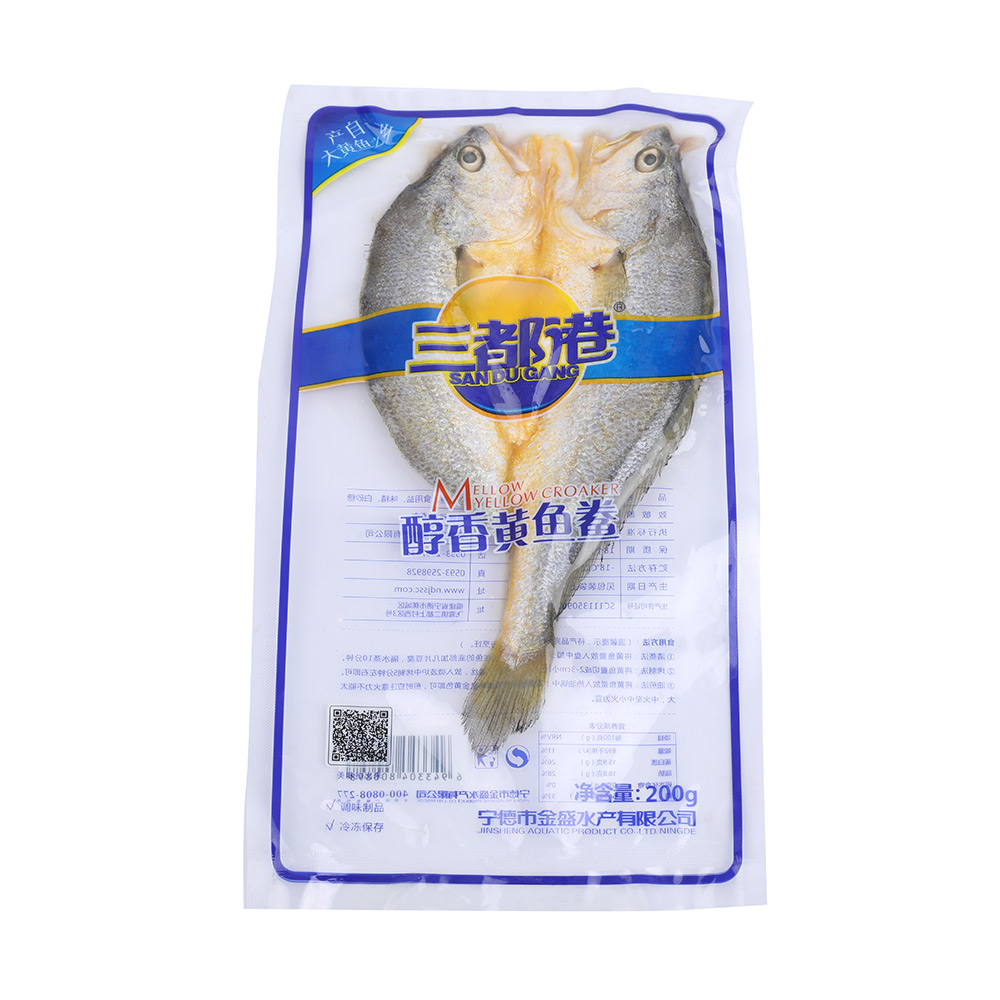 KNY17-BOIL Boilable PVDC-Coated BOPA Nylon FilmA 17-micron PVDC-coated nylon film boilable at 95°C for 30 minutes, with oxygen and moisture barrier for meat, aquatic, oil, and boiled packaging.View Product →
Puncture, flex-crack and drop resistance
Nylon is the reason vacuum packs of bone-in meat, frozen shellfish and sharp-edged snacks do not arrive leaking. The web bends instead of cracking, so the barrier survives thermoforming, vacuum draw, chill tunnels and the drop from a pallet. In practice a pinhole-free barrier is worth more than a marginally better OTR figure on paper.
Transparency, gloss and print quality
Unlike foil and metallized structures, coated BOPA stays see-through, which suits retail packs that need to show the product. Laminated to a reverse-printed web it also delivers good gloss and registration, because the nylon base is smooth and dimensionally stable through printing.
Fewer grams per pack
A 15–17 µm coated BOPA frequently replaces thicker multi-web combinations in medium-barrier duties, trimming grams per square metre while keeping the required oxygen and mechanical performance. That shows up in material cost and in packaging-weight reporting.
High oxygen barrier Aroma retention Boil and retort ready Puncture resistant Transparent Thermoformable
How KBOPA Compares With Other Barrier Films
None of these films wins everywhere. The choice follows the pack: whether it must be boiled or retorted, whether it must stay clear, how much stiffness the filling line needs, and what the barrier has to stop.
| Film | Construction | Oxygen barrier | Moisture barrier | Where it wins |
|---|---|---|---|---|
| KBOPA (KNY) | BOPA plus PVDC coating | Very high | Moderate to high | Vacuum, boil and retort packs; thermoformed meat and cheese |
| KPET | PET plus PVDC coating | Very high | High | Flat pouches and lidding where stiffness and print quality matter |
| KOPP | BOPP plus PVDC coating | High | High | Cost-driven snack, confectionery and biscuit wraps |
| VMPET | PET plus metallized aluminium | High | Very high | Moisture and light barrier with a metallic appearance |
| ALOx PET | PET plus aluminium oxide | High, transparent | Moderate | Clear high-barrier and microwaveable packs |
| Metallized BOPP or CPP | PP plus metallized aluminium | Moderate | High | Twist wraps, snack bags, decorative effects |
Two practical notes sit behind that table. When a pack is boiled or retorted, the web that survives heat and vacuum draw tends to decide the structure, and that usually points to the nylon-based film. When the main threat is moisture and the pack is flat, KPET or a metallized web often does the job at lower cost.
If your specification rules out chlorine-containing materials, a PVA-coated BOPA film gives a similar barrier profile with a different coating chemistry, and it can often run on the same lamination line after a trial confirms adhesion and heat behaviour.
 PVANY-S16 PVA-Coated BOPA Film for Food PackagingA 16-micron PVA-coated nylon film with strong gas barrier and grease resistance for food and inflatable packaging, useful where chlorine-containing coatings are ruled out.View Product →
Where KBOPA Film Earns Its Place
Applications cluster where heat, vacuum and sharp contents meet at the same time:
- Vacuum and thermoformed packs for ham, bacon, sausage, sliced cheese, fresh pasta and marinated fish, where the web must draw deeply without thinning into a pinhole.
- Boil-in-bag and retort pouches for ready meals, sauces, soups, rice and pet food, where the pack is cooked after filling.
- Sous-vide and pasteurised products, where the film must tolerate a hot water bath without delaminating.
- Aroma-critical dry goods such as ground coffee, tea and spices, usually as the barrier layer in a three-ply laminate.
- Lidding and blister applications that need barrier and toughness at low thickness.
What these have in common is a barrier that must survive handling. A film with a better datasheet number but a brittle surface still loses the argument once the pack has been vacuum-drawn, chilled and stacked.
Writing a KBOPA Specification That Survives Production
Most complaints about coated BOPA trace back to something that was never written into the specification. Lock these down before the first purchase order:
- Grade and heat class. Standard, boil or retort – a standard grade run through a retort cycle will curl, haze or delaminate.
- Coating weight and adhesion. Ask for bond strength after lamination and a tape test on the coated side; coating transfer shows up as cloudy patches on the finished pack.
- Barrier data at defined conditions. OTR and WVTR with temperature and relative humidity stated, ideally dry and at 75–85% RH.
- Gauge tolerance, flatness and slip. Wide gauge bands disturb print registration and lamination tension; the wrong coefficient of friction causes blocking on the unwind or jammed forming collars.
- Treatment side and treatment level. Confirm which surface is corona or chemically treated for ink and adhesive, and put the dyne level in writing.
- Compliance and traceability. A declaration of compliance, FDA and EU food-contact documentation where relevant, plus batch-level traceability.
- Supply parameters. Roll width, core diameter, maximum roll diameter, splice frequency, lead time and the supplier's genuine capacity at your order volume.
A lamination and retort trial on your own equipment before committing to a full pallet is cheap insurance, because coated films that pass a lab test can still behave differently once adhesive, ink and sealing conditions are involved.
FAQ: KBOPA Film
Q1: Is KBOPA the same as KNY or K-nylon?
Yes. KBOPA, KNY and K-nylon all refer to a biaxially oriented polyamide film with a PVDC coating. Grade names follow thickness and heat class, so KNY17 is a 17 µm coated BOPA, and a Boil suffix marks a grade built for boiling or pasteurisation.
Q2: Can KBOPA film be used on its own as a bag?
No. It is a barrier and carrier web without a heat-sealing layer. It must be laminated to a sealant such as CPP or PE, and often to a printed outer web as well.
Q3: How does coated BOPA compare with aluminium foil laminates?
Foil still delivers a higher absolute barrier and blocks light, but it is opaque, cracks when flexed and weighs more. Coated BOPA suits transparent or lightweight packs and holds its barrier better through repeated flexing.
Q4: Does the PVDC coating affect recyclability?
Chlorine-containing coatings complicate some recycling streams, and requirements differ by market. If a chlorine-free construction is a hard requirement, PVA-coated BOPA or an ALOx PET grade can fill the barrier role.
Q5: What is the most common thickness?
15 µm and 17 µm coated BOPA dominate food packaging. Heavier gauges are used where thermoforming depth or mechanical abuse demands more material.
The advantages of KBOPA film are easy to summarise: an oxygen and aroma barrier from the PVDC coating, toughness and deep-draw performance from the nylon base, and enough heat resistance for boiling and most retort conditions. Those gains only materialise when the grade matches the process and the specification covers coating adhesion, barrier data and surface treatment.
If you are weighing coated BOPA against KPET, KOPP or a metallized web for a specific pack, the fastest route is to compare supplier test data at your own process conditions. Our coated and high-barrier film range covers PVDC-coated BOPA in standard and boil grades, PVA-coated alternatives and ALOx PET, supported by ISO 9001 quality management with FDA and SGS documentation.

Are you ready to work with us?
Start a project
- Quick Links
- Company Profile
- Company Culture
- Qualification
- FAQ
- Product
- ALOx Films
- VMPET
- VMCPP
- VMBOPP
- Coated Film
- Contact Us
- Tel: +86-13456263964
-
Phone : +86-0573-87783633
Phone : +86-0573-87780583 - E-mail : [email protected]
- Address: 6th Xinhe Road, Xieqiao Town, Haining City, Zhejiang Province, China

