

 English
  中文简体
中文简体 
Regulatory Compliance and Food Safety for Flexible Packaging Films
 2026.07.02
 Industry News
Understanding the Legal Architecture of Food-Contact Materials
The global landscape for flexible food packaging is governed by strict regulatory matrices designed to prevent chemical contamination and ensure consumer safety. When engineering materials for direct food contact, packaging specialists must navigate complex overlapping frameworks. These structures ensure that food-grade resins, processing aids, and functional additives do not transfer toxic constituents to food matrices under commercial processing and storage conditions.
Regulatory Imperative: Any substance intended to come into contact with food must be evaluated for migration behavior, toxicological profiles, and functional suitability under the exact thermal and chemical conditions of end-use applications.
Compliance is not a static certification but an active engineering benchmark. Different jurisdictions approach food safety and packaging through distinct regulatory mechanics. For instance, the United States relies on a positive list framework managed by the Food and Drug Administration, whereas the European Union implements comprehensive plastic regulations backed by specific migration limits (SML) and overall migration limits (OML).
To establish compliance, polymers undergo exhaustive chemical characterization. This process identifies intentional and unintentional additives that could compromise food quality or public health. Understanding these regulatory boundaries is essential for designing packaging structures that deliver shelf-life stability while maintaining certified safety profiles.
Decoding FDA Compliance for Flexible Films
In the United States, materials intended for direct food contact are classified as Indirect Food Additives or Food Contact Substances (FCS). The regulatory pathway for validating an fda compliant packaging film requires strict adherence to the Code of Federal Regulations (CFR), specifically Title 21. This framework itemizes permitted polymers, adjuvants, and production limits to control structural degradation and chemical migration.
21 CFR Part 177
Governs polymers and base resins, outlining specific specifications for polyolefins, polyesters, and nylon structures.
21 CFR Part 175
Regulates adhesives, coatings, and structural components used as functional barriers or sealing layers.
21 CFR Part 178
Details permitted antioxidants, stabilizers, plasticizers, and clarifying agents used during resin processing.
For complex packaging configurations, including fda-compliant thermoforming applications, the material formulation must be cross-referenced with the Food Contact Notification (FCN) program. The FCN program is the primary mechanism through which the FDA reviews new food contact substances. Manufacturers must submit detailed data regarding the identity, manufacturing process, stability, and projected dietary exposure of the substance.
A critical component of achieving compliance is maintaining the raw materials within the strict purity guidelines established by the FDA. This involves ensuring that volatile organic compounds (VOCs) and heavy metal residues remain well below defined actionable thresholds. Furthermore, any film production facility must operate under current Good Manufacturing Practices (cGMP) as outlined in 21 CFR 174.5, ensuring that the packaging materials are produced cleanly and consistently.
European Union Framework and Migration Thresholds
The European Union utilizes a highly standardized approach for flexible food packaging, anchored by Framework Regulation (EC) Number 1935/2004. This overarching mandate stipulates that food-contact materials must not transfer their constituents to food in quantities that could endanger human health, bring about an unacceptable change in the composition of the food, or cause a deterioration in its organoleptic characteristics.
For plastic structures, Commission Regulation (EU) Number 10/2011 provides the definitive regulatory execution. This regulation institutes a comprehensive Union List of authorized monomers, starting substances, and additives. It also establishes strict testing criteria using standardized food simulants over precise time and temperature profiles.
| Testing Metric | Regulatory Threshold | Standard Analytical Condition |
|---|---|---|
| Overall Migration Limit (OML) | 10 mg/dm2 of surface area | Exposure to food simulants at designated thermal durations |
| Specific Migration Limit (SML) | Substance-specific (e.g., 0.05 mg/kg) | Quantified via advanced chromatography techniques |
| Heavy Metal Restriction | Variable by element (e.g., Lead, Cadmium) | Inductively Coupled Plasma Mass Spectrometry analysis |
EU compliance requires analytical verification using specific food simulants chosen to mimic actual food categories. Simulant A represents hydrophilic products (10 percent ethanol), Simulant B covers acidic environments (3 percent acetic acid), Simulant C handles alcoholic matrices (20 percent ethanol), and Simulant D2 is designed for lipophilic products (rectified olive oil or synthetic triglycerides). Evaluating materials under these strict chemical parameters ensures that flexible structures maintain integrity across diverse food types.
In addition, EU regulations place heavy emphasis on the Declaration of Compliance (DoC). This document is a mandatory legal instrument that must accompany plastic food-contact materials at all stages of marketing, excluding the retail stage. The DoC confirms compliance with relevant regulations, provides clear identification of the substances used, and outlines instructions for safe handling and application parameters.
Scientific Methodology of Migration Testing
Migration testing acts as the primary analytical validation method for food safety and packaging designs. It measures the physical transfer of chemical species from a flexible film structure into a food product or its representative simulant. This process identifies two distinct categories of migrants: Non-Intentionally Added Substances (NIAS) and Intentionally Added Substances (IAS).
The selection of specific testing parameters depends heavily on the intended operational environment of the film. High-temperature filling, retort processing, long-term ambient storage, and freezing require distinct analytical profiles known as Pressing Conditions or Food Action Conditions. For example, testing for a retort pouch requires exposure temperatures exceeding 121 degrees Celsius, whereas a film engineered for frozen storage is evaluated under subdued thermal kinetic profiles.
Advanced chromatography systems, including Gas Chromatography-Mass Spectrometry (GC-MS) and Liquid Chromatography-Mass Spectrometry (LC-MS), identify and quantify migrating compounds. The primary focus of these evaluations centers on plasticizer degradation, residual monomers like vinyl chloride or styrene, and low-molecular-weight oligomers that can cross polymer matrix boundaries.
Material Engineering of High-Barrier and Coated Films
To preserve food quality, multi-layer coextrusion techniques incorporate specialty resins designed to resist gas and moisture transmission. Utilizing a high barrier film significantly limits Oxygen Transmission Rates (OTR) and Water Vapor Transmission Rates (WVTR), preventing food spoilage and oxidative degradation while maintaining strict compliance profiles.
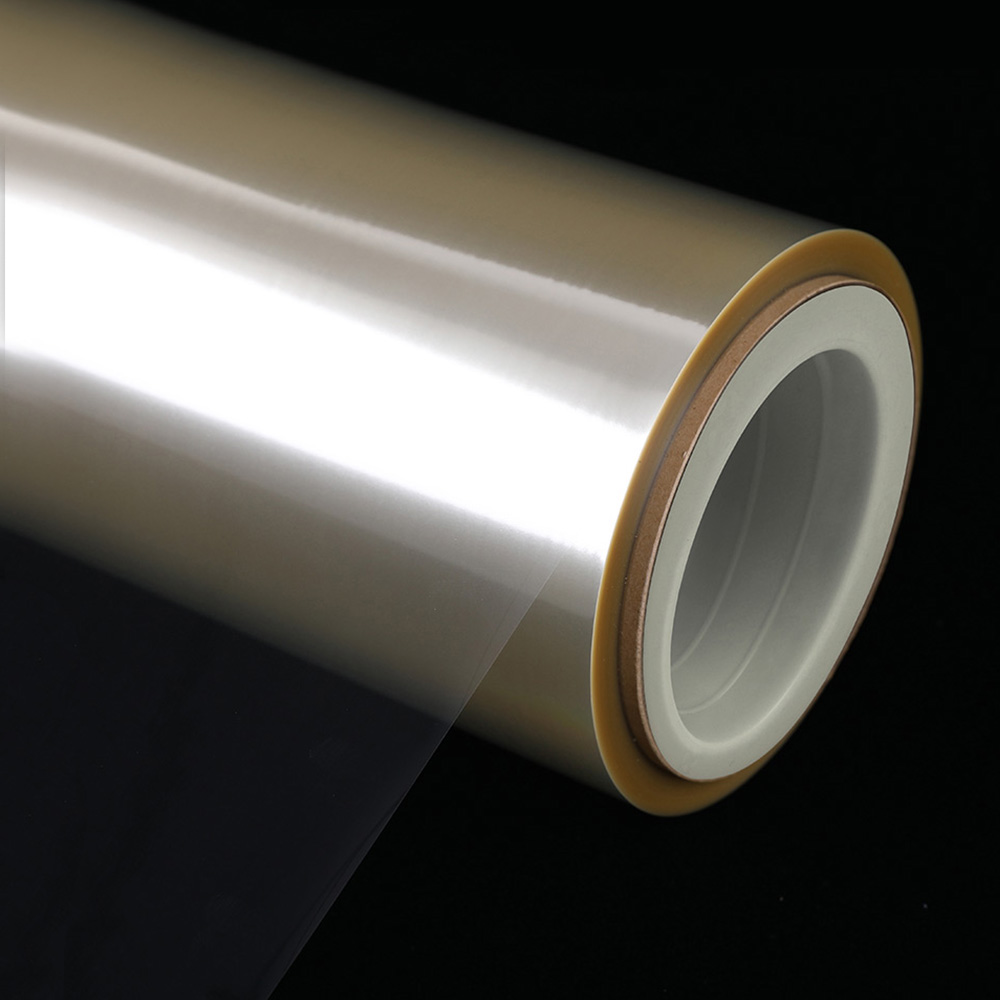
Another popular methodology involves using a specialized coated film to add barrier functionality without altering the mechanical properties of the base web. Substrates like oriented polypropylene (OPP) or polyethylene terephthalate (PET) are often coated with thin layers of polyvinylidene chloride (PVDC), ethylene vinyl alcohol (EVOH), or inorganic oxides like silicon oxide (SiOx) and aluminum oxide (AlOx).
When engineering these complex structures, cross-layer migration must be carefully evaluated. Adhesives and tie-layers used to bond distinct structural segments must be selected from approved food-grade resins to prevent delamination or the internal migration of uncured aromatic amines. The barrier layer itself must remain isolated from direct food contact unless the specific barrier material is explicitly certified for direct contact by relevant safety authorities.
Managing Additives, BPA, and Sustainable Chemistry
Modern material design focuses heavily on implementing clean chemistry and using bpa-free films. Bisphenol A (BPA) is a structural component historically utilized in certain polycarbonate resins and protective coatings, but its potential for endocrine disruption has led to stringent global restrictions or total prohibitions within direct food-contact configurations.
Beyond removing legacy chemical compounds, modern flexible packaging structures must manage a wide range of processing additives. These include slip agents (such as erucamide or oleamide), anti-blocking agents (such as synthetic silica), and complex antioxidant systems designed to prevent polymer breakdown during thermal extrusion.
- Slip Compounds: Migrating agents that bloom to the film surface to decrease the coefficient of friction on automated packaging machinery.
- Antioxidants: Stabilizing elements that neutralize free radicals generated during high-temperature coextrusion processing.
- Antistatic Additives: Hydrophilic substances designed to attract ambient moisture, preventing dangerous electrostatic accumulation during rapid rewinding operations.
As the market shifts toward sustainable circular economies, the integration of post-consumer recycled (PCR) resins introduces unique compliance challenges. Recycled plastics often contain trace impurities from prior lifecycles. To achieve food-grade certification, PCR materials must undergo rigorous decontamination validation processes to ensure that any residual chemical contaminants are completely eliminated or trapped behind certified functional barriers.
Frequently Asked Questions Regarding Food-Contact Film Standards
Q1: What is a functional barrier within flexible packaging frameworks?
A functional barrier is an internal layer within a multi-layer packaging film that prevents the migration of chemical substances from outer non-compliant layers into the food matrix, ensuring overall compliance even when utilizing complex printing inks or non-food-grade structural components on the exterior web.
Q2: How does temperature affect the safety compliance of a flexible food packaging structure?
Elevated temperatures accelerate molecular kinetic energy, significantly increasing the rate of chemical migration from a polymer structure. Consequently, a film certified safe for ambient use or refrigeration may fail compliance audits if subjected to hot-filling, microwave reheating, or autoclave sterilization without specific thermal validation.
Q3: Why are specific migration limits considered safer than overall migration metrics?
Overall migration limits quantify the total mass of inert material transferred to a food simulant, whereas specific migration limits isolate and target specific individual toxicological elements, ensuring that trace amounts of hazardous compounds are tightly regulated regardless of total inert chemical transfer levels.
Q4: Can a non-compliant film layer be used if it does not directly touch the food?
Yes, provided that a validated functional barrier separates the non-compliant layer from the food matrix, and the material formulation prevents set-off migration, which occurs when the outer printed layer transfers contaminants to the inner food-contact layer while rolled on a storage spool.

Are you ready to work with us?
Start a project
- Quick Links
- Company Profile
- Company Culture
- Qualification
- FAQ
- Product
- ALOx Films
- VMPET
- VMCPP
- VMBOPP
- Coated Film
- Contact Us
- Tel: +86-13456263964
-
Phone : +86-0573-87783633
Phone : +86-0573-87780583 - E-mail : [email protected]
- Address: 6th Xinhe Road, Xieqiao Town, Haining City, Zhejiang Province, China

