

 English
  中文简体
中文简体 
What is metallized polyester film and how is it manufactured?
 2026.04.03
 Industry News
Definition and Core Characteristics of Metallized Polyester Film
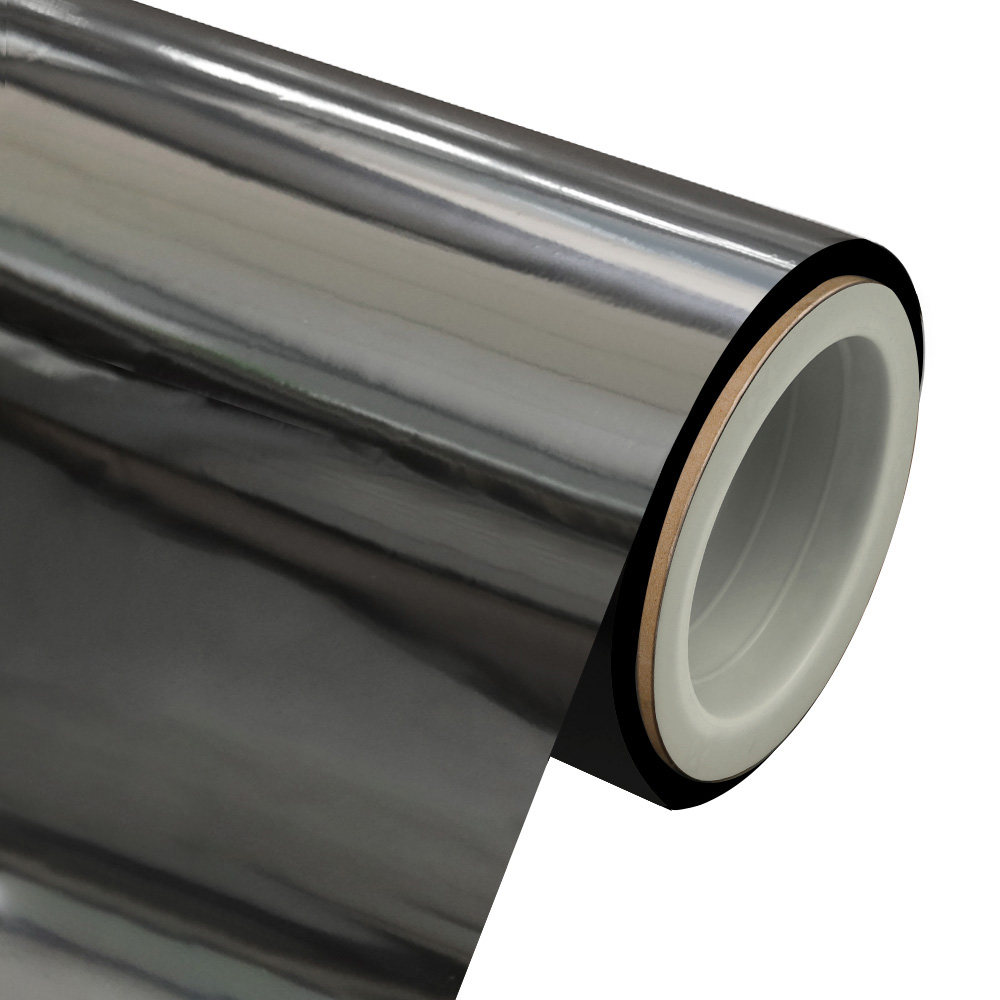
Metallized polyester film, widely known as metalized polyester film, is a high-performance flexible composite material made by depositing a thin layer of metal (primarily aluminum) onto the surface of biaxially oriented polyester film (BOPET) through specialized vacuum metallization technology. This material combines the excellent mechanical properties of polyester film with the barrier, reflective, and conductive properties of metal, creating a versatile film used across dozens of industrial and consumer sectors.
The base material of metallized polyester film is BOPET film, a thermoplastic polymer film known for its dimensional stability, tensile strength, and temperature resistance. The metal coating applied is typically 0.02 to 0.1 micrometers thick, a micro-scale layer that does not compromise the flexibility of the original polyester film but significantly enhances its functional performance. This precise coating thickness control is one of the core technologies in the production process.
Key Physical and Chemical Properties
Metallized polyester film exhibits a set of stable and superior properties that make it irreplaceable in many applications. All performance indicators are tested under standard environmental conditions (temperature 23±2℃, humidity 50±5% RH).
- Light transmittance: Less than 2% for high-barrier grade products, effectively blocking ultraviolet, visible, and infrared light
- Oxygen barrier property: Reduces oxygen transmission rate by 90% or more compared to uncoated BOPET film
- Water vapor barrier property: Water vapor transmission rate as low as 0.1 g/m²·24h, meeting strict moisture-proof requirements
- Tensile strength: Maintains 180-220 MPa, consistent with original BOPET film
- Operating temperature range: Can stably work between -70℃ and 150℃, adapting to extreme temperature environments
- Adhesion strength: Metal coating adhesion grade reaches 100% (no peeling off in 3M tape test)
Unlike aluminum foil composite materials, metallized polyester film is lighter in weight, more cost-effective, and easier to process and print. The ultra-thin metal layer ensures the film maintains good flexibility and foldability, while achieving barrier effects close to aluminum foil in medium-to-high barrier application scenarios.
Classification Standards of Metallized Polyester Film
According to performance, coating thickness, and application scenarios, metalized polyester film is divided into multiple categories to meet the needs of different industries. Classification is mainly based on three dimensions: barrier level, surface finish, and functional performance.
- General-purpose grade: Suitable for packaging, decoration, and other conventional fields, with standard barrier and reflective properties
- High-barrier grade: For food, pharmaceutical, and electronic product packaging requiring long-term shelf life
- High-reflective grade: For lighting, solar energy, and optical equipment requiring light reflection and concentration
- Conductive grade: For anti-static, electromagnetic shielding, and electronic component applications
- Printable grade: Surface-treated for high-definition printing and lamination processing
Each category has corresponding thickness specifications, with common film thicknesses including 12μm, 15μm, 19μm, 25μm, 36μm, and 50μm. The most widely used thickness in the global market is 12μm and 19μm, accounting for more than 65% of total consumption.
Raw Material Preparation for Metallized Polyester Film Production
The quality of raw materials directly determines the final performance of metalized polyester film. Strict raw material selection and pretreatment are essential prerequisites for stable production and qualified products. The entire raw material system includes base film, metal raw materials, surface treatment agents, and auxiliary materials.
BOPET Base Film Selection and Requirements
BOPET film is the core substrate of metallized polyester film, and its quality indicators directly affect coating uniformity, adhesion, and overall performance. Only high-quality BOPET films that meet strict standards can be used for metallization processing.
Key requirements for BOPET base film: thickness tolerance controlled within ±0.3μm, flat surface without crystal spots, scratches, or dust; moisture content below 0.1% to avoid bubbling during vacuum metallization; tensile elongation at break greater than 120% to ensure no breakage during high-speed processing.
Before production, the base film must undergo unwinding and inspection. Workers or automated optical inspection equipment check for surface defects, and qualified film rolls enter the pre-treatment stage. The width of base film commonly used in industrial production ranges from 500mm to 2200mm, supporting large-scale continuous production.
Metal Coating Raw Materials and Auxiliaries
Aluminum wire is the primary metal raw material for metallized polyester film, with purity reaching 99.99% (4N aluminum) to ensure coating uniformity and stability. High-purity aluminum avoids impurities that cause coating spots, poor adhesion, or reduced barrier properties.
In addition to aluminum wires, special surface treatment agents are used to improve the bonding force between the metal layer and the polyester film. These agents are non-toxic, odorless, and compliant with food-grade safety standards, suitable for food and pharmaceutical packaging applications. Auxiliary materials include high-temperature-resistant protective films, cleaning agents, and vacuum system sealing materials, all of which must meet industrial production safety and environmental requirements.
Raw Material Pretreatment Process
Pretreatment is divided into three key steps: base film cleaning, static elimination, and preheating. The base film surface is cleaned with high-purity ionized air to remove dust and particulate matter; static elimination equipment reduces static voltage to below 100V to prevent dust adsorption; preheating raises the film temperature to 40-60℃, enhancing surface activity and metal layer adhesion.
All pretreatment processes are completed in a Class 100,000 clean workshop to avoid secondary pollution. The entire process is fully automated, with real-time monitoring of temperature, humidity, and static parameters to ensure consistency between batches of raw materials.
Complete Manufacturing Process of Metallized Polyester Film
The manufacturing of metalized polyester film is a high-precision, high-vacuum automated process centered on vacuum evaporation metallization. The entire production line runs continuously, with process parameters controlled by a computer system to ensure product stability and consistency.
Vacuum System Evacuation Stage
The production equipment is a vertical or horizontal high-vacuum metallization machine, and the first step is to evacuate the vacuum chamber to the required pressure. The vacuum system consists of a mechanical pump, roots pump, and molecular pump, working in stages to achieve an ultra-high vacuum environment.
The evacuation process is divided into two stages: rough vacuuming reduces the chamber pressure to below 1Pa within 10 minutes; high vacuuming further reduces it to 5×10⁻³Pa or lower. This pressure level is critical—only in an ultra-high vacuum environment can aluminum atoms evaporate uniformly and deposit stably on the film surface without oxidation or condensation.
The vacuum holding time is not less than 5 minutes to ensure complete removal of residual air and moisture in the chamber, laying the foundation for subsequent metallization processes.
Metal Evaporation and Deposition Process
This is the core process of metallized polyester film production. High-purity aluminum wires are fed into a resistance heating boat or induction heating source in the vacuum chamber. The heating temperature reaches 1300-1500℃, instantly melting and evaporating aluminum into atomic vapor.
The BOPET film runs continuously at a constant speed (100-800m/min) above the evaporation source. Aluminum atoms collide with the film surface and condense into a dense, uniform metal coating. The coating thickness is precisely controlled by adjusting the wire feeding speed, heating power, and film running speed.
During deposition, the film cooling system maintains the surface temperature below 60℃ to prevent thermal deformation, shrinkage, or performance degradation of the polyester film. Real-time thickness monitoring equipment feeds data back to the control system, adjusting parameters within 0.1 seconds to ensure thickness error within ±0.01μm.
Post-Coating Treatment Processes
After metallization, the film undergoes three post-treatment processes: surface passivation, cooling and shaping, and winding forming. Passivation forms a protective layer on the metal surface to prevent oxidation, discoloration, or performance attenuation during storage and use.
Cooling and shaping reduces the film temperature to room temperature, eliminating internal stress and ensuring dimensional stability. The winding system uses constant tension control to wind the finished film into neat rolls without wrinkles, slippage, or deformation. The winding tension is set according to film thickness, typically between 50-200N.
Quality Inspection and Finished Product Packaging
All metallized polyester film must pass full inspection before leaving the factory. Inspection items include coating thickness, adhesion, barrier property, light transmittance, surface smoothness, and appearance defects. Online inspection equipment scans the entire film surface, marking and removing any unqualified sections.
Qualified products are packaged with moisture-proof and anti-static materials. The inner layer uses a polyethylene protective film, and the outer layer uses a waterproof carton with desiccant. Finished products are stored in a constant temperature (15-25℃) and humidity (40-60% RH) warehouse, with a shelf life of up to 24 months under proper storage conditions.
Performance Advantages of Metallized Polyester Film
Compared with traditional flexible packaging materials, plastic films, and aluminum foil materials, metalized polyester film has obvious comprehensive advantages, making it the preferred material in many high-end application fields. Its advantages cover performance, cost, processing, and environmental protection.
Barrier Property Advantages
The most prominent advantage of metallized polyester film is its excellent barrier performance. The dense metal coating effectively blocks oxygen, water vapor, light, and odor, greatly extending the shelf life of contents.
Data comparison: Uncoated BOPET film has an oxygen transmission rate of 50-80 cm³/m²·24h·0.1MPa; after metallization, it drops to 1-5 cm³/m²·24h·0.1MPa, a reduction of more than 90%. For food packaging, this can extend shelf life from 3-6 months to 12-24 months without adding preservatives.
It also has complete light barrier properties, blocking 99% of ultraviolet rays, protecting products from light-induced deterioration, especially suitable for medicines, dairy products, and cosmetics sensitive to light and oxygen.
Mechanical and Processing Advantages
Metallized polyester film retains the high strength, folding resistance, and dimensional stability of BOPET film, with excellent mechanical properties. It can withstand high-speed printing, slitting, lamination, bag making, and other processing procedures without cracking, peeling, or deformation.
It adapts to a wide range of processing temperatures, compatible with various printing inks and adhesives. The metal surface has good printability, supporting gravure, flexo, and digital printing to achieve high-definition patterns and text effects. The film's flexibility allows it to be made into bags, films, and composite materials of various shapes, meeting diversified processing needs.
Cost and Environmental Advantages
Compared with aluminum foil composite materials, metallized polyester film uses 90% less metal raw materials, significantly reducing production costs. It is lighter in weight, reducing transportation and packaging costs for downstream enterprises, with a cost advantage of 20-30% in large-scale applications.
Environmentally, it is a low-carbon, environmentally friendly material. The production process has no waste gas, waste water, or waste residue emissions; the film is recyclable, reducing environmental pollution. It meets EU and US environmental protection standards and is widely used in green packaging and sustainable industrial programs.
Functional Diversity Advantages
By adjusting process parameters, metallized polyester film can obtain different functions such as high reflection, static resistance, electromagnetic shielding, and electrical conductivity, expanding its application scope. One material can meet the needs of multiple industries, reducing the cost of material development and inventory for enterprises.
Main Application Fields of Metallized Polyester Film
With its excellent comprehensive performance, metalized polyester film is widely used in food packaging, pharmaceutical packaging, electronic appliances, solar energy, construction, decoration, and other fields, with a global annual consumption of more than 2 million tons.
Food and Beverage Packaging Industry
This is the largest application field of metallized polyester film, accounting for 45% of total consumption. It is used for snack packaging, coffee packaging, condiment packaging, frozen food packaging, and cooked food packaging.
Its barrier properties keep food crispy, fresh, and aromatic; high-temperature resistance adapts to retort sterilization (121℃) and freezing (-40℃) processes; good printability achieves attractive packaging designs. Common applications include potato chip bags, chocolate wrappers, milk powder outer packaging, and pet food bags.
Pharmaceutical and Health Care Products Industry
Metallized polyester film meets strict pharmaceutical packaging standards, with non-toxic, odorless, and sterile properties. It is used for medicine blister packaging, tablet packaging, cream packaging, and medical device packaging.
It blocks moisture and oxygen to prevent drug failure, with a shelf life extension effect of more than 2 times. The material complies with FDA, EU pharmacopoeia, and other international certifications, suitable for prescription drugs, over-the-counter drugs, and health care product packaging.
Electronic and Electrical Industry
In the electronic field, it is used for electromagnetic shielding, anti-static packaging, battery insulation, and circuit board protection. The metal layer provides excellent shielding effectiveness (up to 60dB), protecting electronic components from signal interference.
It is also used for insulating layers of lithium batteries, capacitors, and electronic sensors, with high temperature resistance and insulation properties ensuring safe and stable operation of electronic products. Anti-static grade products are used for packaging integrated circuits, chips, and precision electronic components.
Solar Energy and Optical Applications
High-reflective metallized polyester film has a light reflectivity of 95% or more, used for solar reflective layers, lighting reflectors, and optical instrument components. It improves solar energy utilization efficiency by 15-20% and is widely used in solar water heaters and photovoltaic modules.
Construction and Decoration Industry
Used for building insulation films, decorative films, and energy-saving glass interlayers. It blocks infrared rays, reduces indoor temperature, and achieves energy saving and emission reduction. Decorative grade films have metallic luster, used for wall decoration, furniture veneer, and automotive interior decoration.
Quality Control Standards and Testing Methods
To ensure the performance and service life of metalized polyester film, strict quality control standards and standardized testing methods are implemented throughout production, covering raw materials, process, and finished products.
International and Industrial Quality Standards
Metallized polyester film complies with multiple international standards, including ASTM F1249 (water vapor transmission rate test), ASTM D3985 (oxygen transmission rate test), GB/T 31984 (Chinese national standard), and EU food contact material regulations.
Key standard indicators: coating thickness uniformity ≥95%, adhesion strength ≥4.9N/15mm, light transmittance ≤2%, no holes, spots, or scratches on the surface. All indicators must be tested and recorded before product delivery.
Core Performance Testing Items
| Testing Item | Testing Equipment | Qualified Standard |
| Coating Thickness | X-ray Fluorescence Thickness Gauge | 0.02-0.1μm, error ≤±0.01μm |
| Oxygen Barrier Property | Oxygen Transmission Rate Tester | ≤5 cm³/m²·24h·0.1MPa |
| Water Vapor Barrier Property | Water Vapor Transmission Rate Tester | ≤0.5 g/m²·24h |
| Coating Adhesion | Peel Strength Tester | ≥4.9N/15mm |
| Light Transmittance | UV-Vis Spectrophotometer | ≤2% |
Online and Offline Quality Monitoring
Online monitoring runs throughout production, with sensors collecting vacuum degree, temperature, speed, and thickness data in real time. Offline testing is conducted on sampled finished products, including accelerated aging tests, folding resistance tests, and printing adaptability tests.
Each batch of products has a unique inspection report, recording all testing data and parameters, ensuring full traceability from raw materials to finished products. Unqualified products are strictly isolated and recycled to prevent delivery to the market.
Storage, Transportation and Usage Precautions
Proper storage, transportation, and processing are essential to maintain the performance of metalized polyester film and avoid quality problems such as coating oxidation, moisture absorption, and mechanical damage.
Storage Conditions and Requirements
Finished film rolls must be stored in a closed, clean, constant temperature and humidity warehouse. Temperature control range: 15-25℃, humidity control range: 40-60% RH. Avoid direct sunlight, heat sources, and corrosive gases.
Film rolls should be placed vertically on pallets, not stacked horizontally or pressed by heavy objects. The storage period should not exceed 24 months; after opening the package, use it as soon as possible and reseal the unused part with a moisture-proof film.
Transportation Standards
Transport vehicles must be closed and moisture-proof, avoiding rain and sun exposure. During loading and unloading, handle with care to prevent collision, falling, or scratching. In long-distance transportation, add shockproof cushions to avoid friction and damage between film rolls.
Processing and Usage Tips
- Unwind at a constant tension to avoid film breakage or coating peeling
- Use alcohol or special cleaning agents for surface cleaning; do not use corrosive chemicals
- Control processing temperature below 150℃ to prevent thermal deformation
- Avoid contact with sharp objects to prevent coating scratches
- For composite processing, use supporting adhesives to ensure bonding fastness
Frequently Asked Questions About Metallized Polyester Film
Q1: What is the difference between metallized polyester film and aluminum foil film?
A: Metallized polyester film has an ultra-thin metal coating, lighter weight, lower cost, and better flexibility; aluminum foil film has a thicker metal layer, higher barrier but higher cost and poor folding resistance.
Q2: Is metallized polyester film food-safe?
A: Yes, food-grade products comply with FDA, EU, and Chinese food contact standards, non-toxic and safe for food and pharmaceutical packaging.
Q3: What is the service life of metallized polyester film?
A: Under proper storage, the shelf life is 24 months; in normal use, the service life is 3-10 years depending on the application environment.
Q4: Can metallized polyester film be recycled?
A: Yes, it is a recyclable material. It can be recycled and reused through physical recycling processes, in line with environmental protection requirements.
Q5: What thicknesses of metallized polyester film are commonly available?
A: Common thicknesses: 12μm, 15μm, 19μm, 25μm, 36μm, 50μm. 12μm and 19μm are the most widely used.
Q6: Can metallized polyester film be printed?
A: Yes, printable grade products support gravure, flexo, and digital printing with clear patterns and strong ink adhesion.
Q7: What is the temperature resistance range of metallized polyester film?
A: It can stably work between -70℃ and 150℃, adapting to freezing, retorting, and daily high-temperature environments.
Q8: How to judge the quality of metallized polyester film?
A: Check surface smoothness, coating uniformity, adhesion, barrier properties, and whether it meets national and international standards.
Q9: Can metallized polyester film be used for solar applications?
A: Yes, high-reflective grade has 95%+ reflectivity, widely used in solar reflective layers and photovoltaic components.
Q10: What is the production speed of metallized polyester film?
A: Industrial production speed ranges from 100-800m/min, adjusted according to film thickness and coating requirements.

Are you ready to work with us?
Start a project
- Quick Links
- Company Profile
- Company Culture
- Qualification
- FAQ
- Product
- ALOx Films
- VMPET
- VMCPP
- VMBOPP
- Coated Film
- Contact Us
- Tel: +86-13456263964
-
Phone : +86-0573-87783633
Phone : +86-0573-87780583 - E-mail : [email protected]
- Address: 6th Xinhe Road, Xieqiao Town, Haining City, Zhejiang Province, China

