

 English
  中文简体
中文简体 
What Makes Polyester (PET) Film the Backbone of Modern Flexible Packaging?
 2026.06.11
 Industry News
Polyester film — commercially known as polyethylene terephthalate film or simply pet plastic film — has quietly become one of the most indispensable substrate materials in the global flexible packaging industry. From the shiny barrier layer on your snack bag to the transparent window on a pharmaceutical blister pack, PET film is everywhere. Yet despite its ubiquity, its technical depth is often underestimated.
This guide cuts through the surface and explores what PET film really is, how its different variants perform, and why engineers and procurement teams keep returning to it when precision, barrier integrity, and processability all matter at once.
Key Insight: Global demand for biaxially-oriented PET film exceeded 8 million metric tons in 2023, with flexible packaging accounting for over 55% of end-use applications — reflecting a consistent annual growth rate near 4.5%.
Understanding PET Film: From Polymer to Packaging Substrate
At its core, polyethylene terephthalate film is a semi-crystalline thermoplastic polymer derived from the condensation of ethylene glycol and terephthalic acid. The raw resin is extruded, quenched, and then stretched — a process that dramatically transforms its mechanical and barrier properties.
What differentiates commodity PET resin from high-performance packaging film is the orientation process. When the film is stretched in both the machine direction (MD) and the transverse direction (TD), the polymer chains align in a planar biaxial configuration, resulting in Biaxially-oriented PET (BOPET) — the gold standard for flexible packaging substrates.
The BOPET Advantage in Numbers
190°C
Dimensional stability threshold
0.03 g/m²/day
Typical WVTR (12μm BOPET)
200 MPa+
Tensile strength (MD)
1.39 g/cm³
Typical density
These figures are not abstract — they translate directly into real-world packaging performance. A film that maintains its dimensions at 190°C can survive solvent-based lamination, high-speed printing, and retort sterilization cycles without deforming or delaminating.
Polyester vs PET: Clearing Up the Terminology
One of the most common points of confusion in the packaging industry is the interchangeable use of "polyester film" and "pet flexible packaging." Technically, PET is one type of polyester, but in practical packaging contexts, the two terms are almost always synonymous. Other polyesters like PBT or PTT are rarely used as packaging films, so when a spec sheet says "polyester film sheets," it almost certainly means PET-based film.
| Term | Formal Meaning | Industry Usage |
|---|---|---|
| Polyester Film | Any film from the polyester polymer family | Almost always refers to PET film |
| PET Film | Film made from polyethylene terephthalate | Standard technical term |
| BOPET Film | Biaxially-oriented PET film | Used when orientation is specified |
| CPET Film | Crystallized PET, often thermoformed | Used for rigid/semi-rigid trays |
The Main Variants of PET Film Used in Flexible Packaging
Not all PET films are equal. Depending on the application, processors and converters select from several distinct variants, each engineered to deliver specific functional properties.
1. Biaxially-Oriented PET (BOPET) Film
Biaxially-oriented PET (BOPET) is the workhorse of the flexible packaging world. Produced by stretching the film in both directions at elevated temperatures, BOPET achieves a unique combination of properties that few other substrates can match:
- Tensile strength in the range of 180–220 MPa (MD), making it highly resistant to tearing and puncture during high-speed converting
- Thermal stability up to approximately 150°C for short-term exposure, enabling compatibility with hot-fill processes and solvent-based inks
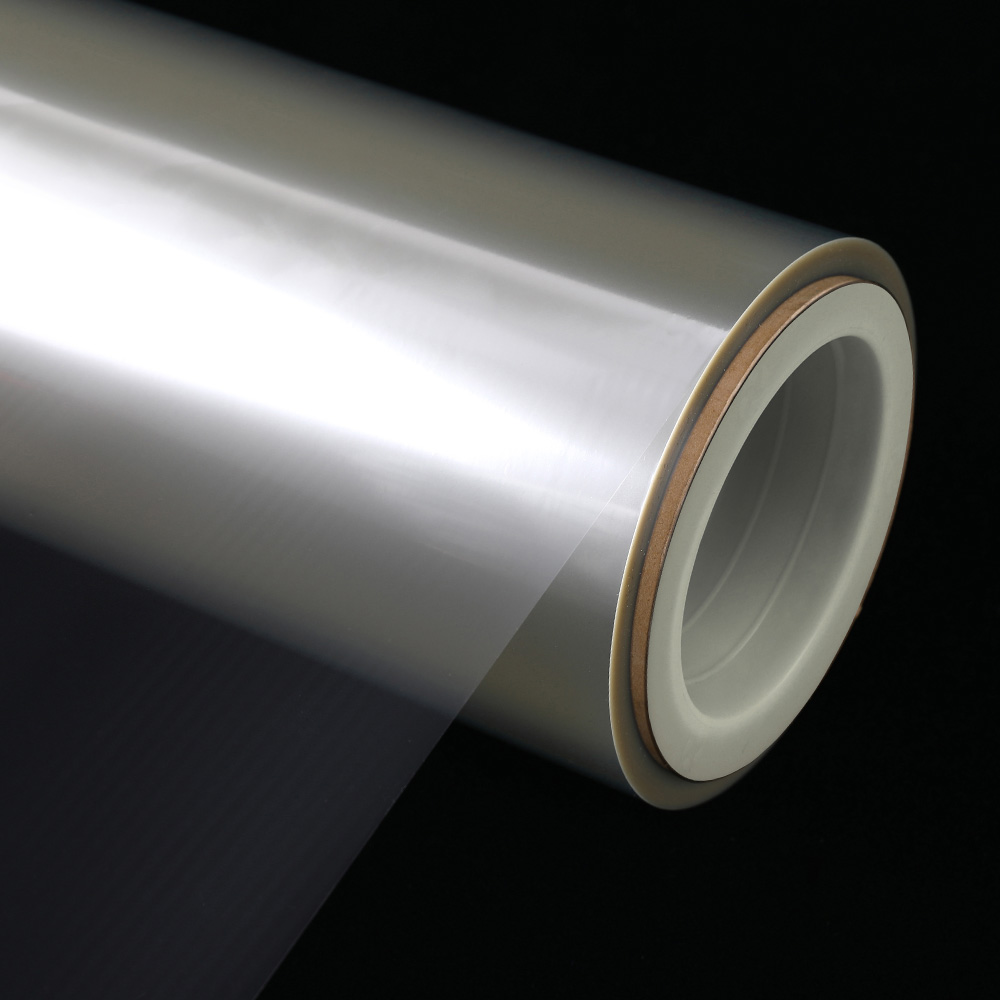
- Optical clarity with haze values typically below 2%, crucial for transparent window applications and direct print layers
- Chemical resistance to a wide range of solvents, oils, and dilute acids — a critical asset in food and pharmaceutical packaging
Standard thicknesses for flexible packaging range from 9 to 36 micrometers, with 12 and 23 micron grades being the most widely used. Thinner gauges are favored for lamination to reduce total structure weight; thicker gauges provide additional rigidity for stand-up pouch applications.
2. VMPET Film — Metalized Polyester for High-Barrier Applications
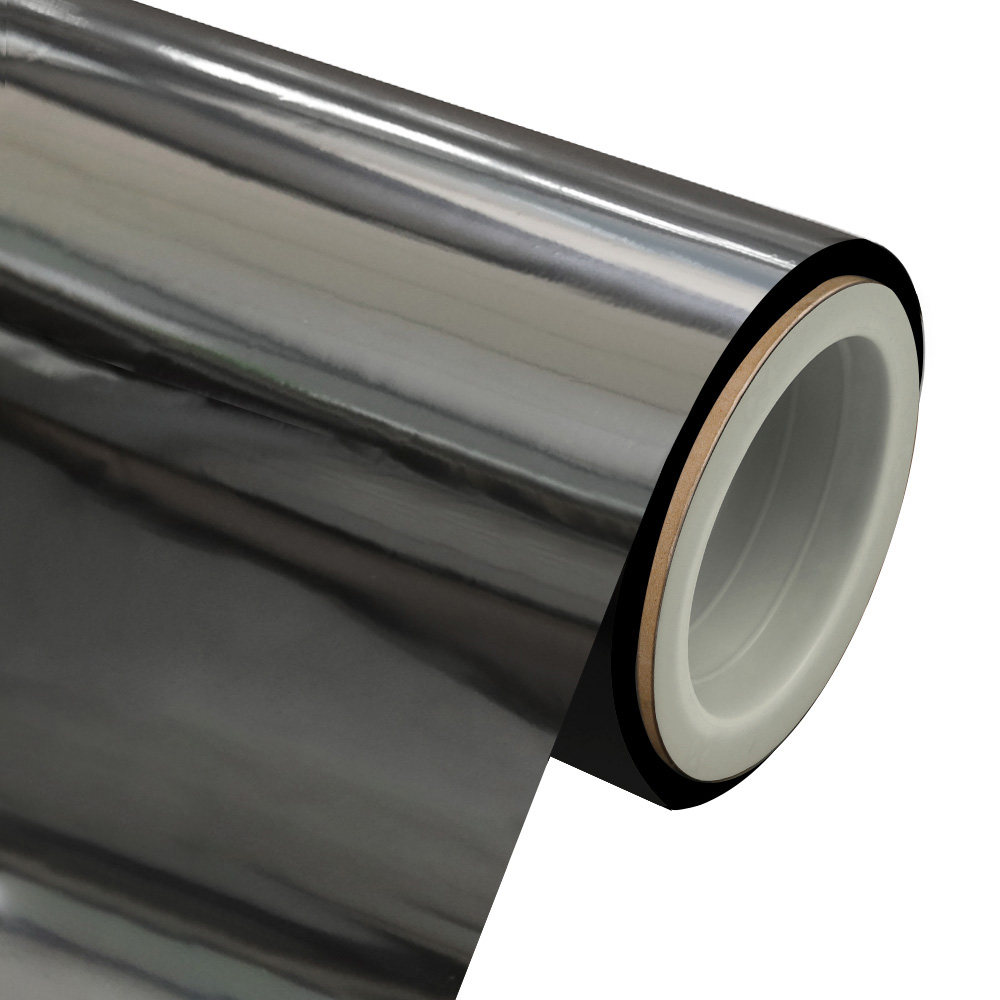
VMPET film (vacuum-metalized PET) is produced by depositing a ultra-thin layer of aluminum — typically 20 to 100 nanometers — onto the surface of a BOPET substrate under high vacuum. This seemingly simple modification produces a dramatic shift in barrier performance:
- Oxygen Transmission Rate (OTR) drops from approximately 100 cc/m²/day (plain BOPET) to as low as 0.5–2 cc/m²/day
- Water Vapor Transmission Rate (WVTR) is reduced to below 0.5 g/m²/day in well-metallized grades
- The reflective surface provides an aesthetic often associated with premium positioning
Crucially, VMPET film achieves this barrier performance with far less aluminum than foil lamination, translating into lower weight, lower material cost, and greater recyclability potential. It is widely deployed in snack food packaging, coffee pouches, pharmaceutical blister overwraps, and agricultural film applications.
One important technical nuance: metallization quality is measured by Optical Density (OD). An OD value of 2.0–3.5 is standard for most barrier applications; values above 3.5 indicate ultra-high barrier grades suited for oxygen-sensitive products with extended shelf life requirements.
3. Coated PET Film — Engineered Surface Functionality
Coated film refers to PET film that has received one or more functional coatings applied either inline during production (in-line coating) or offline as a secondary process. The diversity of coating chemistries allows converters to fine-tune nearly every surface property:
| Coating Type | Primary Function | Typical Application |
|---|---|---|
| PVDC Coating | Moisture and oxygen barrier | Meat, cheese, medical packaging |
| Acrylic Coating | Improved ink adhesion and sealability | Flexo and gravure printed structures |
| SiOx (Silicon Oxide) | Transparent high barrier | Retort pouches, microwave packs |
| AlOx (Aluminum Oxide) | Transparent + heat-resistant barrier | Retortable flexible packaging |
| Heat-Seal Coating | Direct sealing without PE layer | Lidding films, easy-peel structures |
| Anti-Static Coating | Reduces static buildup | Electronic component packaging |
4. CPET Film — Crystallized Polyester for Rigid and Semi-Rigid Formats
CPET film occupies a different niche from the flexible variants above. By controlled crystallization of the PET structure — achieved through heating the amorphous film above its glass transition temperature — CPET develops a higher degree of crystallinity that enables:
- Continuous service temperatures up to 220°C, allowing use in conventional ovens
- Thermoformability into trays and containers with well-defined geometry
- Resistance to fat and oil migration at elevated temperatures
CPET is the defining substrate for ovenable meal trays in the ready-meal sector and is increasingly finding use in hot-fill and retort applications where standard amorphous PET would deform.
Why Thermal Stability and Optical Clarity Set PET Apart
Among all the performance attributes of PET film, thermal stability and optical clarity are the two that most consistently differentiate it from competing substrates like oriented polypropylene (OPP), nylon, and polyethylene.
Thermal Stability in Practice
Thermal stability in packaging films refers to a substrate's ability to maintain its dimensions, mechanical integrity, and barrier properties when exposed to heat — during lamination, printing, filling, or sterilization. PET film outperforms most competing substrates in this regard:
PET / BOPET
- Shrinkage at 150°C: < 1.5%
- Compatible with retort at 121°C
- Maintains flatness in solvent lamination
- No distortion in hot-fill (85°C+)
OPP Film
- Shrinkage at 150°C: 3–8%
- Not suitable for retort
- Requires care in solvent lamination
- Limited to cold-fill and ambient
Nylon (BOPA)
- Shrinkage at 150°C: 2–4%
- Retort capable but costly
- Excellent puncture resistance
- Moisture-sensitive (affects barrier)
Optical Clarity and Printability
For packaging formats where product visibility is a marketing requirement — think transparent window pouches, skin packaging, and lidding films — BOPET's optical performance is exceptional. With a refractive index of approximately 1.64 and haze values consistently below 2%, it provides the crystal-clear appearance that retailers and brand owners demand.
Furthermore, PET film's surface energy (after corona treatment, typically 48–54 mN/m) supports excellent ink adhesion for both solvent-based and UV-curable ink systems. This allows for high-resolution gravure and flexographic printing without the adhesion promotion primers often required by polyolefin substrates.
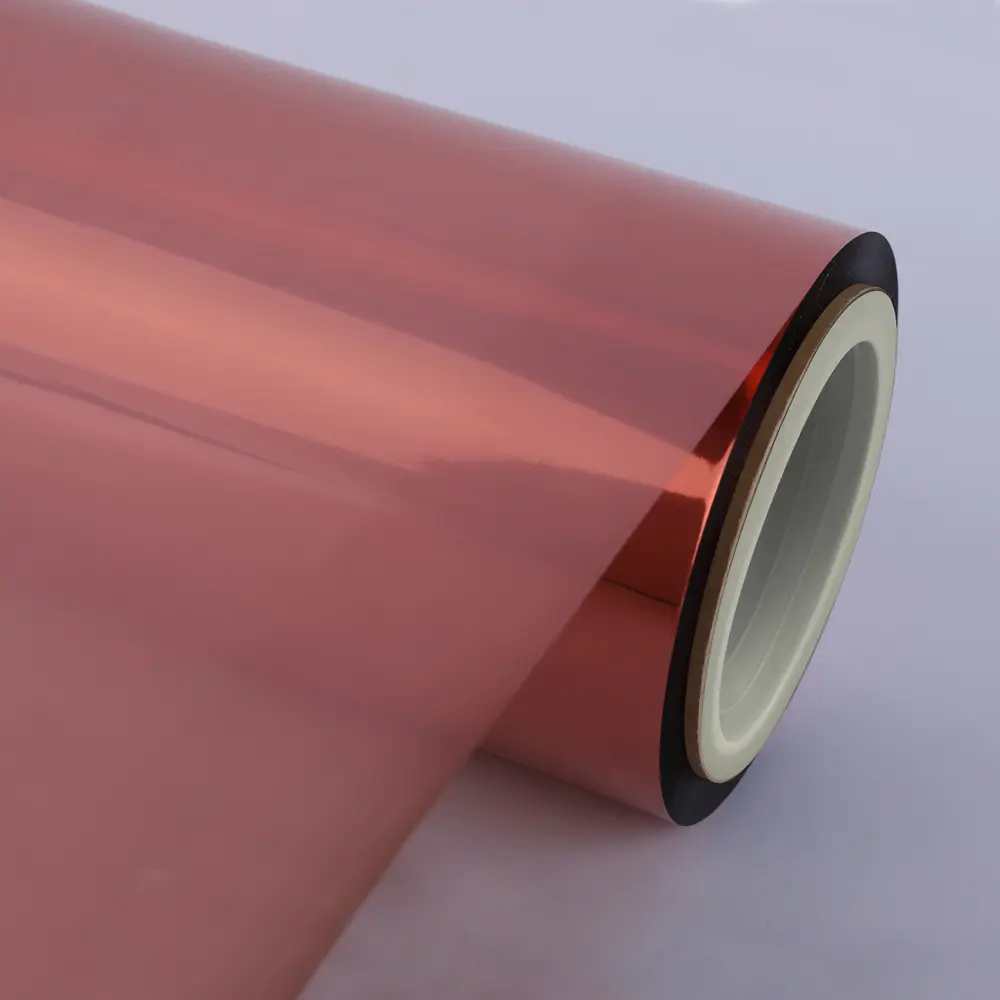
VMPET films in various functional and decorative color grades for flexible packaging
Extrusion Coating on PET Film: Expanding the Functional Range
Extrusion coating is a process by which a molten polymer — most commonly polyethylene (PE), polypropylene (PP), or ethylene vinyl acetate (EVA) — is applied as a thin layer onto the surface of a PET film. This is distinct from adhesive lamination and produces a tightly bonded, thermally sealable layer that enhances the film's functionality for specific end uses.
Why Extrusion Coat PET Film?
Plain BOPET film cannot heat-seal to itself — it requires either an adhesive or a sealant layer to form a functional package. Extrusion coating of low-density polyethylene (LDPE) or linear low-density polyethylene (LLDPE) directly onto the PET surface creates a structure that can be:
- Sealed on standard impulse and continuous band sealers at temperatures of 120–160°C
- Processed on form-fill-seal (FFS) and horizontal flow-wrap equipment
- Combined with aluminum foil to create triple-layer laminates for aseptic packaging
Extrusion Coating Process Flow
The interface bond strength between the extrudate and PET is critically dependent on surface preparation. Proper corona treatment of the PET surface raises its surface energy to the 44–52 mN/m range, ensuring the molten polymer wets and adheres reliably. Without this step, delamination under stress or thermal cycling is virtually inevitable.
Real-World Applications of PET Film in Flexible Packaging
The versatility of PET film — across its plain, metalized, coated, and crystallized forms — means it appears in an extraordinarily diverse range of packaging end-uses. Below are the most commercially significant application areas, along with the specific film variant and performance requirements involved.
Food Packaging
Food packaging is by far the largest single application sector for PET films. The demands here are multidimensional: the film must provide barrier against oxygen and moisture, withstand printing and lamination processes, and in some cases survive thermal processing.
- Snack foods and confectionery: VMPET is dominant, providing the high oxygen barrier needed to maintain crispness and flavor for 6–12 month shelf life targets
- Coffee and tea: VMPET with additional aroma barrier layers, often in combination with extrusion-coated LDPE sealant layers
- Retort pouches: AlOx-coated or SiOx-coated PET provides transparent, high-barrier structures that can withstand 121°C retort cycles without delamination
- Fresh produce overwrap: Plain BOPET with controlled permeability provides the modified atmosphere needed to extend freshness
Pharmaceutical and Medical Packaging
Pharmaceutical packaging demands exceptional purity, barrier consistency, and resistance to chemical migration. PET film satisfies all three:
- Blister pack base films use thermoformable PET or CPET for solid dose forms
- Lidding films for unit-dose blister packs commonly use BOPET as the top layer
- Medical device pouches use BOPET as a substrate layer for clarity and chemical resistance
- PVDC-coated PET provides the moisture barrier needed for hygroscopic tablets and capsules
Industrial and Agricultural Applications
Beyond consumer packaging, polyester film sheets find use in demanding industrial contexts:
- Agricultural mulch and silage films leveraging UV resistance
- Electrical insulation tapes and motor winding films exploiting PET's dielectric properties
- Photovoltaic backsheets for solar panels (fluoropolymer-coated PET)
- Metallized decorative films for labeling and gift wrapping
How to Select the Right PET Film Grade for Your Application
Selecting the optimal grade of PET film is not a one-size-fits-all exercise. The decision tree involves balancing barrier requirements, processing parameters, regulatory compliance, and total cost of ownership.
Step 1 — Define the Barrier Requirements
Begin by establishing the quantitative barrier targets for your product. For oxygen-sensitive products, what is the acceptable OTR over the desired shelf life? For moisture-sensitive products, what WVTR threshold maintains product quality? These numbers directly determine whether plain BOPET, VMPET, or a coated variant is required.
Step 2 — Assess Thermal Processing Conditions
Determine the maximum temperature the film will encounter — from lamination through filling and end-use. Products requiring pasteurization (70–85°C), hot fill (85–95°C), or retort sterilization (121°C) will have distinctly different requirements from ambient-temperature snack packaging. CPET and oxide-coated PET grades should be prioritized for high-temperature applications.
Step 3 — Evaluate Printing and Lamination Compatibility
Confirm that the chosen film grade is compatible with your ink system (solvent-based, water-based, or UV), lamination adhesive (solvent-based, water-based, or solventless), and any extrusion coating requirements. Surface energy specifications, particularly post-corona treatment values and their decay rate, are critical inputs here.
Step 4 — Consider Sustainability Objectives
As recyclability requirements tighten globally, PET film structures that minimize lamination with dissimilar polymers are becoming strategically important. Mono-material PET structures — using coated or heat-seal-coated PET throughout the laminate — offer improved recyclability compared to multi-polymer structures. VMPET, while not fully recyclable in current infrastructure, represents a significant reduction in material use versus aluminum foil laminates.
| Application | Recommended Film | Key Performance Driver | Typical Thickness |
|---|---|---|---|
| Snack food pouch | VMPET / BOPET | Oxygen barrier, stiffness | 12 μm |
| Coffee capsule / pouch | VMPET + LDPE | Barrier + sealability | 12–15 μm |
| Retort pouch (transparent) | SiOx / AlOx coated PET | Transparent barrier at 121°C | 12–23 μm |
| Pharmaceutical blister lidding | PVDC-coated BOPET | Moisture barrier, peel force | 12–19 μm |
| Ovenable meal tray | CPET | Thermal stability to 220°C | 250–400 μm |
| Printed lamination outer layer | Clear BOPET | Print quality, flatness | 12 μm |
PET Film and the Sustainability Conversation
No material guide published today can responsibly omit sustainability. PET film's position in the sustainability debate is nuanced — it is neither a villain nor a silver bullet, but it does have several structural advantages over competing substrates that are worth examining clearly.
Recyclability
PET is one of the most widely recycled polymers in the world. Bottle-grade PET recycling infrastructure is mature in most developed markets. However, flexible film PET faces a different challenge: mixed-polymer laminate structures are difficult to delaminate and recycle efficiently. This has accelerated industry interest in:
- Mono-material PET structures where the sealant, barrier, and structural layers are all PET-compatible
- Washable adhesives that allow delamination of VMPET or coated PET from polyolefin sealant layers
- In-store flexible film take-back programs that process sorted PET film separately from other flexible film types
Lightweighting
PET film's high strength-to-weight ratio enables significant downgauging compared to alternative substrates. Using 12 micron BOPET instead of a thicker OPP film or a rigid format reduces total packaging weight — and therefore transport energy and material cost — without sacrificing functional performance. Industry data indicates that switching from rigid PET trays to flexible BOPET-based pouches can reduce packaging weight by 60–75% for comparable unit doses.
VMPET vs Aluminum Foil: A Meaningful Comparison
The case for metalized polyester film over aluminum foil is increasingly compelling on environmental grounds. A typical 9-micron aluminum foil layer contains approximately 24 g/m² of aluminum. A VMPET layer with equivalent barrier performance uses approximately 0.5–1 g/m² of aluminum — a reduction of more than 95%. While the recycling pathway for VMPET is less mature than for foil, its lifecycle material footprint is substantially lower in production-phase impact analyses.
Sustainability Note: VMPET uses over 95% less aluminum than equivalent foil laminates while delivering comparable barrier performance — a key metric in lifecycle analysis for flexible packaging systems.
Quality Control Parameters for PET Film in Production
For technical buyers and quality engineers, specifying PET film is not simply a matter of ordering "12 micron BOPET." A comprehensive specification document should address each of the following quality parameters:
Physical and Mechanical Properties
- Thickness tolerance: Typically ±4–6% across web width; tighter tolerances required for high-precision gravure printing
- Tensile strength and elongation at break: Both MD and TD values should be specified; MD/TD imbalance affects converting behavior
- Coefficient of friction (COF): Kinetic and static COF affect slip behavior on converting equipment; typically 0.2–0.5 for most packaging grades
- Flatness / curl: Critical for printing; film curl > 5mm over a 300mm span can cause registration errors
Optical Properties
- Haze (%): Values below 2% required for transparent packaging; higher values acceptable for frosted or matte grades
- Gloss (45° GU): Typically 130–160 GU for standard BOPET; matte coated grades may be 20–60 GU
- Yellowness Index: Should be near zero; elevated values indicate thermal degradation during processing
Barrier and Surface Properties
- OTR and WVTR: Measured under standardized conditions (23°C/50% RH for WVTR; 23°C for OTR); actual performance must match application conditions
- Surface energy (dyn/cm or mN/m): Corona-treated PET should be > 44 mN/m; ideally tested within 48 hours of receipt as surface energy decays over time
- Optical density (for VMPET): Specified to ensure consistent metallization and barrier uniformity
Frequently Asked Questions
Q1: What is the difference between PET film and polyester film?
In flexible packaging practice, the terms are essentially interchangeable. PET (polyethylene terephthalate) is the dominant member of the polyester family used in packaging films. When a specification calls for "polyester film sheets," it almost always means PET-based film — either plain BOPET, metalized, or coated grades.
Q2: What makes VMPET film different from aluminum foil laminate?
VMPET film carries an ultra-thin aluminum layer deposited under vacuum — typically 20 to 100 nanometers — compared to the 7–9 micron thickness of conventional aluminum foil. This means VMPET uses over 95% less aluminum by weight while delivering comparable oxygen and moisture barrier performance for most food applications. Foil laminates remain preferred for the most demanding hermetic requirements.
Q3: Can PET film be used in retort packaging?
Standard BOPET has limited suitability for retort at 121°C due to potential delamination in multi-layer structures. However, specifically engineered retort-grade PET films — including SiOx-coated and AlOx-coated variants — are designed to withstand retort conditions while maintaining barrier integrity and adhesion. CPET is used for thermoformed retort containers.
Q4: What coatings are applied to polyester film for barrier enhancement?
The most common barrier coatings applied on polyester film include PVDC (polyvinylidene chloride) for moisture and oxygen barriers, acrylic coatings for printability, and inorganic oxide coatings such as SiOx and AlOx for transparent high-barrier applications. Acrylic coatings are also used to improve sealability and adhesion in specific laminate structures.
Q5: What is CPET film used for?
CPET — crystallized polyethylene terephthalate film — is primarily used for thermoformed packaging that must withstand high temperatures, particularly oven-safe meal trays in the ready-meal industry. Its crystalline structure allows it to maintain dimensional stability up to approximately 220°C, making it suitable for conventional oven, microwave, and hot-fill applications.
Q6: How does extrusion coating improve PET film performance?
Extrusion coating applies a molten polymer layer — typically polyethylene or polypropylene — directly onto the PET surface, creating a heat-sealable structure. This eliminates the need for a separately laminated sealant film and can improve adhesion consistency. The process requires proper corona pretreatment of the PET surface to ensure bond strength and prevent delamination.
Q7: Is PET film recyclable?
PET as a polymer is highly recyclable, and collection infrastructure for rigid PET (bottles, trays) is well established globally. Flexible PET film recycling is more complex due to mixed-material laminate structures. Industry initiatives focused on mono-material PET structures and delamination-compatible adhesives are advancing the recyclability of flexible PET packaging. VMPET, while technically recyclable, requires specialized processing to separate the aluminum layer.

Are you ready to work with us?
Start a project
- Quick Links
- Company Profile
- Company Culture
- Qualification
- FAQ
- Product
- ALOx Films
- VMPET
- VMCPP
- VMBOPP
- Coated Film
- Contact Us
- Tel: +86-13456263964
-
Phone : +86-0573-87783633
Phone : +86-0573-87780583 - E-mail : [email protected]
- Address: 6th Xinhe Road, Xieqiao Town, Haining City, Zhejiang Province, China

