

 English
  中文简体
中文简体 
What Makes VMPET and ALOx Coated Films the Preferred High-Barrier Solution for Flexible Packaging
 2026.07.16
 Industry News
Understanding the Barrier Challenge in Flexible Packaging
Every flexible packaging film has to solve the same underlying problem: keeping oxygen, moisture, aroma, and light on the correct side of the pack. A standard clear PET film or BOPET film offers excellent tensile strength, printability, and dimensional stability, but on its own it is a relatively poor gas barrier. Oxygen transmission rate (OTR) and water vapor transmission rate (WVTR) are the two numbers that determine whether a product on the shelf will oxidize, absorb moisture, lose crispness, or spoil before the intended shelf life is reached.
For dry snacks, coffee, dehydrated ingredients, pharmaceutical blister lidding, and many industrial vacuum packaging materials, an uncoated polyester film is simply not enough. This is why converters add a functional barrier layer on top of the base substrate. Two of the most widely used approaches for building this barrier are vacuum metallization and transparent oxide coating, which is where Metallized film and ALOx coated film both enter the conversation as practical, production-proven solutions.
10x Typical OTR reduction after metallization
2-3 yrs Extended shelf life for dry goods
under 1 micron Thickness of the functional barrier layer
VMPET Film: Structure, Properties, and Application Range
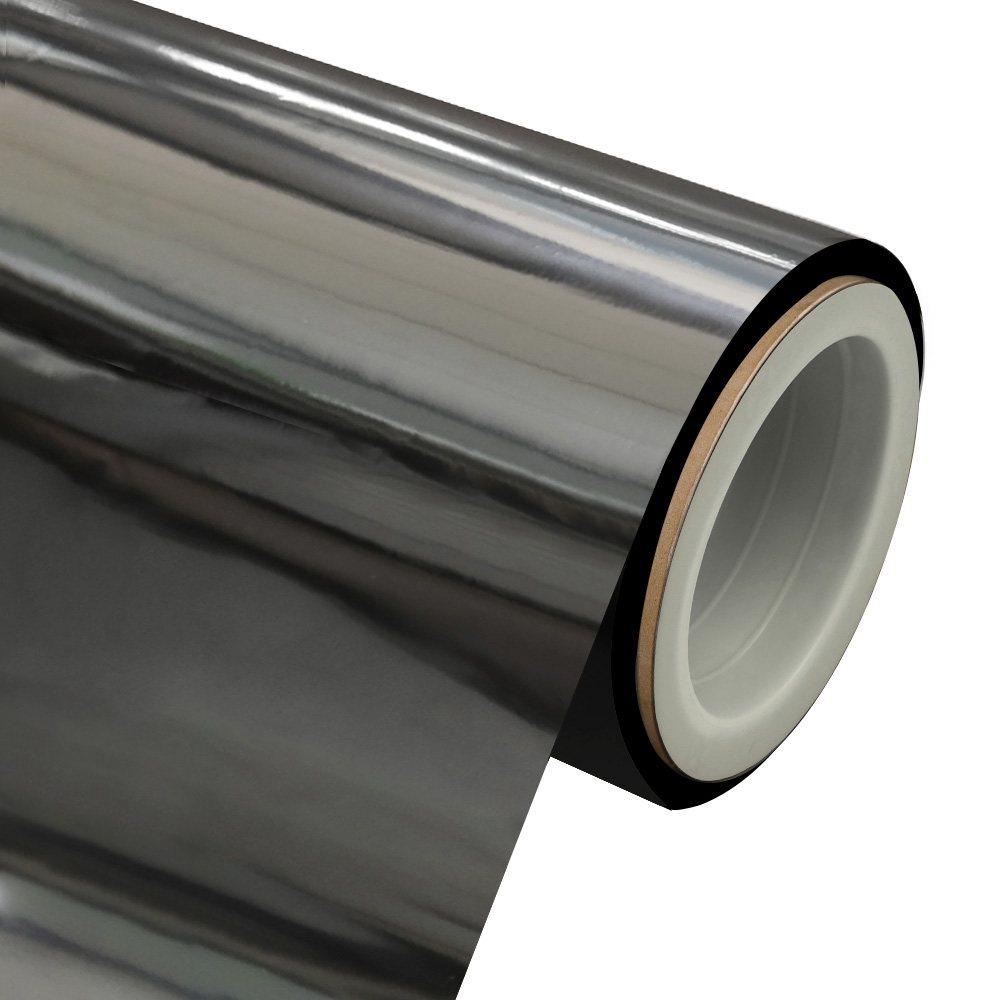
VMPET film refers specifically to vacuum-metallized polyester film, built on a BOPET base and finished with an aluminum deposition layer, often followed by a protective topcoat that improves adhesion, gloss retention, and scuff resistance during printing and lamination.
Typical Property Range
- Thickness range: commonly available from 12 micron to 23 micron base film
- Oxygen transmission rate: reduced to low single-digit values under standard test conditions
- Water vapor transmission rate: significantly lower than uncoated PET film
- Metallic bond strength: rated for lamination without visible delamination under normal handling
- Surface finish: bright, mirror-like appearance suitable for shelf-facing lamination
Because the aluminum layer also blocks visible and UV light, VMPET film is widely selected for products sensitive to photo-oxidation, such as roasted coffee, snack foods, confectionery, and certain dry pharmaceutical formats. It laminates well with polyethylene, oriented polypropylene, and paper substrates, which makes it a flexible mid-layer or outer layer in multi-ply structures used across flexible packaging film production.
ALOx Coated Film: A Transparent Alternative for High-Clarity Barrier Packaging
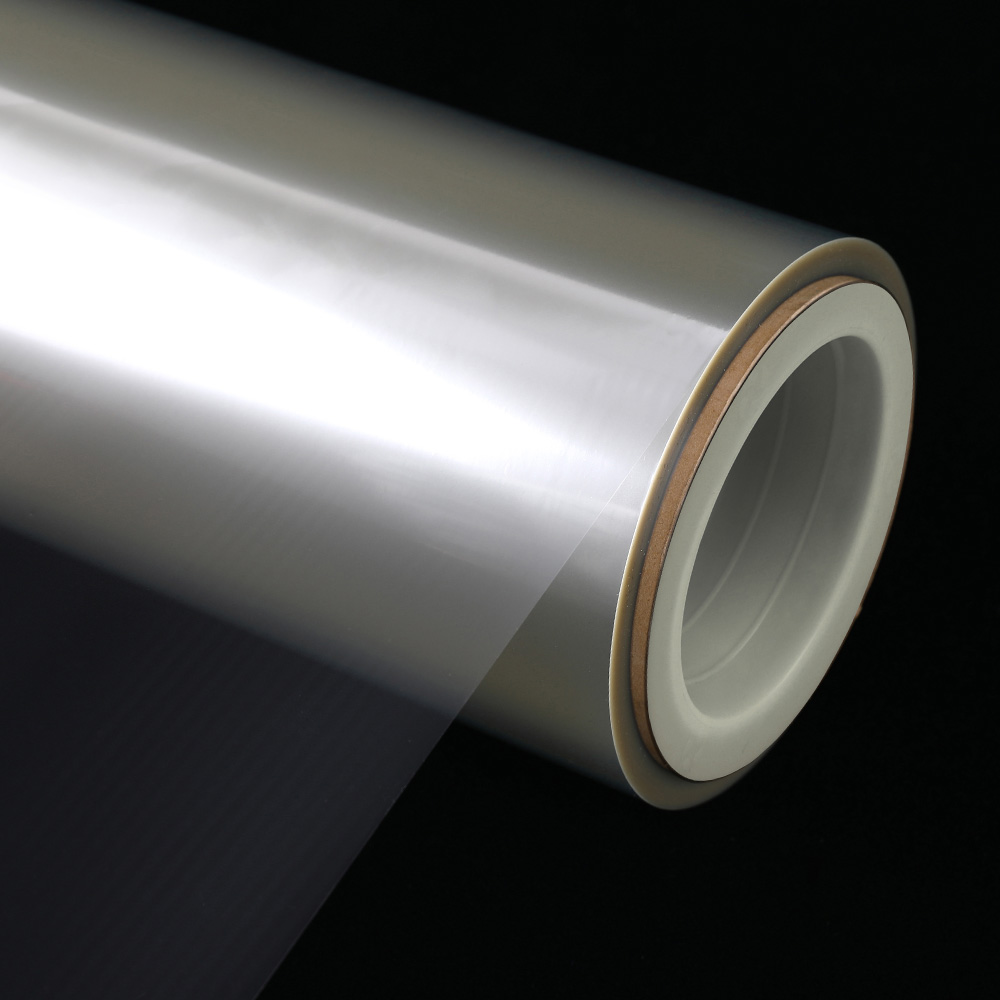
Where full opacity is not desired, ALOx coated film offers a different route to a similar barrier outcome. Instead of aluminum, an aluminum oxide layer is deposited under vacuum onto a PET or BOPP base film. The oxide layer is transparent, allowing the package to retain a clear or semi-clear appearance while still achieving high oxygen and moisture barrier performance.
Why Transparency Matters for Certain Applications
Retail products where visual inspection of the contents is a purchase driver, such as fresh pasta, cheese, dried fruit, and some medical device packaging, cannot use an opaque metallized structure. ALOx coating solves this by keeping the pack see-through while still qualifying as a genuine high-barrier packaging material. It is also compatible with microwave use and metal detection lines, since it contains no metallic layer, which is a meaningful operational advantage for food processors running metal-detection quality checks on the packaging line itself.
Comparing Metallized, ALOx, and Standard Barrier Films
Choosing between these options depends on whether transparency, cost efficiency, or peak barrier value matters most for a given product. The table below summarizes the practical differences seen across common flexible packaging film applications.
| Property | Metallized film | ALOx coated film | Standard PET film |
|---|---|---|---|
| Appearance | Opaque, metallic | Transparent | Transparent |
| Oxygen barrier | High | High | Low |
| Moisture barrier | High | Moderate to high | Low to moderate |
| Metal detectable | No | Yes | Yes |
| Microwave safe | Not recommended | Yes | Yes |
| Typical cost tier | Moderate | Higher | Lowest |
Matching Film Selection to Application Requirements
A practical selection process usually starts with the product's sensitivity profile rather than the film itself. The following framework is a useful starting point for packaging engineers evaluating options:
- Identify the primary risk: oxidation, moisture pickup, light degradation, or aroma loss
- Determine whether transparency is required for retail presentation or inspection
- Check compatibility with existing sealing, lamination, and printing equipment
- Confirm whether metal detection or microwave use applies on the production or retail side
- Balance the barrier requirement against target shelf life and total structure cost
In multi-layer structure trials for dry food products, teams frequently find that a metallized mid-layer paired with a sealant layer meets shelf life targets at a lower total structure cost than a fully transparent high-barrier alternative, provided opacity is not a marketing requirement.
For products packed under vacuum, both film types are frequently used as part of broader vacuum packaging materials, laminated with a puncture-resistant nylon layer and a heat-sealable polyethylene layer to build a complete structure capable of withstanding pressure differentials without pinholing.
Sustainability Considerations for High-Barrier Flexible Packaging
Barrier performance and recyclability have historically pulled in opposite directions, since adding a functional layer to a base film usually means introducing a different material class into the structure. This has become a central design question for anyone specifying sustainable flexible packaging today.
Downgauging Mono-material design Recyclable structures Reduced material use
Because the metallization or oxide layer is applied at nanometer scale, it typically does not disqualify a structure from mechanical recycling streams the way a thicker foil layer would, particularly when the rest of the laminate is built from a single polymer family. Converters increasingly pair a metallized or ALOx-coated food-grade barrier film with a compatible polyethylene sealant to move toward mono-material, more readily recyclable constructions, while still meeting oxygen barrier films and moisture barrier films performance targets required for shelf-stable products.
Downgauging the base substrate, improving deposition uniformity, and reducing scrap during metallization are also common efficiency levers, since even small thickness reductions across a high-volume production run translate into meaningful material savings without compromising barrier performance.
Frequently Asked Questions
Q1: What is the main difference between metallized film and ALOx coated film?
Metallized film uses a thin aluminum layer and is opaque, while ALOx coated film uses aluminum oxide and remains transparent, though both provide strong oxygen and moisture barrier performance.
Q2: Is VMPET film safe for direct food contact?
VMPET film is typically used as a barrier or printing layer within a laminate rather than as the direct food-contact layer, which is usually a separate sealant film chosen for food safety compliance.
Q3: Why choose ALOx coated film over metallized film for some products?
ALOx coated film is preferred when transparency, microwave compatibility, or metal detection during processing are required, since it contains no metallic layer.
Q4: Can metallized and ALOx films be recycled?
Both can be compatible with mechanical recycling streams when paired with matching polymer sealant layers in a mono-material laminate design, though recyclability ultimately depends on the full structure.
Q5: How is barrier performance measured for these films?
Barrier performance is typically expressed through oxygen transmission rate and water vapor transmission rate testing under standardized conditions, allowing direct comparison between film options.

Are you ready to work with us?
Start a project
- Quick Links
- Company Profile
- Company Culture
- Qualification
- FAQ
- Product
- ALOx Films
- VMPET
- VMCPP
- VMBOPP
- Coated Film
- Contact Us
- Tel: +86-13456263964
-
Phone : +86-0573-87783633
Phone : +86-0573-87780583 - E-mail : [email protected]
- Address: 6th Xinhe Road, Xieqiao Town, Haining City, Zhejiang Province, China

