

 English
  中文简体
中文简体 
Which is better BOPP or CPP film?
 2026.03.05
 Industry News
BOPP film is generally the better choice for most rigid packaging, labeling, and high-clarity applications, while CPP film excels where flexibility, heat sealability, and soft-touch feel are required. Neither is universally superior — the right answer depends on your specific end-use requirements. This article breaks down a direct, data-backed comparison to help you decide.
What Are BOPP and CPP Films?
Both films are made from polypropylene, but they are manufactured differently, which leads to significantly different physical properties.
BOPP Film (Biaxially Oriented Polypropylene)
BOPP film is produced by stretching polypropylene in both the machine direction (MD) and transverse direction (TD). This biaxial orientation aligns the polymer chains, resulting in improved stiffness, tensile strength, and optical clarity. Typical thickness ranges from 12 to 60 microns.
CPP Film (Cast Polypropylene)
CPP film is produced through a cast extrusion process without stretching. The film retains its natural softness and flexibility. It is commonly used in lamination structures and as a heat-seal layer. Thickness typically ranges from 20 to 80 microns.
Key Property Comparison: BOPP vs CPP
The table below summarizes the core performance differences between the two film types:
| Property | BOPP Film | CPP Film |
| Tensile Strength | High (up to 200 MPa MD) | Moderate (50–80 MPa) |
| Optical Clarity | Excellent (haze <1%) | Good (haze 1–3%) |
| Flexibility | Low | High |
| Heat Seal Performance | Limited (requires coating) | Excellent (self-sealing) |
| Moisture Barrier | Excellent | Good |
| Heat Resistance | Up to ~120°C | Up to ~140°C |
| Printability | Excellent | Moderate |
| Cost | Relatively lower | Slightly higher |
Where BOPP Film Outperforms CPP
BOPP film has clear advantages in several high-demand packaging scenarios:
- Pressure-sensitive labels: BOPP's dimensional stability and surface energy (after corona treatment, typically 38–42 dyn/cm) make it ideal for label stock used on bottles, containers, and retail products.
- Snack food and confectionery packaging: Its excellent moisture vapor transmission rate (MVTR) — as low as 0.3 g/m²/day — protects against humidity, keeping products crisp.
- High-speed printing: BOPP accepts solvent-based and water-based inks well after treatment, supporting gravure and flexographic printing at speeds exceeding 300 m/min.
- Overwrapping and surface lamination: Its stiffness provides structure and a premium visual finish in retail overwrap applications.
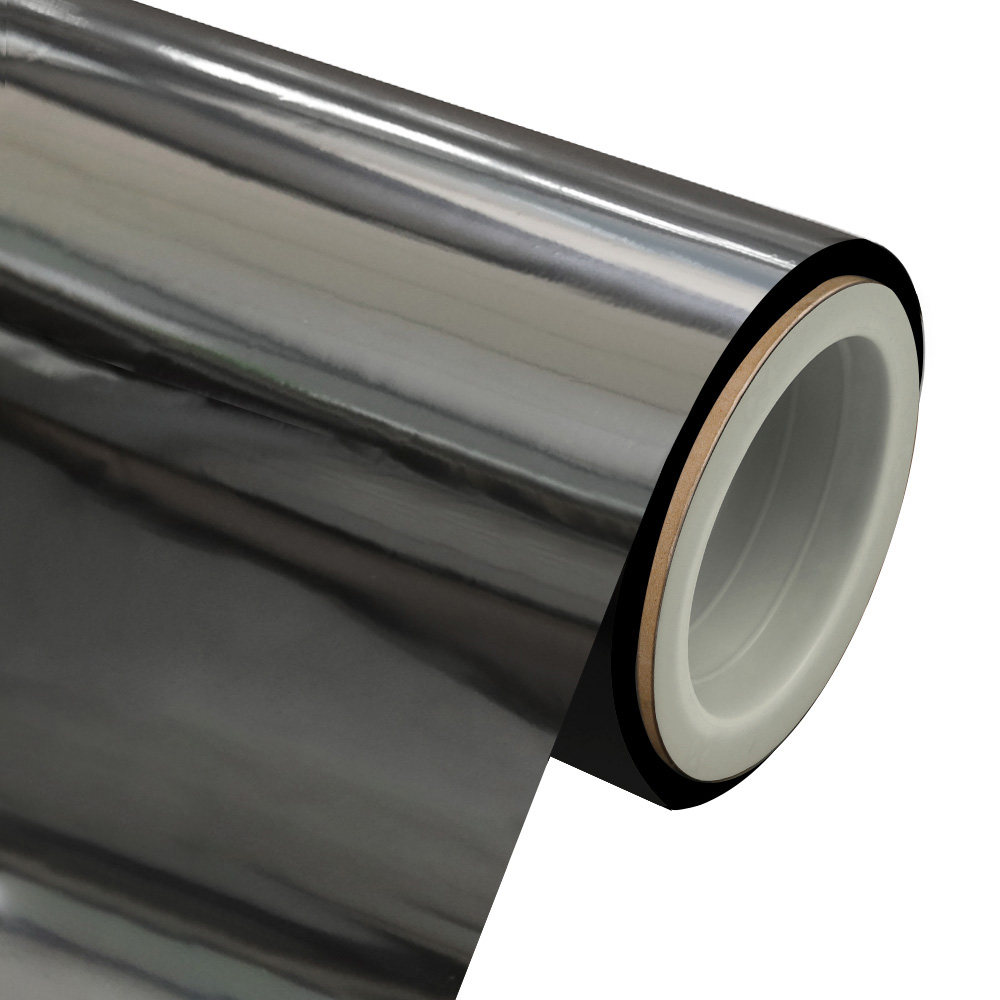
- Metallized film applications: BOPP is widely used as the base substrate for metallized films, delivering high barrier performance and a reflective appearance.
Where CPP Film Has the Edge
CPP film is the preferred material when the application demands softness, sealing performance, or higher temperature tolerance:
- Laminate inner seal layers: CPP is commonly used as the sealant layer in multi-layer laminates (e.g., PET/CPP or NY/CPP) because it seals reliably at temperatures between 130°C and 160°C.
- Sterilizable pouches: CPP can withstand retort sterilization at up to 121°C for 30–60 minutes, making it suitable for medical packaging and ready-to-eat food pouches.
- Soft packaging for garments and textiles: Its flexibility and soft feel reduce the risk of damage to delicate contents.
- Flower and fresh produce wrap: CPP's breathability and pliability suit it for horticultural and fresh food wrapping applications.
Barrier Performance: A Critical Decision Factor
If moisture or oxygen barrier is your primary concern, BOPP has an inherent advantage in standard form. Standard BOPP film achieves an MVTR of approximately 3–6 g/m²/day, while metallized BOPP can lower this to below 0.5 g/m²/day — comparable to aluminum foil in some configurations.
CPP film, by contrast, has a higher MVTR of around 6–10 g/m²/day in standard grades. It is rarely used alone as a primary barrier film; instead, it functions as a component within a laminated structure where another layer provides the barrier.
For oxygen barrier, neither BOPP nor CPP provides high resistance on their own. Coating or lamination with EVOH, PVDC, or metallization is required when oxygen transmission rates below 10 cc/m²/day are needed.
Heat Seal Capability: CPP Wins by Design
One of the most significant practical differences is heat sealability. Standard BOPP film does not heat seal to itself without a special sealable coating or co-extrusion. Heat-sealable BOPP is a modified product that adds a sealing layer, typically achieving seal initiation at around 90–110°C.
CPP, by contrast, is inherently heat-sealable and forms strong seals at 130–160°C. Seal strength typically ranges from 8 to 20 N/15mm, depending on grade and sealing conditions. This makes CPP the default choice wherever reliable, strong seals are a packaging requirement without additional processing steps.
Printability and Surface Treatment
BOPP film has a clear advantage for direct printing applications. After corona treatment to a surface energy of 38 dyn/cm or above, BOPP accepts inks with excellent adhesion and print resolution, supporting fine-detail flexographic and gravure printing used in retail packaging.
CPP film is printable but requires more careful surface treatment management. Its surface energy tends to decay faster after treatment compared to BOPP, which can affect ink adhesion during storage or long press runs. For applications where the film is primarily a lamination substrate rather than a printed outer layer, this limitation is less relevant.
Cost Considerations
BOPP film is generally more cost-effective on a per-area basis due to higher production volumes and lower raw material costs per unit weight. Its lower density compared to CPP means more square meters per kilogram, which reduces cost-per-unit in high-volume packaging.
CPP film commands a modest price premium, particularly for specialty grades such as retort CPP or high-clarity CPP. However, when CPP eliminates the need for additional sealing layers or converters, the total system cost may be comparable or even lower.
For budget-sensitive, high-volume applications such as bread bags, FMCG overwrap, or label stock, BOPP is typically the more economical choice. For engineered laminate structures requiring heat-seal reliability or retort capability, CPP is worth the incremental cost.
Application-Based Recommendation Summary
- Snack food, biscuit, and confectionery bags → BOPP (moisture barrier, stiffness, print quality)
- Pressure-sensitive labels → BOPP (dimensional stability, surface energy)
- Retort and sterilizable pouches → CPP (heat resistance, seal integrity under sterilization)
- Laminated sealant layers → CPP (heat seal performance, bond strength)
- Metallized barrier films → BOPP (substrate stability for vacuum metallization)
- Flower and fresh produce wrapping → CPP (flexibility, softness)
- High-speed overwrap packaging → BOPP (machinability, stiffness)
- Medical device packaging → CPP (sterilization compatibility)
FAQ
Q1: Can BOPP and CPP films be used together in one package?
Yes. A common laminate structure is BOPP (outer printed layer) / CPP (inner sealant layer), combining BOPP's printability and stiffness with CPP's heat-seal performance.
Q2: Is BOPP film food-safe?
Yes. BOPP film is widely used in direct food contact applications and complies with major food contact regulations including FDA 21 CFR and EU Regulation 10/2011 when produced accordingly.
Q3: Which film is more environmentally friendly?
Both are mono-material polypropylene films and are technically recyclable within PP recycling streams. BOPP's lower density means less material per square meter, giving it a slight edge in material efficiency. Neither is biodegradable in standard conditions.
Q4: Does CPP film shrink when heated?
CPP has low shrinkage because it is not oriented. BOPP, being biaxially oriented, can exhibit slight shrinkage under high heat, which is why it is generally not used in shrink-wrap applications (OPP or POF films are preferred for that).
Q5: What is the typical shelf life of BOPP film in storage?
Under proper storage conditions (temperature below 30°C, relative humidity below 70%, away from UV light), BOPP film can maintain its performance properties for 12 to 24 months from the date of production.

Are you ready to work with us?
Start a project
- Quick Links
- Company Profile
- Company Culture
- Qualification
- FAQ
- Product
- ALOx Films
- VMPET
- VMCPP
- VMBOPP
- Coated Film
- Contact Us
- Tel: +86-13456263964
-
Phone : +86-0573-87783633
Phone : +86-0573-87780583 - E-mail : [email protected]
- Address: 6th Xinhe Road, Xieqiao Town, Haining City, Zhejiang Province, China

