

 English
 中文简体

High Bonding Metallized Film Applications: Lamination, Retort and Packaging
 2026.11.05
 Industry News
Aluminium transfer across a 40,000-meter lamination reel rarely announces itself as a technical failure. It shows up as a hazy, patchy web, a rejected roll, or a pouch that delaminates three days after filling. The metallized layer is only 30–60 nm thick, so a bond weaker than the adhesive's own cohesion will always give way somewhere.
High bonding metallized film exists for that interface. It is not one product but a group of treatments and constructions built so the metallized surface keeps hold of adhesives, molten polyethylene, inks and seal layers through converting, filling and shelf life.
Short answer first: the largest application clusters are adhesive lamination for dry food packaging, retort and hot-fill pouches, sachets and stick packs on high-speed form-fill-seal lines, twist and decorative wrap, pharmaceutical laminates and lid stock, and flexible reflective builds for insulation, heating and shielding.
The practical filter is simple. When the metallized side meets the laminating adhesive, a high bonding grade usually pays for itself. When the metallized side faces the product or a seal layer and never touches adhesive, a standard metallized film normally performs well.
What "High Bonding" Refers To at the Interface
Metallized film has two interfaces, and they fail for different reasons.
- Metal to base film – how the vacuum-deposited aluminium grips the PET, BOPP or CPP surface. This is decided inside the metallizer: base film surface energy, in-chamber plasma or corona pre-treatment, deposition rate and web temperature.
- Metal to adhesive – how the metallized surface grips the laminating adhesive, extrusion PE or a subsequent coating. This is where most conversion complaints originate.
The mechanism behind both is well established. Metal adhesion to PET film depends on mechanical and chemical bonding at the interface, as documented in TAPPI conference work on the subject. Mechanically, a micro-roughened base surface lets the aluminium layer anchor into it. Chemically, polar groups created by a primer or a discharge treatment react with the adhesive system and turn simple contact into a real bond.
Chemical primer treatment Plasma treatment Double-side corona Bonding-grade skin layer
Each route raises surface energy and creates sites the adhesive can wet and react with, instead of merely sitting on top of the metal.
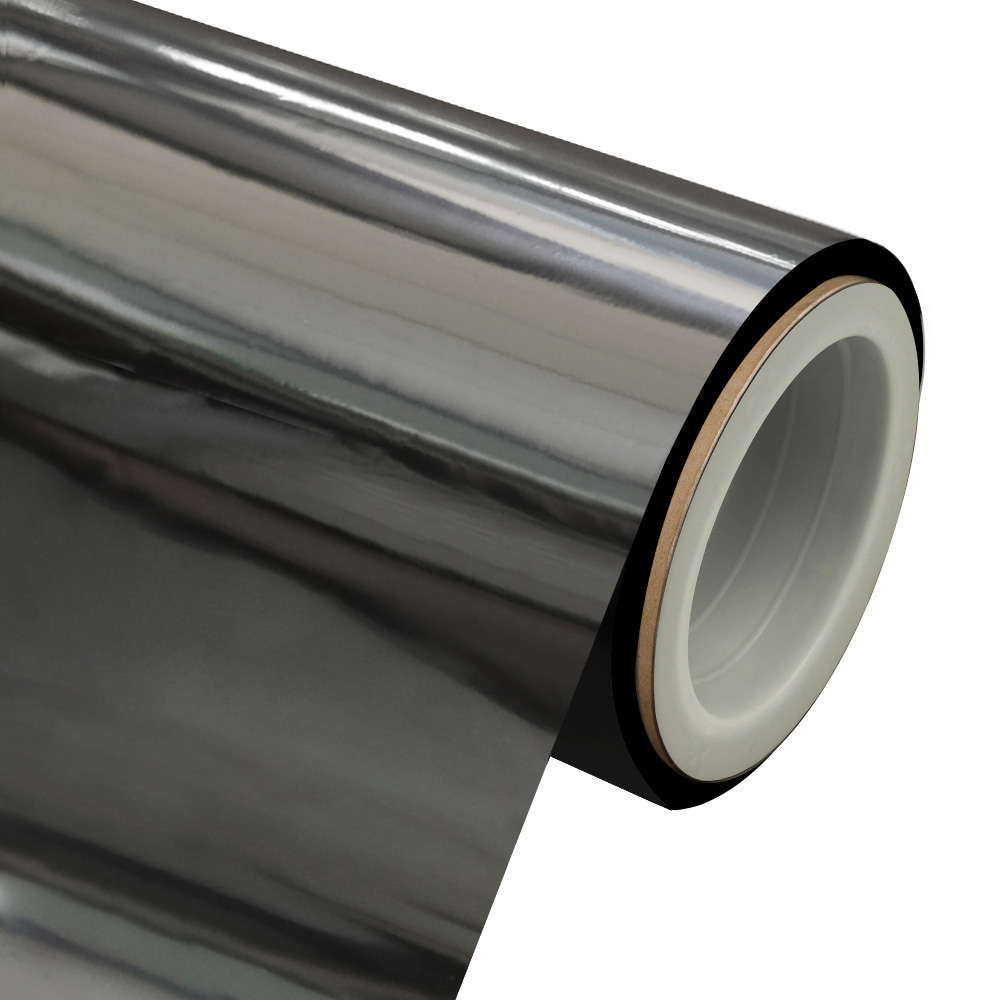
 Chemical Treated Metallized PET Film for Stable AdhesionA chemical-treated metallized BOPET film with built-in bondable surface chemistry, suited to flexible and boiled packaging where stable aluminum adhesion is required.View Product →
A chemical-treated metallized PET film is the clearest example. Rather than leaning on a corona effect that fades with time, the treatment is built into the metallizing process, so the metal surface reaches the laminator with a stable, bondable chemistry.
High Bonding Metallized Film Applications That Test the Interface
Adhesive lamination of dry food packaging
This is the volume application. A printed or barrier layer of metallized PET or metallized BOPP is laminated to a PE or CPP sealant, usually with the metal side facing the adhesive. Solvent-based systems typically run at 2.5–4.0 g/m² dry coat weight and solventless at about 1.6–2.2 g/m², followed by 24–48 hours of curing at 40–50 °C. Coffee, biscuits, snacks, powdered drinks and confectionery all live here, and all of them reveal a marginal bond as silver streaking after slitting.
High bonding grades also appear on the sealant side for the same reason, and the advantages of high bonding metallized CPP film in food packaging and lamination come down to bond consistency across a long run rather than a higher peak value.
Retort, boil-in-bag and hot-fill
Heat is the harshest test. A retort cycle at 121 °C for 30 minutes softens the adhesive, stresses the aluminium layer and drives moisture through the structure. High bonding and high viscosity metallized CPP films are specified here for ready meals, pet food and similar retort pouches, because the bond has to survive sterilisation and then the flexing the pouch sees during handling.
 High Bonding Metallized CPP Film for Retort PackagingA metallized cast polypropylene film with a heat-sealing layer and high aluminum adhesion, designed for retort pouches and powder-filled food packaging.View Product →
Sachets, stick packs and high-speed form-fill-seal
Powder filling throws fine dust into the seal area while the film is folded and pulled at speed. The bond must hold at the same time as the coefficient of friction stays low enough to prevent wrinkles and registration drift, and on a CPP sealant those two requirements often pull against each other.
Twist wrap and decorative packaging
Confectionery twist wrap folds the same film many times over a small area, so the metallized layer has to flex with the base instead of flaking. Partial and semi-metallized versions add design effects without losing lamination integrity.
Pharmaceutical and industrial builds
Blister lidding, foil bags and powder stick packs depend on a stable metallized surface for printing and sealing. Outside packaging, metallized and semi-metallized polyester films go into reflective insulation, floor heating builds and shielding parts, where thermoforming and lamination both pull on the aluminium layer.
Matching Substrate to Application
Bonding performance is a combination of base film, treatment and end use. The table below maps the three workhorse substrates.
| Base film | Bonding route | Typical structure | Best-fit applications | Watch-outs |
|---|---|---|---|---|
| PET | Chemical treatment, plasma, double-side corona | Printed PET / metallized PET / PE | Dry food lamination, coffee and snack packs, sachets | Treatment decay in storage; verify wetting tension on the actual roll |
| BOPP | Corona on the metallized side, heat-sealable grades | Metallized BOPP / CPP | Biscuits, confectionery, cost-sensitive dry lamination | Lower heat resistance; keep the seal window in mind |
| CPP | Bonding-grade skin layer, high viscosity grades | PET / metallized CPP / CPP | Retort and boil-in-bag pouches, hot-fill, pharmaceutical bags | Seal strength and bond strength must be tuned together |
The row you choose also sets the converting window, so it is worth confirming the structure before the film is ordered rather than after the first lamination trial.
Numbers Worth Writing Into the Specification
Bonding is measurable, so treat it as a specification line rather than a preference.
2.0 N/15 mmCommon floor for dry lamination
2.5 N/15 mmTypical target for retort structures
38–42 dyn/cmTreated-side surface energy
2.0–2.6Optical density of barrier grades
- Bond strength in N/15 mm from a T-peel or 180° peel test on a laminated sample. The failure mode matters as much as the number: adhesive failure is recoverable, metal transfer is not.
- Surface energy on the treated side, normally 38–42 dyn/cm and above. Because discharge treatments decay, confirm the value on the production roll, not on a pilot sample.
- Optical density between roughly 2.0 and 2.6. Thicker aluminium improves barrier but stiffens the layer and can raise the risk of cracking and transfer.
- Barrier values for the finished laminate, with oxygen and water vapour transmission measured after lamination rather than on the single film.
- Friction and sealing data for high-speed lines: coefficient of friction on the sealant side, heat seal initiation temperature and seal strength.
- Storage conditions for the roll, typically below 30 °C at moderate humidity and used within about three to six months.
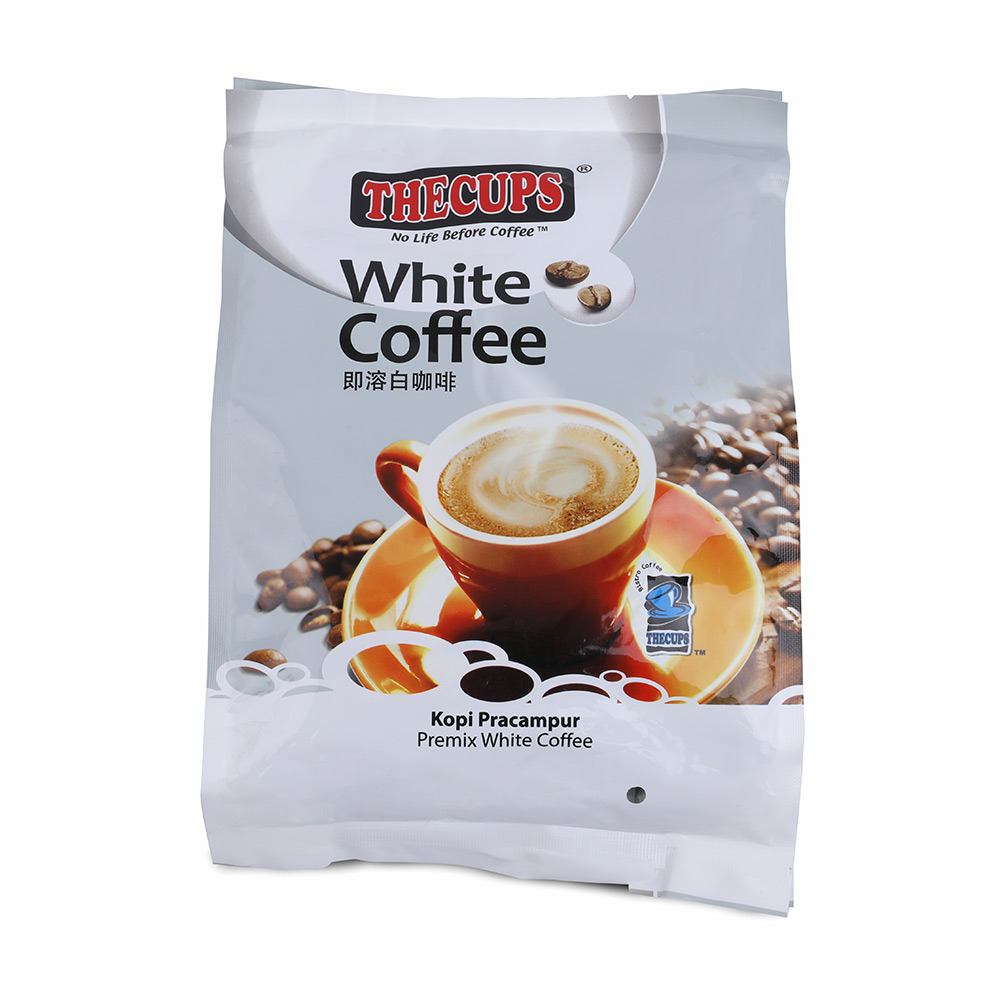 High Barrier Metallized PET Film PH-P02A plasma-pretreated metallized BOPET with strong barrier and bonding performance, suited as an aluminum foil replacement in food and pharmaceutical packaging.View Product →
Where barrier and bond strength are both critical, a high barrier metallized PET film with a bonding-grade treatment covers the shelf-life target and the converting window in one structure.
Failure Modes to Watch During Scale-Up
Most bonding problems appear at scale-up rather than on the pilot run, and each one leaves a different fingerprint.
- Metal transfer: silver patches on the adhesive side after slitting or in the seal area, usually from an under-treated metal surface, too low a coat weight, or a cold nip.
- Delamination after filling: the bond survived the laminator but failed after retort or repeated flexing, often with residual solvent or an under-cured adhesive behind it.
- Ink drop and weak print anchorage on the metallized surface, which points to surface energy rather than to the ink.
- Blocking and wrinkles on fast lines, where a high bonding grade with a high friction coefficient fights the machine.
- Treatment decay: rolls stored warm and humid for months lose part of their bonding advantage before they reach the laminator.
Frequently Asked Questions
Q1: What is a high bonding metallized film?
It is a metallized film whose aluminium surface has been engineered, through chemical treatment, plasma, corona treatment or a bonding-grade skin layer, to hold a strong and repeatable bond to laminating adhesives, extrusion polyethylene and coatings.
Q2: How do I know whether I need it?
Check which side of the film meets the adhesive. If the metallized side is laminated, order a high bonding grade and specify bond strength in N/15 mm plus an acceptable failure mode. If the metallized side stays inside the pack, a standard grade is usually sufficient.
Q3: Does higher optical density mean a stronger bond?
No. Optical density describes how much aluminium is deposited and therefore how good the barrier is. Bond strength depends on interface chemistry and surface structure, so a dense metallized layer on an untreated surface can still transfer.
Q4: Which substrate suits a retort pouch?
Metallized CPP in a high bonding or high viscosity formulation is the usual choice, since it tolerates sterilisation and still anchors to the adhesive. Metallized PET is preferred when the metal layer sits in the middle of the structure and stiffness or print quality matters most.
The application list is long, but the decision is narrow: identify which interface carries the load, then specify the treatment, the bond value and the failure mode you can accept. For films where the metallized surface is laminated, retorted or twisted, a high bonding grade removes the most expensive variable in converting. Our metallized and coated film range covers chemical-treated PET, bonding-grade CPP and high barrier builds for exactly those interfaces.

Are you ready to work with us?
Start a project
- Quick Links
- Company Profile
- Company Culture
- Qualification
- FAQ
- Product
- ALOx Films
- VMPET
- VMCPP
- VMBOPP
- Coated Film
- Contact Us
- Tel: +86-13456263964
-
Phone : +86-0573-87783633
Phone : +86-0573-87780583 - E-mail : [email protected]
- Address: 6th Xinhe Road, Xieqiao Town, Haining City, Zhejiang Province, China

