

 English
  中文简体
中文简体 
Ice Cream Packaging Materials: Advantages and Disadvantages for Ice Cream Brands
 2026.10.15
 Industry News
Choosing an ice cream packaging material is a decision that shows up in every scoop. A poorly sealed tub lets moisture migrate, crystals form, and flavor fade long before the printed shelf life is reached. A wrapper that turns brittle at −20°C damages both the product and the brand. The most practical approach is to understand what each material family does well and where it falls short. No single material wins every case; the right choice depends on the format, the cold chain, and the barrier targets.
What Ice Cream Packaging Must Do Before You Choose a Material
Frozen desserts are more demanding than most dry foods. Packaging has to perform three jobs at the same time: keep moisture from leaving the product, keep oxygen from entering it, and remain structurally sound at temperatures between −18°C and −25°C. If one of these fails, the product quality suffers in a way that is immediately visible to the consumer.
Conclusion first: The material with the best oxygen and moisture barrier will not automatically produce the best ice cream package. You still have to match the barrier level to the product recipe, the distribution temperature, and the intended shelf life.
The four properties below determine almost every material trade-off in this article.
- Moisture barrier Water vapor transmission rate (WVTR) at low temperature is the number that predicts freezer burn.
- Oxygen barrier Oxygen transmission rate (OTR) controls fat oxidation, stale flavors, and aroma loss.
- Low-temperature toughness The material must survive repeated stress in a commercial freezer without cracking or delaminating.
- Heat seal integrity The seam has to stay tight during cold chain handling, especially for wrappers and pouches.
Realistic barrier targets for frozen desserts: For premium butterfat recipes, an OTR below 50 cm³/m²/day is a reasonable goal. For WVTR, values below 1 g/m²/day are commonly used as a high-barrier benchmark. These are typical industry reference points, not universal mandates; the final target depends on your specific shelf-life requirement.
Paper and Paperboard: A Renewable Base with Real Limitations
Paperboard cartons remain a staple for pint-sized and family-sized ice cream. They deliver a strong sustainability message, print well, and give the brand a familiar shelf presence. But paper alone is not enough for frozen desserts.
Advantages
- Renewable and recyclable where the coating system permits.
- Excellent print surface for offset, flexographic, and digital artwork.
- Good rigidity that protects the product during handling and scooping.
- Easy to communicate natural or artisan positioning through tactile finishes.
Disadvantages
- Poor moisture resistance without a coating; uncoated board absorbs water vapor and loses strength.
- Very low oxygen barrier, which means an internal barrier layer is almost always necessary.
- Can warp, delaminate, or develop ice spots if the coating is damaged or uneven.
- Heavier than flexible films, which increases freight cost and post-consumer waste.
Practical note: A paper tub usually needs a PE coating, a wax layer, or a metallized film liner to hit moisture and oxygen targets. That composite construction complicates recyclability, so check what your local waste stream will accept before claiming an easy eco-label.
Plastic Tubs and In-Mould Labeling: Durable but Not Automatic
Polypropylene and PET tubs dominate the multi-serve segment for good reason: they survive drops, they reseal, and they offer strong graphics through in-mould labeling. But durability comes with a set of trade-offs that are easy to overlook when you are staring at a perfect lid.
Advantages
- Impact resistance that protects the product from loading docks and home freezers.
- Resealability that keeps the remaining product fresh after the first scoop.
- In-mould labeling provides scuff-resistant, moisture-independent graphics.
- Double-wall or air-gap designs add insulation with minimal extra weight.
Disadvantages
- Petroleum-based feedstock raises sustainability concerns and may be rejected by some curbside programs.
- PP can become brittle at very low temperatures, leading to lid cracking.
- Lower transparency than glass or thin films, which reduces the visual appeal of premium contents.
- Higher material weight than flexible films, increasing distribution emissions and cost.
Edge case to watch: Lidding seals on plastic tubs have a narrower working window at −20°C than at ambient temperature. The lid must peel cleanly without tearing, remain food-safe when contacted by frozen product, and still hold a vacuum if your process creates one. Test it with your actual filling line conditions, not with generic lab data.
Flexible Films and Wrappers: The Most Versatile Option
For single-serve bars, novelty items, and pouches, flexible films offer the widest performance envelope. They are lightweight, barrier-efficient, and highly printable. This is also the category where the material structure can be engineered to match the product almost exactly.
Advantages
- Excellent barrier performance with metallized or oxide-coated layers.
- Lightweight construction reduces material use and transport weight.
- High-speed sealing on VFFS, HFFS, and flow-wrap lines.
- Vivid reverse printing that conforms to the product shape.
- Lower per-unit cost than rigid packaging for single-serve formats.
Disadvantages
- Lacks rigidity unless combined with a tray, carton, or rigid sleeve.
- Heat seal windows are narrower; temperature, pressure, and dwell time must match the film specification.
- Multi-layer structures can be difficult to recycle if the layers are not compatible.
- Sharp or angular product edges may puncture thin films during automatic handling.
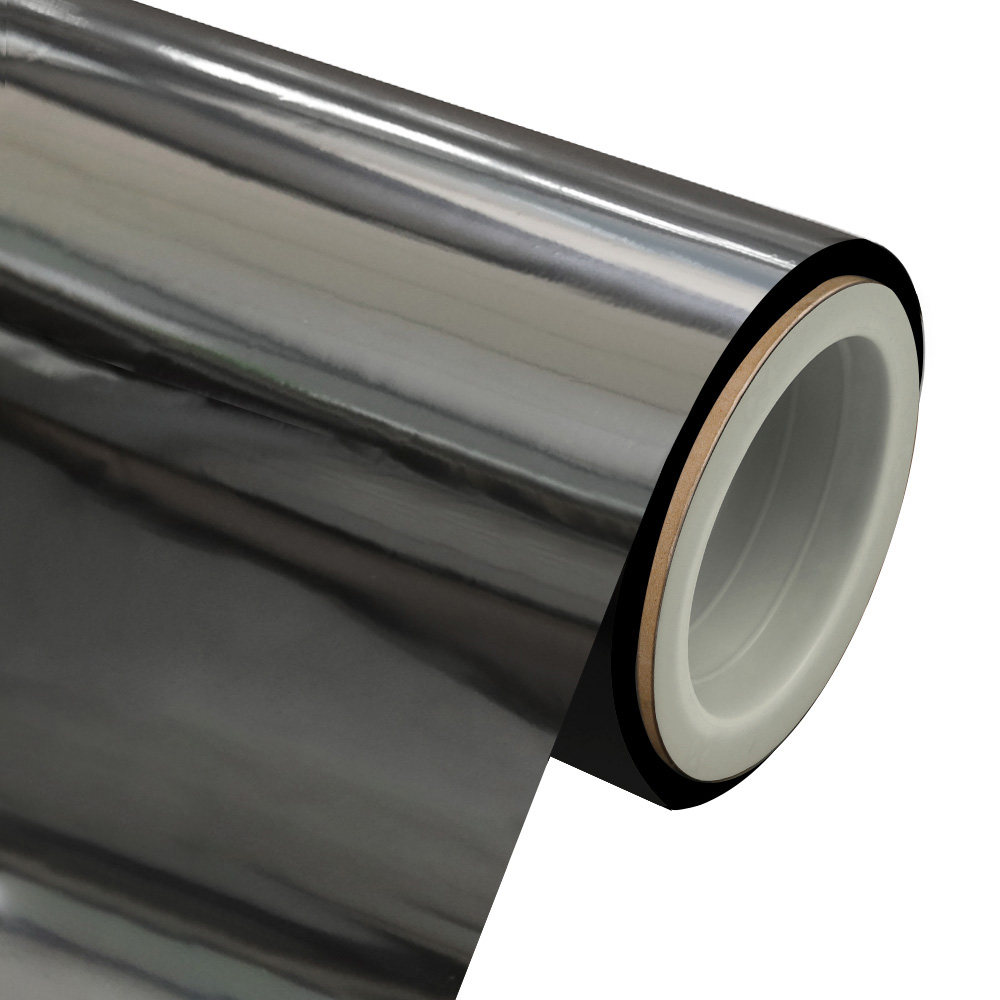
For pouch and flow-wrap formats, a high barrier metallized PET film provides strong oxygen protection and a mirror-like surface that draws attention in the freezer aisle. When the layer also needs to be heat-sealed at low temperature, high barrier metallized CPP film adds a reliable sealing layer with excellent moisture resistance.
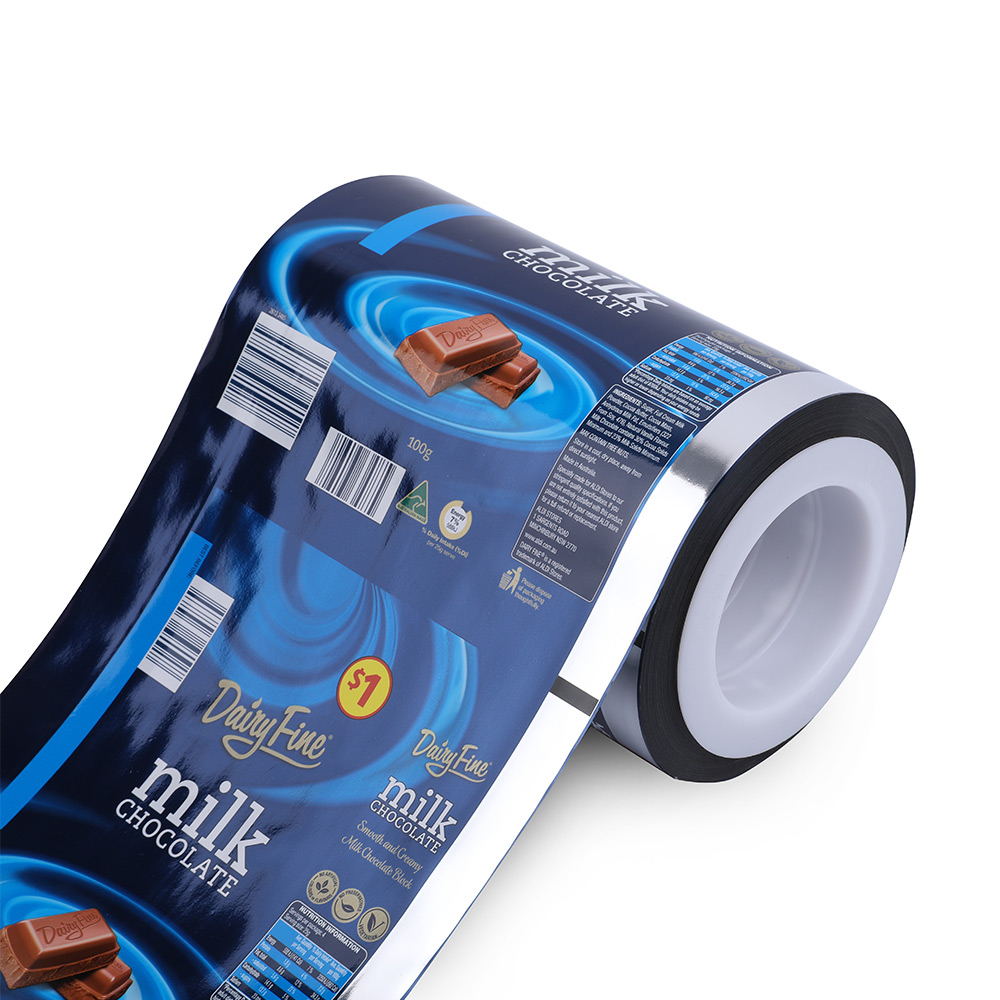 Metallized CPP Film with Low-Temperature Heat SealingA high barrier cast polypropylene film with metallized surface, offering moisture resistance and reliable heat sealing at low temperatures, suitable as a sealing layer in multilayer packaging structures.View Product →
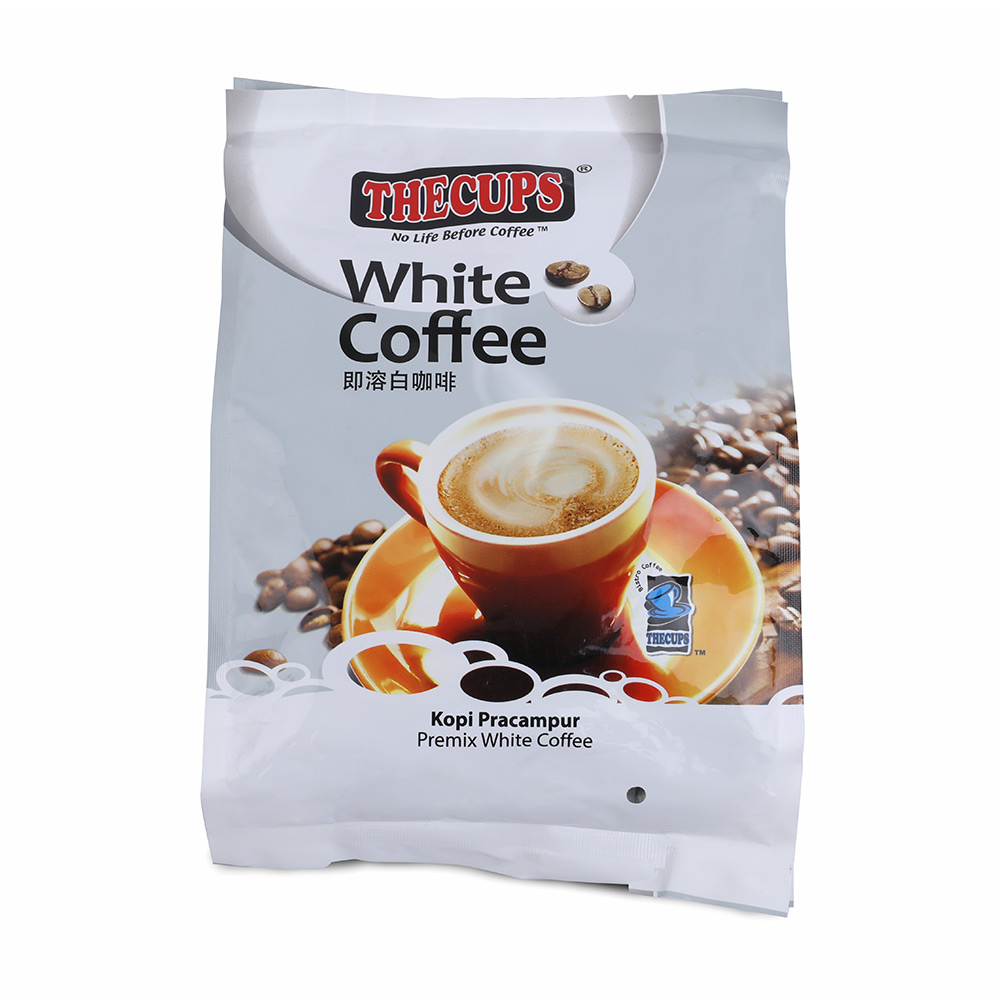 High Barrier Metallized PET Film for Pouch and Flow-Wrap PackagingThis metallized polyester film delivers strong oxygen protection and a glossy, reflective appearance, making it suitable for pouches and flow-wraps where visual appeal and barrier performance are needed in freezer aisles.View Product →
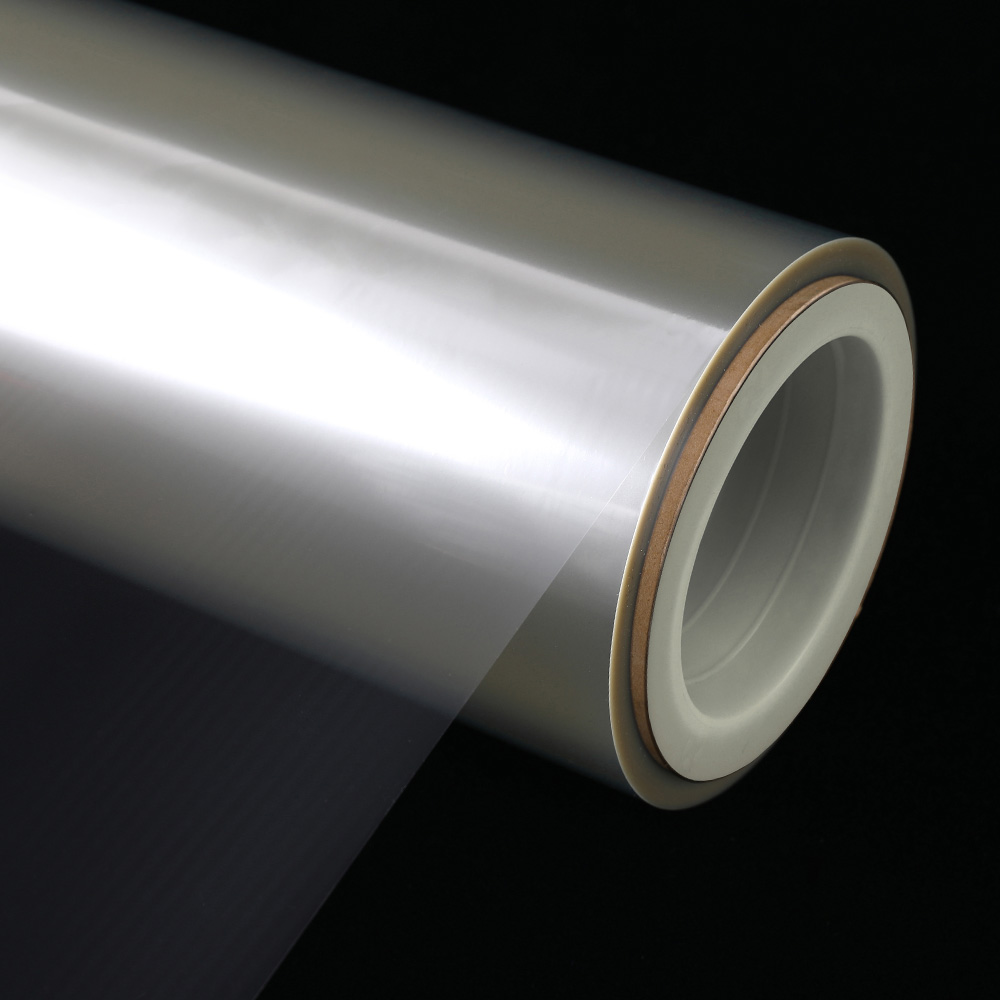
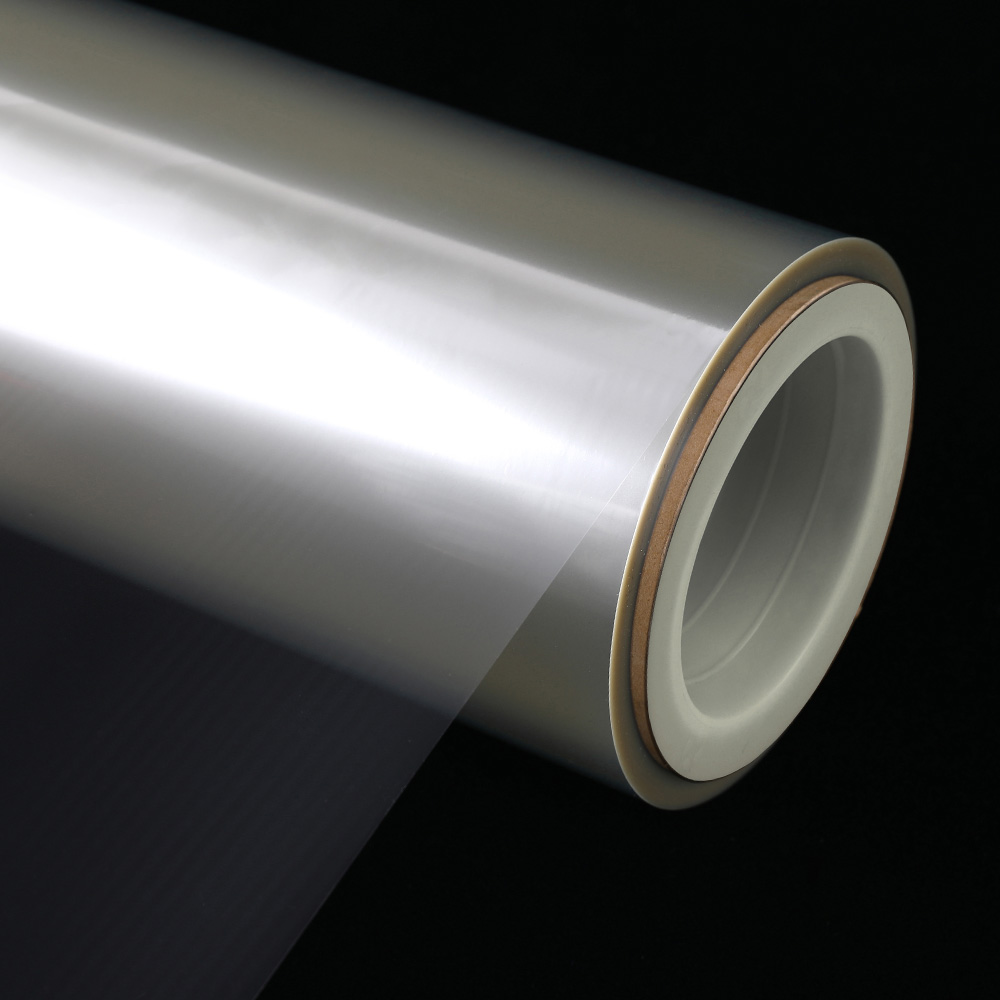
Brands that want a transparent window to reveal the swirl or inclusions can choose transparent ALOx PET film, which delivers oxygen and moisture barrier without hiding the product. This is a practical alternative to opaque metallized structures, especially for premium lines where visual appeal matters.
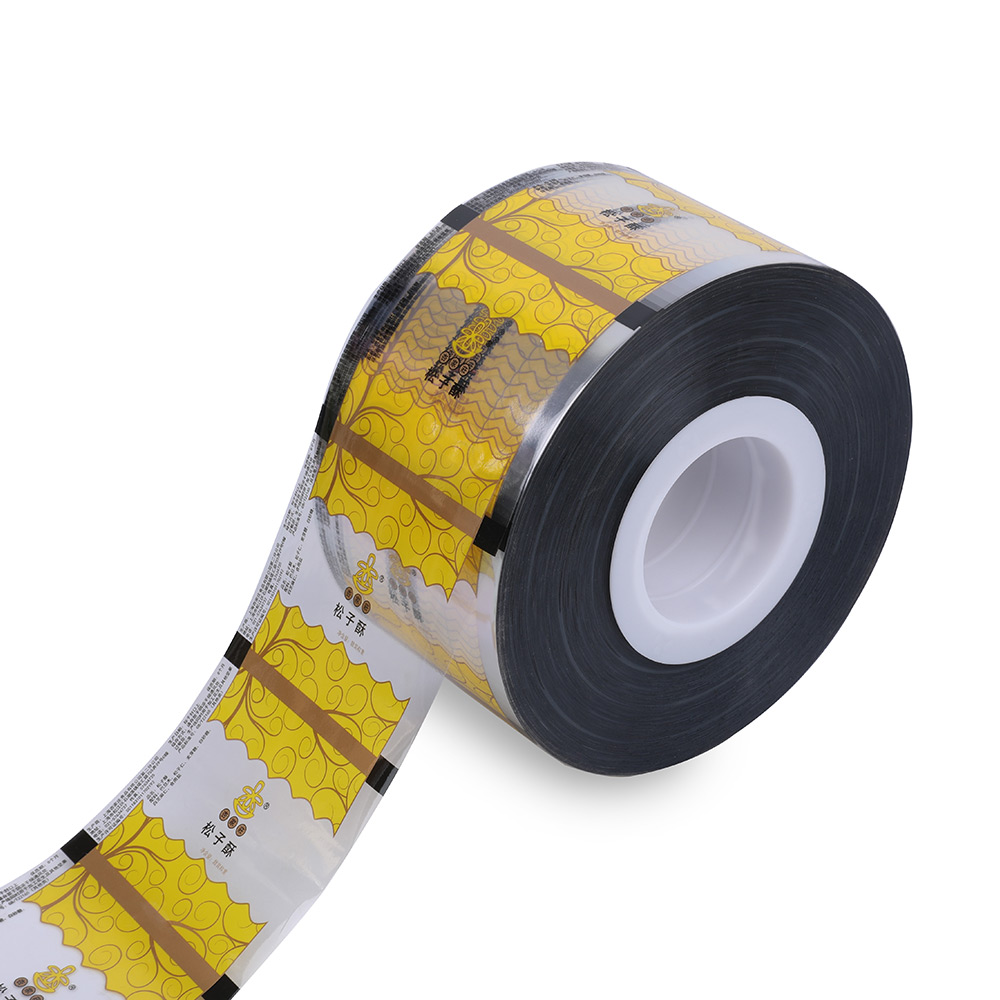 Transparent ALOx Coated PET Film for Barrier with VisibilityThis transparent PET film with ALOx coating provides oxygen and moisture barriers while allowing product visibility, appealing for premium packaging where visual presentation is key, such as revealing swirls or inclusions.View Product →
Key insight from conversion experience: Flexible barrier films often outperform rigid containers on barrier performance per gram of material. If your primary problem is freezer burn, a well-designed wrapper or pouch can reduce moisture loss more effectively than a single-wall polymer tub, while using less plastic overall.
Side-by-Side Comparison of Ice Cream Packaging Materials
The table below summarizes how each material family compares on the properties that matter most for frozen desserts.
| Material | Moisture Barrier | Oxygen Barrier | Freezer Durability | Recyclability | Best For |
|---|---|---|---|---|---|
| Paper / Paperboard | Low without coating | Low | Moderate | Good when uncoated | Multi-serve family packs |
| PP Plastic Tub | Moderate | Moderate | High | Limited in many regions | Recloseable family size |
| Metallized PET Film | High | High | High | Limited | Pouches and wrappers |
| Transparent ALOx Film | High | High | Moderate | Limited | Premium windowed packs |
| Aluminum Foil Laminate | Very High | Very High | Moderate | Limited | High-end frozen desserts |
How to Choose the Right Ice Cream Packaging Material
Conclusion first: Define the product format and shelf life before you talk to suppliers. The material is a consequence of those two decisions, not a starting point.
Use the following checklist to narrow your options.
- Product format Scoopable tubs, novelty bars, and single-serve cups require different handling systems and opening experiences.
- Shelf life target A 3-month cycle can tolerate lower barrier values than a 12-month cycle.
- Cold chain stability A stable retail freezer allows thinner barrier films; variable distribution demands more margin.
- Sustainability claim Decide whether recyclability, compostability, or lightweighting is the primary claim. That choice filters many candidates.
- Packaging machinery VFFS and HFFS lines have specific seal temperature and dwell time windows. Match the film to the machine, not the machine to the film.
If you are comparing how different films behave in practice, the analysis of VMPET and ALOx coated films as preferred high-barrier solutions walks through the structural logic behind barrier claims. For cross-border distribution, review food contact regulations and compliance for flexible packaging films before locking in a structure.
Frequently Asked Questions
Q1: What is the biggest packaging mistake for ice cream?
Choosing a material with a high water vapor transmission rate. Moisture migration causes freezer burn, iciness, and weight loss. Check the WVTR at −20°C, not at room temperature, because barrier resins behave differently at low temperatures.
Q2: Is paper or plastic better for ice cream tubs?
Paper is stronger on sustainability positioning and printability but needs a coating or laminate to reach practical moisture barrier levels. Plastic tubs are more durable and resealable but have higher fossil-based content. The better choice depends on your sustainability target and your filling equipment.
Q3: Can flexible films replace rigid ice cream containers?
For single-serve bars, mini cups, and pouches, yes. Flexible films use less material per unit and provide excellent barrier performance. For large family-size formats, rigid containers still offer better handling, scooping convenience, and reusability.
Q4: What does high barrier mean for ice cream packaging?
High barrier means the material keeps both moisture and oxygen transmission below target thresholds. For frozen desserts, a WVTR below 1 g/m²/day and an OTR below 50 cm³/m²/day are common benchmarks, but always confirm against your specific recipe and shelf life.

Are you ready to work with us?
Start a project
- Quick Links
- Company Profile
- Company Culture
- Qualification
- FAQ
- Product
- ALOx Films
- VMPET
- VMCPP
- VMBOPP
- Coated Film
- Contact Us
- Tel: +86-13456263964
-
Phone : +86-0573-87783633
Phone : +86-0573-87780583 - E-mail : [email protected]
- Address: 6th Xinhe Road, Xieqiao Town, Haining City, Zhejiang Province, China

